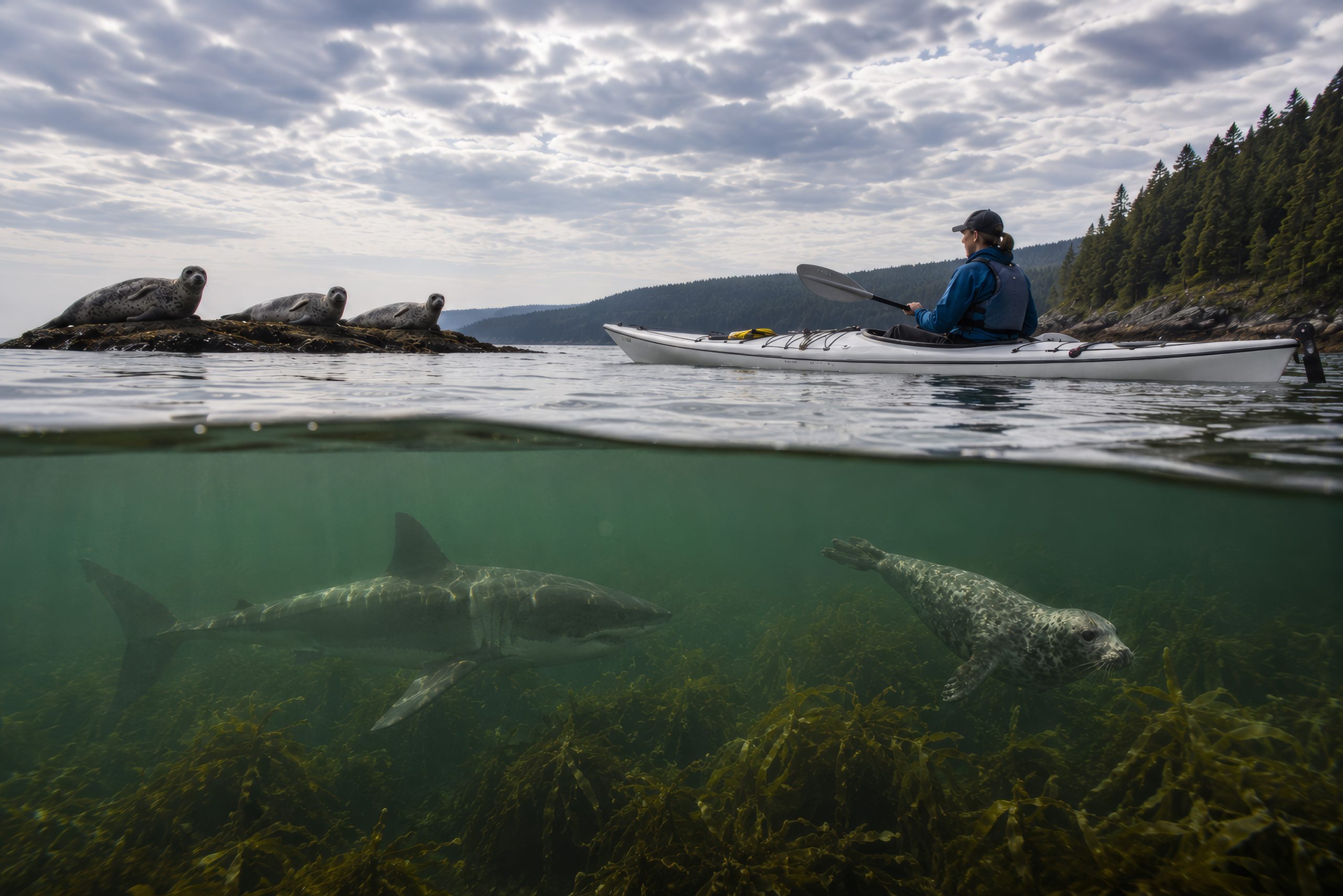


Sharks, seals, and people often share the same waters. Understanding
these interactions is key to reducing risk and promoting coexistence.
AI-assisted © ORS | All Rights Reserved
Sharks, seals, and people often share the same waters. Understanding
these
interactions is key to reducing risk and promoting coexistence.
AI-assisted © ORS | All Rights Reserved
PUBLISHED BY
IN SUPPORT OF
LAST UPDATED
23.06.2026
ABOUT THIS PUBLICATION
Understanding shark interactions in Canada provides the scientific context needed to interpret shark-related incidents in Canadian waters, including information on shark behaviour, incident classification, risk assessment, historical records, and practical recommendations for reducing the likelihood of negative interactions.
Individual incident assessments are not included in this publication. Detailed analyses of historical and contemporary cases, together with their supporting evidence and classifications, are presented separately in the Canadian Shark Attack Registry.
Understanding Shark Interactions in Canada
Version 2.0 © 2026 St. Lawrence Shark Observatory (ORS). All rights reserved.
Author: Jeffrey Hay Gallant, M.Sc., Doctoral Researcher (UQAM)
Affiliation: St. Lawrence Shark Observatory (ORS)
First published: 2022
Current edition: June 2026
Last updated: 23 June 2026
Table of contents
- Citation and use of this resource
- Notice to journalists and content creators
- Living scientific resource
- Preface
- Mission and objectives
- Editorial philosophy
- Scope and inclusion criteria
- Methodology
- Limitations of historical sources
- Why a registry?
- A history of shark incidents in Canada
- Prehistoric human–shark relationships
- Fear of sharks (Galeophobia)
- Are sharks dangerous?
- Comparative statistics
- Attack vs. incident: A case of semantics?
- Why do sharks bite?
- Who is to blame?
- CSAR incident codes
- Reducing the risk
- Recommendations for swimmers
- Recommendations for surfers and paddleboarders
- Recommendations for boaters
- Recommendations for divers
- Knowledge, respect, and coexistence
- References
Citation and use of this resource
The Canadian Shark Attack Registry is the product of ongoing historical research and scientific review conducted by the St. Lawrence Shark Observatory (ORS). Compiling and assessing these records often requires locating and interpreting rare or obscure sources, including historical newspapers, government documents, scientific publications, archival material, and eyewitness accounts spanning more than three centuries. Many original documents exist only in French or English, while some of the earliest sources are written in archaic forms of the language that require careful interpretation and contextual analysis.
Researchers, educators, journalists, students, and other users are encouraged to cite this publication when referencing information, data, analyses, or original interpretations contained within it. Proper attribution acknowledges the work involved in assembling and critically evaluating these records, enables readers to consult the original source, and supports the continued development and maintenance of this openly accessible scientific resource.
Suggested citation: Gallant, J. H. (2026b). Understanding shark interactions in Canada. St. Lawrence Shark Observatory.
In-text citation:
(Gallant, 2026b)
When referring to a specific incident, users are encouraged to include the corresponding Canadian Shark Attack Registry (CSAR) identifier (e.g., CSAR-0015) in addition to the recommended citation. These permanent identifiers provide a stable means of referencing individual records and remain valid as the registry is updated and expanded.
Notice to journalists and content creators
As per its media communications policy, the St. Lawrence Shark Observatory (ORS) does not participate in live interviews concerning shark incidents or the Canadian Shark Attack Registry.
Journalists, documentary producers, educators, and other content creators are encouraged to consult the Canadian Shark Attack Registry and Understanding Shark Interactions in Canada, which together provide the official scientific background, terminology, historical context, assessment methodology, incident classifications, and practical safety recommendations developed by ORS.
This written approach helps ensure that information is communicated accurately and consistently while reducing the risk of statements being quoted out of context, oversimplified, or sensationalised. Inquiries requiring clarification may be addressed through written correspondence or future updates published through ORS’s official communication channels.
Living scientific resource
The Canadian Shark Attack Registry and its companion publications are living scientific resources. Historical interpretations, incident classifications, behavioural assessments, species identifications, and other conclusions may be revised as new evidence becomes available. Consequently, the assessments and interpretations presented herein represent the best available understanding of the evidence at the time of publication rather than immutable historical fact.
To ensure that readers have access to the most current information, corrections, and case assessments, these resources are maintained in digital form and are not presently available in print.
Preface
Sharks, seals, and humans have shared Canadian waters for thousands of years. Although documented negative interactions remain exceptionally rare, sharks continue to inspire fascination, fear, and misunderstanding. Public perceptions are often shaped by sensational media coverage, folklore, and popular culture rather than by scientific evidence, creating a gap between perceived and actual risk.
Understanding Shark Interactions in Canada was developed by the St. Lawrence Shark Observatory (ORS) to provide the scientific context needed to better understand these encounters. Drawing on historical records, contemporary research, behavioural ecology, and incident investigations, this publication examines why interactions occur, how risk can be assessed, and what practical measures can help reduce the likelihood of negative outcomes.
The objective of this publication is neither to exaggerate nor to dismiss the risks associated with sharks. Rather, it seeks to place those risks within an evidence-based framework while recognising the important ecological role that sharks play in marine ecosystems. Understanding how and why interactions occur benefits both public safety and shark conservation.
This document should be regarded as a living resource. As new research, historical evidence, and scientific knowledge become available, interpretations and recommendations may evolve. The ORS remains committed to promoting a balanced, transparent, and scientifically grounded understanding of sharks and their interactions with humans in Canadian waters.
Mission & objectives
The Canadian Shark Attack Registry (CSAR) was established by the St. Lawrence Shark Observatory (ORS) to document, preserve, and critically evaluate reported shark incidents occurring in Canadian waters. Its purpose is not merely to catalogue events, but to assess them using transparent and consistent evidentiary standards grounded in historical scholarship and modern shark science.
The Registry serves as a scientific reference designed to improve understanding of the circumstances under which shark-related incidents occur, while acknowledging that interpretations may evolve as new evidence becomes available.
The Canadian Shark Attack Registry has four principal objectives:
1. Document Canada’s history of human–shark interactions
To compile and preserve historical and contemporary records of shark-related incidents occurring in Canadian waters, including attacks, stalking encounters, defensive interactions, scavenging events, vessel strikes, equipment damage, and other historically or scientifically significant occurrences.
2. Evaluate the evidence
To assess each reported incident using the best available historical, archaeological, documentary, biological, and scientific information. Wherever possible, the Registry seeks to distinguish documented facts from speculation, folklore, misidentification, and later embellishment while explicitly acknowledging uncertainty when it exists.
3. Improve public understanding and support risk reduction
To provide accurate and balanced information concerning shark behaviour, ecology, and the circumstances under which negative interactions occur. By promoting evidence-based understanding rather than sensationalism or complacency, the Registry seeks to contribute to informed decision-making and responsible risk reduction.
4. Support shark conservation through education
To foster a greater appreciation of sharks as ecologically important predators whose conservation is compatible with informed public safety initiatives. By replacing myths and misconceptions with evidence-based information, the Registry encourages coexistence between people and sharks.
Editorial philosophy
The Canadian Shark Attack Registry neither exaggerates nor dismisses the danger posed by sharks. Its objective is to understand and document human–shark interactions as accurately and objectively as the available evidence permits, recognising that informed public safety and effective shark conservation are complementary rather than competing goals.
Scope and inclusion criteria
The Canadian Shark Attack Registry is not intended to serve as a catalogue of every shark sighting or encounter reported in Canadian waters. Its purpose is to document incidents that are historically significant, scientifically informative, involve physical contact, result in injury or damage, or otherwise contribute meaningfully to understanding shark behaviour and risk in Canada.
As shark populations recover and observations become increasingly common, particularly in Atlantic Canada, many encounters occur that do not meet these criteria. White sharks are now observed regularly by fishers, boaters, surfers, divers, and researchers, and most such encounters involve no injury, physical contact, or unusual behaviour.
Consequently, the Registry does not attempt to document every reported sighting or close approach. Instead, inclusion is generally reserved for incidents involving injury, fatalities, physical contact, equipment damage, unusually persistent investigatory behaviour, historically important events, or interactions that substantially advance scientific understanding.
Some incidents are retained because of their historical and scientific significance. For example, the 2004 Baie-Comeau Greenland shark encounter (CSAR-0020) and the 2021 Chebucto Head white shark encounter (CSAR-0026) were among the first well-documented Canadian cases in which sharks appeared to actively investigate or repeatedly approach scuba divers without making physical contact. At the time, such observations were exceptionally rare and provided important insight into shark behaviour in Canadian waters.
Since then, similar encounters have been documented more frequently. As a result, additional diver encounters are not normally included in the Registry unless they involve physical contact, injury, equipment damage, unusually persistent behaviour, or other circumstances that provide significant scientific, historical, or public-safety value.
The Registry therefore focuses on incidents rather than routine sightings and should not be interpreted as a comprehensive database of all shark observations reported in Canada.
Methodology
The Canadian Shark Attack Registry (CSAR) applies a systematic, multidisciplinary, and evidence-based approach to the assessment of reported shark incidents occurring in Canadian waters. Each case is evaluated individually using all available lines of evidence and interpreted in light of current historical scholarship and contemporary scientific knowledge.
The Registry integrates methods and information drawn from history, archaeology, ethnohistory, marine biology, ecology, and behavioural science to determine, whenever possible:
- whether the reported event likely occurred;
- the reliability and quality of the available evidence;
- the most probable shark species involved;
- the most plausible behavioural interpretation; and
- the degree of confidence associated with each conclusion.
Because historical certainty is not always attainable, the Registry favours transparency over speculation and explicitly acknowledges uncertainty wherever it exists.
Sources of evidence
Case assessments may draw upon one or more of the following sources:
- contemporaneous newspaper reports;
- government and fisheries records;
- coroners’ reports and legal documents;
- museum collections and archival material;
- scientific publications;
- historical books, journals, and memoirs;
- eyewitness testimony;
- photographs and video recordings;
- physical evidence, including damaged vessels, equipment, or recovered shark teeth;
- archaeological evidence; and
- Indigenous oral traditions and historical accounts.[3-5 12]
Whenever possible, priority is given to primary sources and independently corroborated documentation. Secondary sources are evaluated critically and are not accepted solely because they have been widely repeated in the literature.
Biological assessment
Historical descriptions and contemporary reports are interpreted within the context of current knowledge of shark taxonomy, distribution, morphology, ecology, and behaviour.[6 7]
Factors considered during species identification may include:
- geographic location;
- season;
- habitat;
- reported body size;
- dentition;
- feeding behaviour;
- attack characteristics;
- damage patterns;
- prey availability; and
- the documented occurrence of candidate species in the region.
Where the available evidence is insufficient to support a reliable identification, the shark is classified as suspected or unknown rather than assigned to a particular species with unwarranted certainty.
Behavioural assessment
Whenever possible, incidents are also evaluated from a behavioural perspective.
Potential interpretations may include:
- predatory behaviour;
- investigatory or exploratory behaviour;
- defensive responses;
- territorial behaviour;
- competition over food resources;
- scavenging; or
- accidental contact under adverse environmental conditions.[7-9]
Because the motivations of wild animals cannot usually be determined with certainty, behavioural interpretations represent the most plausible explanation supported by the available evidence and current scientific understanding.
Classification of cases
Each incident is assigned a confidence status reflecting the strength of the available evidence.
Confirmed – Supported by reliable documentary, physical, photographic, or eyewitness evidence.
Plausible – Consistent with the available evidence but lacking sufficient corroboration for confirmation.
Unconfirmed – Reported but supported by insufficient evidence to permit a reliable assessment.
Discredited – Inconsistent with the available historical or scientific evidence, or demonstrably derived from folklore, misidentification, duplication, exaggeration, or later embellishment.
Similarly, shark species may be classified as confirmed, suspected, or unknown depending on the available evidence.
Indigenous knowledge
The Registry recognises Indigenous knowledge as an important source of historical and ecological information. Oral traditions and historical accounts preserved by First Nations communities may provide valuable insights into long-term human–shark relationships and are considered alongside archaeological findings, documentary evidence, and contemporary scientific understanding.[3-5 12]
Like all other sources of evidence, Indigenous knowledge is evaluated within its historical and cultural context using transparent and consistent standards of assessment.
Scientific revision
The Canadian Shark Attack Registry is a living scientific resource. New archival discoveries, archaeological investigations, verified observations, or advances in shark science may justify revisions to individual case assessments, classifications, or interpretations.
Guiding principle:
Every incident included in the Canadian Shark Attack Registry is evaluated on its own merits. No case is accepted solely because it has been widely repeated, nor rejected solely because it originates from oral tradition or an early historical source. The objective of the Registry is not to achieve certainty in every case, but to provide the most accurate and transparent assessment possible based on the available evidence.
Limitations of historical sources
The interpretation of historical shark incidents presents challenges that are seldom encountered in modern investigations. Many reported events occurred decades or centuries ago and are known only through fragmented archival records, newspaper accounts, missionary writings, memoirs, oral traditions, or publications produced long after the alleged incident took place. In many cases, physical evidence no longer exists, eyewitnesses cannot be interviewed, and contemporary documentation is incomplete or entirely absent.
Consequently, the Canadian Shark Attack Registry (CSAR) does not assume that every historical account is accurate. Instead, each case is evaluated using the best available evidence while considering the reliability of the source, the historical context in which it was produced, and its consistency with current historical scholarship and scientific knowledge of shark biology, ecology, and behaviour.
Several factors may complicate the interpretation of historical reports:
- Loss of primary documentation. Original records may have been destroyed, misplaced, or never existed, leaving only later summaries or second-hand accounts.
- Repeated retelling and embellishment: Stories transmitted through successive publications or oral tradition may acquire new details over time, making it difficult to distinguish historical fact from later interpretation.
- Translation and linguistic uncertainty: Many early sources were written in French, English, Latin, Mi’kmaw, Innu-aimun, or other languages and have often been translated multiple times. Changes in wording or meaning may influence the interpretation of key passages.[3 5]
- Historical nomenclature: Terms such as marache, maraîche, sea monster, or simply fish were not always used consistently and may refer to different species depending on the author, region, or historical period.[2 5]
- Changing scientific knowledge: Modern understanding of shark taxonomy, distribution, ecology, and behaviour has advanced considerably since many historical accounts were written. Earlier observers frequently lacked the biological knowledge necessary to identify species accurately.[6 7]
- Observer bias and cultural context: Missionaries, explorers, journalists, and travellers inevitably interpreted events through the cultural perspectives and literary conventions of their own era. Some accounts may therefore contain exaggeration, symbolism, or elements of folklore rather than objective observation.
- Retrospective interpretation: Modern attempts to identify shark species or infer behavioural motivations from historical descriptions necessarily involve interpretation and should not be regarded as definitive conclusions.
For these reasons, the Registry applies a cautious and evidence-based approach to historical incidents. No case is accepted or rejected solely because of its source. Instead, archaeological evidence, Indigenous knowledge, archival records, historical publications, physical evidence, eyewitness testimony, ecology, and modern shark science are considered collectively before a conclusion is reached.[3-7 12]
Readers should therefore recognise that the degree of confidence associated with individual cases varies considerably. Some incidents are supported by contemporaneous documentation, physical evidence, or multiple independent sources, whereas others rely on a single historical account or remain impossible to verify. In keeping with scientific practice, the Registry acknowledges these uncertainties openly and may revise individual assessments as new evidence becomes available.
Key principle:
The absence of corroborating evidence should not automatically be interpreted as evidence that an event did not occur. Conversely, claims involving unusual or exceptional circumstances require correspondingly robust supporting evidence before they can be accepted as historical fact.
Why a registry?
The Canadian Shark Attack Registry (CSAR) was created by the St. Lawrence Shark Observatory (ORS) following a series of confirmed and suspected incidents involving white sharks in Nova Scotia, including the Gulf of St. Lawrence, in 2021. Since then, additional encounters involving swimmers, surfers, stand-up paddleboarders, divers, and vessels have continued to be reported in Atlantic Canada.
Whether these observations reflect improved reporting, changes in shark distribution, a recovering Northwest Atlantic population, or a combination of factors remains the subject of ongoing research. Based on the available historical and ecological evidence, the St. Lawrence Shark Observatory currently considers the increase in observations to be most consistent with the recovery of a previously depleted Northwest Atlantic white shark population following decades of legal protection, together with improved public reporting and scientific monitoring.[6] Regardless of the underlying cause, threatening or violent encounters, past and present, must be documented and understood if they are to be predicted, prevented, and placed into their proper scientific context.
Understanding shark incidents is not about creating fear. It is about reducing uncertainty.
The Registry is maintained by a dedicated team of volunteers, researchers, and scientists, all united by a profound respect for sharks and a commitment to their conservation. Members of the St. Lawrence Shark Observatory began studying these often-misunderstood animals in the 1990s, when relatively few Canadians were aware of their presence in domestic waters and long before organised shark conservation gained widespread momentum in the country.
Since then, the Observatory has conducted numerous research expeditions, published peer-reviewed scientific studies, and contributed several Canadian firsts in shark research. Much of this work has taken place underwater on scuba, providing first-hand experience with hundreds of sharks encountered under a wide variety of conditions. Most of these encounters have been exhilarating; a few have been genuinely intimidating. Consequently, the Canadian Shark Attack Registry is founded not only on historical research and scientific literature but also on decades of practical field experience and collaboration with colleagues around the world.
Our objective is straightforward: to protect both humans and sharks by documenting what has happened, understanding what is happening now, and anticipating what may occur in the future.
We believe the public benefits from a realistic understanding of sharks and the risks associated with entering their environment. Sharks should neither be feared irrationally nor portrayed as harmless. They are predators, not of humans, but predators nonetheless, and rare incidents will continue to occur regardless of how much we admire or dislike them. Recognising that occasional encounters, bumps, bites, or attacks are inevitable is neither fearmongering nor clairvoyance; it is a reasonable conclusion based on the biology and behaviour of large marine predators.
Conservation should never depend on denying biological reality.
Like it or not, white sharks are now being documented in Atlantic Canada and the Gulf of St. Lawrence more frequently than in previous decades. At the same time, marine ecosystems are changing under the combined influences of climate variability, warming ocean temperatures, shifting prey distributions, and recovering populations of both sharks and seals.[6]
As increasing numbers of people enter the marine environment for recreation and work, opportunities for interaction inevitably increase. The St. Lawrence Shark Observatory therefore considers it likely that shark incidents in Canada will also become more frequent over time, although they are expected to remain exceptionally rare in absolute terms.
The resurgence of the white shark is ultimately good news for the Northwest Atlantic ecosystem. As an apex predator, it plays an important ecological role in maintaining healthy marine food webs. However, coexistence requires adaptation. By promoting education, situational awareness, and evidence-based prevention rather than fear or denial, we believe it is possible to minimise the already low risk of shark bites while fostering greater acceptance of these remarkable animals.
It is far better to establish a factual understanding of sharks while public discussion remains measured than to attempt to correct misinformation in the aftermath of a highly publicised incident.
Our decades of experience working with government agencies, fishers, coastal communities, conservation organisations, researchers, journalists, and the public have demonstrated that different stakeholders often view sharks through very different lenses. Yet we have also learned that when concerns are acknowledged honestly and information is communicated transparently, most people are willing to support shark conservation.
Trust is built on openness.
The same principle applies to the Canadian Shark Attack Registry.
Hiding reality behind misleading statistics or gratuitous claims that sharks are harmless or pose no danger to humans helps no one, including sharks. Some may argue that documenting attacks perpetuates negative stereotypes or damages public perception. We respectfully disagree.
In our view, the Registry is itself a conservation initiative.
By replacing myth with evidence, speculation with investigation, and sensationalism with scientific context, it promotes a mature understanding of sharks that benefits both public safety and conservation. Ultimately, informed coexistence is far more sustainable than either fear or denial.
Our philosophy is perhaps best summarised by the words of our late friend and colleague Aidan R. Martin, whose work inspired the careers of many shark researchers:
“If we are going to continue entering the shark’s domain, rather than clearing the sea of sharks, it makes much more sense to become familiar with the ways of sharks—to become Shark Smart.”
— Aidan R. Martin, Shark Smart [17]
Key message:
The Canadian Shark Attack Registry exists not to sensationalise shark incidents, but to document and understand them. Honest, evidence-based communication strengthens both public safety and shark conservation by replacing myth and denial with knowledge and preparedness.
History of shark incidents
Although sharks have inhabited the world’s oceans for more than 400 million years, documented interactions between sharks and humans have remained exceptionally rare throughout Canada’s history. Nevertheless, archaeological discoveries, Indigenous knowledge, historical records, and modern scientific observations demonstrate that such encounters are not a recent phenomenon and long predate Confederation, industrialisation, and contemporary concerns surrounding climate change.[1-6]
The history of shark incidents in Canada did not begin with modern science or social media. Archaeology, Indigenous knowledge, and historical records together demonstrate that interactions between humans and sharks long predate European settlement.
The earliest evidence derives from archaeology and Indigenous oral traditions preserved by early missionaries and explorers. Shark teeth, including those of the white shark (Carcharodon carcharias), recovered from ceremonial and mortuary contexts throughout the Maritime Peninsula demonstrate that Indigenous peoples maintained a relationship with large sharks for thousands of years.[4] Likewise, Mi’kmaw traditions recorded by Father Pierre-Antoine-Simon Maillard describe repeated encounters with a formidable marine predator capable of attacking bark canoes and causing fatalities, while the memoirs of Jacques Merle recount the widespread fear inspired by similar animals known as maraches, whose dentition and reported behaviour are consistent with large lamnid sharks.[3 5] Together with the Mi’kmaw concept of the “Bad Fish” (wabinmek ’wa), these independent lines of evidence strongly suggest that interactions between Indigenous peoples and large sharks formed part of long-standing ecological knowledge rather than isolated folklore.[3-5 12]
The earliest known written references to sharks in what is now Canada date to the seventeenth century. In 1672, Nicolas Denys described sharks and skates as abundant in parts of the Gulf of St. Lawrence, while in 1691 Chrestien Le Clercq recounted the story of a fatal shark attack involving a swimmer.[1 2] Although the location and historical authenticity of the latter incident cannot be established with confidence, it nevertheless demonstrates that sharks were already recognised as potentially dangerous animals in early colonial writings.
Historical reports become more numerous during the nineteenth and early twentieth centuries but vary considerably in reliability. Some appear to represent folklore, literary embellishment, or repeated second-hand accounts, whereas others are supported by contemporaneous documentation or physical evidence. Consequently, each incident included in the Canadian Shark Attack Registry is evaluated individually rather than accepted solely because it has been widely cited or rejected merely because it originates from an early source.
The Canadian Shark Attack Registry does not accept or reject historical accounts based on reputation alone. Every case is evaluated individually using the best available historical, archaeological, biological, and scientific evidence.
Among the strongest historical records are several incidents involving fishing vessels attacked by large lamnid sharks while engaged in active fishing operations. The 1874 St. Pierre Bank incident (CSAR-0006), in which shark teeth were reportedly recovered from a damaged dory after repeated strikes by a large shark, provides compelling historical evidence of such an encounter and is consistent with a white shark. Likewise, Canada’s best-documented fatal shark incident occurred near Fourchu, Nova Scotia, in 1953 (CSAR-0017) when a large white shark rammed and holed a wooden lobster boat, causing it to capsize. One fisherman drowned while attempting to swim ashore, although there was no evidence that he was bitten by the shark. The recovery and independent identification of shark teeth embedded in the damaged hull make this one of the strongest authenticated shark incidents in Canadian history.
Contemporary records reveal a similarly low frequency of interactions despite increased recreational use of coastal waters, improved communications, and the widespread availability of smartphones and social media. Recent incidents have included multiple encounters between scuba divers and white sharks off Halifax (CSAR-0026), a suspected white shark bite at Margaree Island in 2021 (CSAR-0025), the first documented chance encounter between a diver and a white shark in the Gulf of St. Lawrence in 2025, and the 2025 strike on a stand-up paddleboard off Cherry Hill Beach, Nova Scotia (CSAR-0030). Even so, confirmed injuries remain exceptionally uncommon, and fatalities are rarer still.[6 7]
Taken together, archaeology, Indigenous knowledge, colonial writings, museum collections, fisheries records, verified observations, and modern telemetry demonstrate that large sharks, and the occasional negative interaction with humans, have long formed part of Canada’s maritime history. The historical and scientific record therefore supports the conclusion that white sharks are not newcomers to Atlantic Canada or the Gulf of St. Lawrence.
The available historical and ecological evidence suggests that white sharks are reoccupying parts of their former range in Atlantic Canada rather than colonising a new one.
Based on the available historical and ecological evidence, the St. Lawrence Shark Observatory currently considers the increase in white shark observations reported during recent decades to be most consistent with the recovery of a previously depleted Northwest Atlantic population, together with substantially improved public reporting and scientific monitoring. This interpretation represents the Observatory’s current working hypothesis and may be refined as additional evidence becomes available.
Key message:
The Canadian Shark Attack Registry neither seeks to validate historical accounts uncritically nor to dismiss them without examination. Its purpose is to evaluate every reported incident objectively using the best available historical, archaeological, documentary, biological, and scientific evidence while acknowledging uncertainty where it exists.
The Canadian Shark Attack Registry adopts neither an alarmist nor a dismissive view of Canada’s history of human–shark interactions. Instead, it seeks to document and critically assess each reported incident using transparent and consistent evidentiary standards while recognising that uncertainty is an inherent part of historical research. In doing so, the Registry aims to preserve an important aspect of Canada’s maritime heritage, improve public understanding of sharks and the rare circumstances under which negative interactions occur, and contribute to both informed public safety and effective shark conservation.
Prehistoric human–shark relationships
The white shark was no stranger to the prehistoric peoples of the Maritime Peninsula, including the Mi’kmaq, who knew it by several names, including wabinmek ’wa. Unlike much of Canadian society today, Indigenous peoples living along the Atlantic coast were intimately familiar with sharks, which appear to have occupied an important ecological, cultural, and possibly spiritual role throughout the region encompassing present-day Atlantic Canada, the Gulf and Estuary of the St. Lawrence, and parts of New England.
This relationship, spanning thousands of years, is evidenced by the discovery of shark teeth, particularly those of the white shark (Carcharodon carcharias), in mortuary and ceremonial contexts dating from approximately 5,000 to 950 years before present (B.P.).[4]
Sharks in the archaeological record
White shark teeth have been recovered from archaeological sites throughout northeastern North America and as far inland as present-day Montréal.[4] To the Maritime Archaic hunter-gatherers, these teeth may have symbolised an animal possessing exceptional predatory abilities and may also have reflected the central importance of the sea in their daily lives.
From a spiritual perspective, shark teeth may have been attributed protective or mystical qualities, while their exchange through trade networks likely reinforced relationships between coastal and inland communities. The presence of white shark teeth in locations where sharks themselves did not occur suggests that these objects were valued well beyond their place of origin.
Thousands of years before European settlement, Indigenous peoples of the Maritime Peninsula already knew, respected, and interacted with the white shark.
Taken together, the archaeological evidence supports the conclusion that white sharks have long been part of Atlantic Canadian ecosystems. It also provides additional support for the hypothesis that the species’ present-day occurrence in Atlantic Canada and the Gulf of St. Lawrence is more consistent with the recovery of a historically depleted population than with a recent climate-driven colonisation.[4 6]
Wabinmek ’wa
The Mi’kmaq were accomplished seafarers who regularly undertook long voyages across open water to reach distant settlements and seasonal hunting grounds, including the Magdalen Islands and southern Newfoundland.² They even developed a specialised seaworthy canoe designed specifically for these journeys.[11]
In addition to storms, strong currents, and navigational hazards, Mi’kmaw oral traditions describe another danger: large predatory fishes capable of pursuing and attacking bark canoes.
Around 1731, while on present-day Prince Edward Island, the Mi’kmaw shaman Lkimu (also known as Arguimaut) recounted such experiences to Father Pierre-Antoine-Simon Maillard, who later recorded the following account (translated by JHG): [3]
“They often travel at great risk… The bad fish that often infest these seas do not allow us to travel without worry or fear… They come and attack our canoes so suddenly from behind that they sink them with those who are in them… When we see them approaching, we seize a pole tipped with a hard bone and attempt to wound the animal… When two attack a canoe, there is little we can do…”
The narrative continues by describing improvised defensive weapons, the throwing of meat, furs, and even hats to distract the pursuing animal, and the use of leafy branches attached to the stern of canoes because experience suggested that the mysterious predator avoided them.
Whether interpreted literally or symbolically, the account leaves little doubt that these “bad fish” inspired genuine fear among Mi’kmaw seafarers.
White shark or orca?
Some historians have tentatively proposed that Maillard’s “bad fish” may have referred to the orca (Orcinus orca).[12]
The St. Lawrence Shark Observatory considers the white shark to be the more parsimonious interpretation.
First, confirmed aggressive interactions between wild orcas and humans are extraordinarily rare and contrast sharply with the repeated, violent, and apparently lethal attacks described in Maillard’s account. Second, while Mi’kmaw terminology exists for several sharks, including wabinmek ’wa, we have been unable to identify a traditional Mi’kmaw name specifically referring to the orca. Finally, the behaviours described, including attacks on bark canoes and the apparent use of pointed weapons to repel the attacker, are arguably more consistent with a large shark than with an orca.
Although certainty is impossible, the available evidence appears more compatible with the white shark hypothesis.
The marache
A second historical clue appears in the memoirs of Jacques Merle (Father Vincent de Paul), who described an incident occurring during a canoe journey from Tracadie to the Strait of Canso in 1824 (translated by JHG): [5]
“The Mi’kmaq who were taking me saw three monstrous fish called maraches and feared them greatly because they are very dangerous… Their teeth resemble gardeners’ knives or slightly curved razors… They often pursue boats and attack them violently. Bark canoes cannot resist them; with a single bite they split them open and sink them.”
This description provides an important clue regarding the identity of the animal.
The comparison of the teeth to knives, saws, and razors corresponds closely to the serrated dentition of the white shark and bears little resemblance to that of an orca. Likewise, the reported ability to split bark canoes is entirely consistent with the capabilities of a large lamnid shark.
The term marache itself is also noteworthy. It closely resembles maraîche, the traditional French name for the porbeagle (Lamna nasus), a species that has often been confused with juvenile white sharks. In addition, marache is a Basque word meaning “shark.” Given centuries of contact between Basque fishers and the Mi’kmaq, it is entirely plausible that the term was adopted locally and applied to large sharks in general, including the white shark.
A relationship measured in millennia
Taken together, archaeological discoveries, Indigenous oral traditions, missionary writings, and early historical memoirs suggest that large sharks, and particularly the white shark, formed a long-standing component of the marine environment used by the Indigenous peoples of the Maritime Peninsula.
Although individual accounts remain open to interpretation, the convergence of multiple independent lines of evidence strongly supports the conclusion that human–white shark relationships in Atlantic Canada predate European settlement by thousands of years.
Key message:
Far from being recent arrivals, white sharks appear to have been familiar animals to the Indigenous peoples of Atlantic Canada for millennia. Archaeology, oral tradition, and historical documents together suggest a long history of coexistence that predates written records and challenges the notion that the species is a modern visitor to the region.
The fear of sharks
Despite their fearsome reputation, sharks are not man-eaters. Encounters resulting in injury or death are exceptionally rare, particularly in Canada. Yet sharks inhabit all three of Canada’s oceans, including the Northwest Atlantic, Northeast Pacific, and Arctic, and among them is the largest and most notorious predatory shark in Canadian waters: the white shark (Carcharodon carcharias).
“The oldest and strongest emotion of mankind is fear, and the oldest and strongest kind of fear is fear of the unknown.”
— H. P. Lovecraft, Supernatural Horror in Literature (1927)[15]
The fear of sharks, known as galeophobia (or less commonly selachophobia), has likely existed for as long as humans have ventured onto the sea. Throughout history, stories of sea monsters, giant fishes, and mysterious disappearances have fuelled our imagination, while modern shark attacks often generate intense media attention precisely because they are so unusual.
For many people, the fear is rooted more in culture than in personal experience. Most individuals will never encounter a shark in the wild, yet films, documentaries, news reports, and popular fiction have left an indelible impression that sharks are lurking beneath every wave. Blockbuster films such as Jaws and more recent productions like The Shallows have reinforced an image of sharks as relentless killers despite overwhelming scientific evidence to the contrary.[14]
For most people, the fear of sharks is learned rather than lived.
The white shark is responsible for the majority of documented shark incidents in Canada, but even this species rarely bites humans. In fact, the extraordinary rarity of attacks is one of the principal reasons they attract such disproportionate public attention.
For those of us who regularly enter the shark’s domain armed with knowledge and experience, however, the fear can still be very real. We understand that attacks are highly unusual, but we also recognise that they are possible. When visibility is poor, seals are abundant, and white sharks are known to be present, there is no room for complacency. Under such conditions, we dive with heightened situational awareness and our heads constantly on swivels.
This distinction is important.
There is a profound difference between irrational fear and healthy respect.
The former is based on misconception and exaggeration; the latter on knowledge, experience, and an appreciation of risk. The St. Lawrence Shark Observatory believes that effective conservation and public safety both depend on replacing the first with the second. Fear itself is therefore not the problem. Ignorance is.
Knowledge does not eliminate fear. It transforms irrational fear into informed caution.
The objective should never be to convince people that sharks are harmless or that concern is unwarranted. Nor should it be to portray sharks as mindless killers waiting for the next opportunity to attack. Rather, it should be to understand when and why risk exists and to adapt our behaviour accordingly.
Sharks deserve neither our hatred nor our blind trust.
They deserve our respect.
Key message:
Fear of sharks is understandable, but it should be guided by evidence rather than myth. For most people the risk is extraordinarily small, while for those knowingly entering shark habitat under specific conditions, informed caution remains both rational and appropriate.
Are sharks dangerous?
The short answer is yes… but there is more to it than meets the eye.
What really matters is the level of risk associated with each species, the personalities of individual sharks—not all sharks of the same species or sex behave alike—as well as compounding factors such as the presence of other sharks competing for the same food, a shark’s age, sea conditions, and human activities such as fishing, spearfishing, or surfing. In other words, when a shark’s judgement is not impaired by adverse environmental conditions, inexperience, or competition, there is very little chance that it will bite a human.[8]
Clearly, sharks do not seek out humans as prey, and the overall risk of being bitten is extraordinarily low. Nevertheless, the combination of their predatory nature, formidable offensive capabilities, and known environmental variables, such as poor visibility, the presence of seals, or the availability of other prey, makes some of the larger species inherently dangerous.
Unfortunately, there is a growing tendency among well-meaning conservation advocates to trivialise the risk posed by sharks in an effort to improve public perception. This impulse is understandable: many shark species are threatened or endangered, and public support is essential for their protection. But who wants to protect a mindless killer?
As a result, the public narrative has, in some circles, shifted almost 180 degrees. Once portrayed as demonic man-eaters, sharks are now sometimes depicted as harmless fish simply going about their business while posing virtually no danger to humans. The St. Lawrence Shark Observatory considers this overcorrection to be counterproductive. Generalising the behaviour of more than 540 recognised shark species to support conservation efforts ultimately weakens the message, because every new incident inevitably revives the same question: Are sharks dangerous or not?
“The need to protect sharks is real, but denaturing their character and trivialising the risk of attacks in the name of conservation does them, and us, a disservice.”
— Jeffrey Hay Gallant, St. Lawrence Shark Observatory
By contrast, society has long accepted that potentially dangerous wild animals can also deserve protection. Wildlife documentaries and natural history programmes have inspired millions of people to appreciate species known to attack humans, including the hippopotamus. Yet hippos are estimated to kill between 500 and 3,000 people every year, making them the deadliest mammal after humans and substantially more lethal than sharks.[16] Likewise, fatal encounters with white bears are considerably rarer than shark attacks, yet few would argue that white bears are harmless. They remain iconic ambassadors for Arctic conservation despite their very real capacity to kill people.
Why, then, the double standard?
What is it about sharks that makes them so unlovable that we feel compelled to alter the narrative in order to generate compassion?
Presenting sharks as essentially harmless may also create a false sense of security, encouraging people to let their guard down and thereby increasing the likelihood, however remote, of a serious encounter. When the inevitable tragedy does occur, the resulting media frenzy and lack of public understanding often produce sensational headlines, calls for culls or other destructive responses, and continued indifference toward the far greater conservation crisis posed by the illegal shark fin trade and overfishing.
Blindly dismissing the danger posed by sharks is no more helpful than exaggerating it.
What is needed instead is a mature, balanced, and scientifically grounded understanding of shark behaviour and ecology. Such an understanding improves our ability to anticipate and help prevent negative interactions while recognising that, in most cases, shark bites represent extremely rare instances of being in the wrong place at the wrong time.
Sharks deserve our respect, not our scorn or derision.
Ultimately, conservation should not depend on denying biological reality. Sharks are apex or mesopredators that have evolved over hundreds of millions of years as highly efficient hunters. Acknowledging that some species are capable of seriously injuring or killing humans does not undermine the case for their protection. On the contrary, a realistic appreciation of both their ecological importance and their inherent capabilities is more likely to foster informed coexistence than either fearmongering or false reassurance.
Key message:
Sharks are dangerous animals, but danger should not be confused with probability. The risk of a serious encounter remains exceptionally low, and effective conservation depends not on denying that sharks can be dangerous, but on understanding when, where, and why that danger exists.
Comparative statistics: Are toasters really more dangerous than sharks?
The short answer is no.
More importantly, even if they were, the comparison would tell us very little about the actual risk of being bitten by a shark.
Comparative statistics are meaningful only when the data sets being compared are truly equivalent. Claims that toasters kill more people than sharks are frequently repeated in newspapers, documentaries, and on social media. However, despite extensive searching, the Canadian Shark Attack Registry has been unable to identify a reliable primary source or peer-reviewed study supporting the commonly cited figures. Regardless of whether the claim is accurate, the comparison itself is fundamentally flawed because it contrasts populations with vastly different levels of exposure.
The same reasoning applies to many of the reassuring comparisons frequently invoked to minimise the risk of shark attacks. Heart disease, cancer, dog bites, bee stings, motor vehicle collisions, lightning strikes, and falling coconuts are all commonly cited as being more dangerous than sharks. While statistically true in many cases, these comparisons often involve completely different populations, exposure times, geographic regions, and patterns of human behaviour. As a result, they provide little meaningful information to someone attempting to evaluate the actual risk associated with entering the ocean.
Statistics are useful only when the populations being compared are exposed to comparable levels of risk.
In reality, stand-alone annual figures should be sufficient to illustrate the rarity of shark bites. Worldwide, an average year typically records approximately one hundred reported shark bites of all types, resulting in roughly ten fatalities. These numbers alone demonstrate that the probability of being killed by a shark is extraordinarily low without resorting to questionable analogies involving household appliances or tropical fruit.
And what about falling coconuts?
Perhaps no comparison is repeated more frequently than the claim that people are more likely to be killed by a falling coconut than by a shark.
But how relevant is this statement to someone entering the ocean in Canada, where coconut trees do not grow?
This illustrates the central weakness of many comparative statistics. Unless the comparison applies equally to the location, circumstances, and activities under consideration, it offers little practical value. Rather than reassuring the public with unrelated global statistics, a far more useful approach is to provide straightforward information about the local environment, the species present, and the circumstances under which encounters are most likely to occur.
Risk is local. The most meaningful statistics are those that apply to the place and activity in question.
If peace of mind is the objective, understanding the seasonal occurrence and behaviour of white sharks in Canadian waters is likely to be far more valuable than memorising comparisons involving toasters or coconuts. White shark bites remain exceptionally rare, but individuals can reduce an already very low level of risk even further by becoming familiar with local conditions, avoiding predictable high-risk situations, and adapting their behaviour accordingly.
At the same time, it is important to acknowledge that white sharks are now being documented in Atlantic Canada more frequently than in previous decades. Based on the available historical and ecological evidence, the St. Lawrence Shark Observatory currently considers this increase to be most consistent with the recovery of a previously depleted Northwest Atlantic population following decades of legal protection, together with improved public reporting and scientific monitoring. This interpretation represents the Observatory’s current working hypothesis and may be refined as additional evidence becomes available.[6]
One statistic does not fit all
According to the International Shark Attack File (ISAF), the estimated lifetime risk of being killed by a shark in the United States is approximately 1 in 4.3 million. This figure, however, is calculated using the entire U.S. population, even though millions of Americans live hundreds or thousands of kilometres from the coast and may never enter the ocean. A resident of Kansas who never visits the sea clearly does not face the same level of risk as a surfer in California or a commercial diver in Florida.
Likewise, global estimates obscure enormous regional variation. The actual probability of a shark encounter depends on numerous interacting variables, including geographic location, season, water temperature, prey availability, shark species, shark abundance, environmental conditions, and the nature of the human activity involved.
The highest quantified risk currently published comes from southern Western Australia. Sprivulis (2014) estimated that during spring, when humpback whales and their calves migrate close to shore, the risk of a fatal shark bite to scuba divers diving approximately 50 metres offshore in waters deeper than five metres could approach 1 in 15,000, still an exceptionally low probability, but many orders of magnitude greater than the often-quoted lifetime average calculated for the United States.[10]
Similarly, a person who chooses to swim or dive near a large grey seal colony off Lunenburg, Nova Scotia, during the peak white shark season in late summer may face a higher level of risk than suggested by generic worldwide statistics. Even then, the absolute probability of a dramatic encounter remains very small, but it is unlikely to be accurately represented by a single number calculated across an entire country or continent.
No single statistic can describe the risk for every place, every season, and every activity.
The level of risk at any location changes continuously according to multiple variables, including time of year, shark species, prey distribution, weather, water clarity, and human behaviour. These conditions may vary seasonally, daily, or even hourly. Consequently, the St. Lawrence Shark Observatory considers it essential that coastal managers, beach users, divers, surfers, and other ocean enthusiasts have access to accurate local information enabling them to make informed decisions and conduct basic risk assessments.
Ultimately, trivialising shark risk through misleading comparisons does little to improve either public safety or public understanding. A more constructive approach is to acknowledge that while shark bites are exceptionally rare, they can often be made even less likely through an understanding of local shark ecology, seasonal occurrence, and responsible behaviour.
Rather than reassuring the public with skewed comparisons, a general understanding of local sharks and environmental conditions could significantly reduce the risk even further, save human lives, and ultimately benefit endangered shark populations, since even rare attacks may generate negative publicity or calls for destructive deterrent measures.
Key message:
The rarity of shark bites should not be used to dismiss them, just as their severity should not be used to exaggerate them. The most meaningful assessment of risk is one based on local conditions, scientific evidence, and an informed understanding of shark ecology rather than simplistic statistical comparisons.
Attack vs. incident: A case of semantics?
According to Oxford Languages, an attack is an aggressive or violent action against a person or place, whereas incident is a far broader term that can describe anything from a chance encounter to an assault, a military confrontation, or any noteworthy event.[13]
Proponents of expressions such as incident, interaction, or negative encounter raise valid points. Not every shark bite is predatory in nature, and the circumstances leading to a confrontation are often complex. Nevertheless, the St. Lawrence Shark Observatory considers that when a shark bites or slashes a person, regardless of whether the behaviour is exploratory, defensive, territorial, or predatory, the end result remains an aggressive act that may inflict catastrophic injuries or death.
In this context, the term attack is both scientifically and linguistically appropriate.
What’s in a name?
We fully appreciate the concern that the word attack may inadvertently reinforce the shark’s long-standing reputation as a mindless man-eater. Yet we also believe that replacing it systematically with softer terminology risks obscuring the seriousness of what has actually occurred.
The purpose of the Canadian Shark Attack Registry is not to sensationalise these exceptionally rare events but to document them accurately and consistently. Passive encounters, which are far more common, are certainly valuable from a scientific perspective, but they generally contribute less to public education and injury prevention than those involving threatening behaviour or physical contact.
For this reason, the Registry focuses primarily on attacks while also documenting selected stalking events and other unusual encounters that may provide insight into shark behaviour and risk assessment.
Instead of as rare as hens’ teeth, why not as rare as a shark attack?
As discussed in the preceding chapter, the Canadian Shark Attack Registry considers that avoiding words depicting violence solely for conservation purposes may inadvertently create a false sense of security, indifference, or complacency. Public safety is better served by straightforward education on shark biology, behaviour, and distribution than by minimising risk through terminology that may confuse rather than clarify.
At the same time, recognising a shark attack for what it is should not be interpreted as portraying sharks as malicious or bloodthirsty. On the contrary, the extraordinary rarity of such events arguably highlights the remarkable restraint exercised by animals fully capable of inflicting catastrophic injuries.
“When a person accidentally kills another, it is called manslaughter, not an incident. Likewise, when a shark bites and sometimes inadvertently kills a human while acting out of curiosity, competition, or predation, calling it an incident may be overly conciliatory and risks obscuring the seriousness of the event.”
— Jeffrey Hay Gallant, St. Lawrence Shark Observatory
Why do sharks bite?
Because sharks lack hands, they use their mouths and teeth to investigate objects, manipulate prey, establish dominance, defend themselves, and feed. Consequently, no single word, including attack, perfectly describes every shark bite.
Some bites appear predatory. Others may be defensive, territorial, or exploratory. Many are quickly attributed to mistaken identity in an effort to explain the behaviour of the shark, yet recent research suggests that the situation may be more nuanced than previously believed.[8] Rather than being explained by a single mechanism, shark bites likely arise from a complex interplay of sensory perception, environmental conditions, individual behaviour, age, experience, prey availability, and circumstances.
The feeding preferences of sharks evolved long before the appearance of humans. After millions of years of evolution, many species are instinctively programmed to travel vast distances and congregate at productive foraging grounds where they exploit prey offering a favourable energetic return.[9]
Humans generally do not satisfy this requirement.
Compared with pinnipeds such as seals, people provide relatively little nutritional reward while presenting an unfamiliar body shape and the potential for resistance. This may partly explain why many sharks bite only once before disengaging from an injured person.
But why do they disengage?
Does the shark recognise that it has bitten an unsuitable prey item? Was the bite merely exploratory? Was it attempting to drive away a perceived competitor? Or was it responding defensively to an unfamiliar stimulus?
In most cases, we simply do not know.
Recent work by Ryan and colleagues has proposed that the still-developing visual systems of juvenile white sharks may predispose them to mistaken identity under certain circumstances, leading them to bite objects resembling their normal pinniped prey.[8] This hypothesis is of particular interest in Atlantic Canada and the Gulf of St. Lawrence, where increasing numbers of juvenile and subadult white sharks are now being documented.[6]
Adult white sharks may represent a different situation altogether. Research suggests they occur in Canadian waters less frequently than younger individuals, and their more developed sensory capabilities and experience may enable them to discriminate potential prey more effectively except under particularly adverse environmental conditions.[7]
More than semantics
Not every shark-related event qualifies as an outright attack.
Some involve accidental contact, investigatory bumps, brief periods of apparent curiosity, or other behaviours that never escalate to biting. Likewise, it is often impossible to determine whether a shark following a swimmer or diver is displaying predatory interest, simple curiosity, territoriality, or another motivation altogether.
Yet benign situations can change rapidly.
A shark that appears merely inquisitive may become increasingly assertive if its interest is maintained or if environmental conditions change. Consequently, whenever a shark approaches too closely for comfort, the safest course of action is usually to leave the water in a calm and controlled manner rather than attempting to interpret its intentions.
Ultimately, the debate over whether to use the word attack or incident is, in many respects, one of philosophy rather than biology.
The St. Lawrence Shark Observatory does not claim authority over the terminology used by other researchers, organisations, or members of the public. Individuals should feel free to adopt whichever terms they consider most appropriate.
For the purposes of the Canadian Shark Attack Registry, however, we believe that honesty, clarity, and consistency are best served by describing genuinely violent encounters as attacks, while recognising that the motivations underlying those attacks may differ greatly and are often impossible to determine with certainty.
Key message:
Not every shark bite is predatory, and not every encounter is an attack. Nevertheless, when a shark inflicts a violent injury on a person, the St. Lawrence Shark Observatory considers the term attack to be an accurate and appropriate description that neither demonises the shark nor diminishes the seriousness of the event.
Who is to blame?
The question often arises after a shark bite: Who is to blame?
The answer depends largely on perspective.
From a scientific standpoint, shark incidents are commonly divided into two broad categories: unprovoked and provoked.
An unprovoked attack occurs when a shark bites a live human in the shark’s natural habitat without any deliberate human action directed toward the animal.
A provoked attack occurs when the bite follows some form of direct or indirect human interaction with the shark, including touching, grabbing, feeding, harassing, attempting to capture it, spearfishing, diving outside a protective cage while chumming, or otherwise interfering with its normal behaviour.
These definitions are practical tools used by researchers to classify events consistently. They do not imply fault in a legal or moral sense.
Unprovoked does not mean that nothing happened. It simply means that the human did not intentionally interact with the shark before the bite occurred.
Some observers argue that the distinction itself is misleading.
From their perspective, every person who voluntarily enters the ocean where sharks live is, by definition, entering the animal’s domain and accepting the possibility, however remote, of an encounter.
The late shark biologist and conservationist Peter Benchley expressed this idea eloquently:
“For all we read and hear about unprovoked shark attacks, I’ve come to believe that there’s no such thing. We provoke a shark every time we enter the water where sharks happen to be, for we forget: the ocean is not our territory, it’s theirs.”
— Peter Benchley, Shark Trouble[14]
While this philosophical perspective is thought-provoking, it should not be interpreted as placing blame on the victim.
People have every right to swim, dive, surf, paddle, fish, and enjoy the ocean. At the same time, entering any natural environment inhabited by large wild predators inevitably involves some degree of risk.
The same principle applies on land.
A hiker entering grizzly bear country accepts that bears may be present. A photographer working near bison understands that the animals are capable of charging. A diver entering known white shark habitat likewise accepts that the possibility of an encounter, however unlikely, cannot be reduced to zero.
The responsibility therefore lies less in assigning blame than in recognising reality.
The ocean belongs neither to sharks nor to humans. It is a shared environment in which both must coexist.
Understanding local conditions, respecting wildlife, and avoiding predictable high-risk situations are among the most effective ways of reducing the already very small probability of a shark bite.
Likewise, recognising that sharks are acting according to instincts shaped by millions of years of evolution helps avoid the temptation to assign human motives such as malice, vengeance, or cruelty to their behaviour.
When a shark bites a person, it is not making a moral decision.
It is behaving as a shark.
For this reason, the Canadian Shark Attack Registry considers the search for someone to blame to be less productive than the search for factors that contributed to the event and lessons that may help prevent similar incidents in the future.
Ultimately, coexistence requires responsibility on both sides: sharks should be allowed to fulfil their ecological role as top predators, while humans should strive to understand the environments they choose to enter.
Key message:
Rather than asking who is to blame after a shark bite, it is often more constructive to ask why the incident occurred and what can be learned from it. Understanding risk, not assigning fault, is the foundation of both public safety and shark conservation.
CSAR incident codes
The Canadian Shark Attack Registry (CSAR) uses a series of standardised incident codes to classify shark-related events according to the most probable circumstances surrounding each occurrence. These codes facilitate scientific analysis, promote consistency between case files, and allow readers to understand the general context of an event at a glance.
Because the motivations of wild animals cannot usually be determined with certainty, the assigned codes should be regarded as the most plausible interpretation supported by the available evidence, rather than as definitive conclusions. As new information becomes available, classifications may be revised.
The purpose of the coding system is not to assign blame, but to describe the most probable circumstances surrounding an event.
The Canadian Shark Attack Registry currently uses the following incident codes:
PRE – Predatory Risk or Exposure
The incident occurred under circumstances in which a person, domestic animal, vessel, or object knowingly or unknowingly entered an environment where a predatory shark was present or likely to be present. This category includes most apparently unprovoked bites and interactions, regardless of whether predatory intent can be demonstrated.
HR – Hit or Ram
A shark strikes, rams, slashes, or bites a person, vessel, paddleboard, or other object where the available evidence is insufficient to conclude that the interaction was predatory, defensive, or primarily food-related.
ST – Stalking
A shark repeatedly followed, shadowed, or closely approached a person or vessel in a manner suggesting sustained interest but without making physical contact.
SC – Scavenging
The shark fed upon or investigated an already deceased person or human remains rather than attacking a living individual.
DF – Defensive
The shark’s behaviour was most likely a response to direct human provocation, such as being harpooned, hooked, captured, restrained, or otherwise threatened.
Not every incident fits neatly into a single category, and in some cases the available evidence is insufficient to determine the most probable circumstances with confidence. The assigned code therefore reflects the best interpretation supported by the available evidence and may be revised if additional information becomes available.
Key message:
CSAR incident codes are analytical tools intended to classify the circumstances surrounding an event. They are not judgments of intent, responsibility, or blame.
Reducing the risk
Self-preservation is the first law of nature for humans as well as for the wildlife with whom we share what remains of the untamed world.
Few people familiar with the North would willingly venture into white bear country without a loaded rifle or some other effective means of protection, yet millions of us enter the ocean every year without a second thought, relying instead on comforting statistics to dispel what is often perceived as an irrational fear of dangerous marine life.
And yet, the ocean is no less wild than the Arctic tundra.
The difference lies not in the absence of risk but in our perception of it.
Unlike bears, sharks usually remain invisible beneath the surface, and because attacks are so extraordinarily rare, many people come to believe that entering their environment carries no meaningful risk whatsoever. This false sense of security is sometimes reinforced by simplistic comparisons or well-intentioned claims that sharks pose virtually no threat to humans.
The Canadian Shark Attack Registry takes a different view.
Respecting sharks means acknowledging both realities simultaneously: that they very rarely bite people and that, under the wrong circumstances, some species are perfectly capable of inflicting catastrophic injuries or death.
The goal is not to fear sharks, but to stop underestimating them.
Fortunately, reducing the already very small risk of a shark bite does not require firearms, spearguns, bang sticks, or other weapons. In most situations, basic knowledge of shark ecology, an understanding of local conditions, and a willingness to adapt one’s behaviour are sufficient to avoid the vast majority of potentially hazardous situations.
Ultimately, coexistence depends not on eliminating sharks from the ocean but on abandoning the notion that humans are somehow entitled to enter every environment without understanding or accepting the risks associated with it.
The sea is neither ours nor theirs alone.
It is shared.
And like every shared environment inhabited by large predators, it deserves respect.
Key message:
The most effective way to reduce the risk of a shark bite is not through weapons or wishful thinking, but through knowledge, humility, and an understanding that entering the ocean means entering the natural habitat of large marine predators.
Recommendations for swimmers
Encounters between swimmers and sharks are exceptionally rare in Atlantic Canada. At the time of writing, the Canadian Shark Attack Registry contains only one suspected incident involving a swimmer (CSAR-0025). Nevertheless, as white sharks become increasingly documented in Atlantic Canadian waters, a basic understanding of shark ecology and behaviour can help reduce an already very small level of risk even further.
The safest swimmer is not the one who fears sharks, but the one who understands them.
Swim at supervised beaches whenever possible
Whenever available, choose beaches with lifeguards or other forms of supervision and remain within designated swimming areas. Pay attention to posted signs and follow any instructions regarding marine wildlife or changing conditions.
If swimming outside a controlled area, stay reasonably close to shore
Avoid venturing unnecessarily far from shore, particularly when swimming alone or in unfamiliar waters. Remaining closer to shore not only reduces exposure but also facilitates rescue should any emergency arise.
Swim with a buddy
Whenever possible, swim with another person and keep each other in sight. This is good practice for many aquatic emergencies and may also prove beneficial should an unexpected wildlife encounter occur.
Exercise additional caution in low-light conditions
Although evidence linking shark bites specifically to dawn, dusk, or nighttime remains limited in Atlantic Canada, reduced light and poor visibility can make it more difficult for both swimmers and sharks to detect one another. Increased vigilance is therefore warranted under such conditions.
Watch for signs of feeding activity
Diving seabirds and dense schools of baitfish may indicate active feeding in the area. While these signs do not necessarily mean that sharks are present, they suggest heightened biological activity and should encourage greater situational awareness.
Keep fish waste and food scraps out of swimming areas
Never dispose of fish remains or other food waste where people are swimming. Such materials may attract scavengers and predatory fish, including sharks.
Avoid swimming near fishing activity
Do not swim near recreational or commercial fishing operations, including fishing boats, wharves, piers, or areas where fish are being cleaned or landed.
Choose clear water whenever possible
Good underwater visibility benefits both swimmers and sharks. Murky water, suspended sediment, heavy surf, or poor light may increase the likelihood of close-range encounters before either party recognises the other.
Avoid swimming near seal haul-outs and breeding colonies
Grey and harbour seals are a principal prey species of the white shark in Atlantic Canada. Areas supporting large numbers of seals should therefore be regarded as places where white sharks may also occur, particularly during late summer and autumn.
The presence of seals should be viewed as ecological information rather than as cause for alarm. It simply means that swimmers are entering an environment where increased awareness is appropriate.
Remember that risk is seasonal
Shark presence is not constant throughout the year. A beach that presents virtually no risk in early summer may warrant greater caution in late August or September if white sharks and their prey are known to occur seasonally in the area.
Risk is dynamic. Understanding when sharks are likely to be present is often more important than understanding where.
Swimming remains one of the safest and most enjoyable ways to experience Canada’s oceans. By combining common sense with a basic understanding of local marine ecology, swimmers can reduce an already very small level of risk while continuing to enjoy the water responsibly.
Key message:
Shark bites involving swimmers in Canada are extraordinarily rare. The most effective way to keep them that way is through awareness of local conditions, respect for wildlife, and informed decision-making rather than fear or complacency.
Recommendations for surfers and stand-up paddleboarders
Encounters between surfers and sharks have been documented in Atlantic Canada, including a recent incident at White Point, Nova Scotia (CSAR-0024). In 2025, a white shark also struck a stand-up paddleboard off Cherry Hill Beach, Nova Scotia (CSAR-0030). Although such events remain exceptionally rare, surfers and stand-up paddleboarders typically spend extended periods on or in the water and often frequent areas where white sharks may occur seasonally.
The following recommendations are intended to reduce an already very small level of risk even further.
The goal is not to avoid the ocean, but to understand the conditions under which risk may increase.
Leave the water calmly if you see a shark
If you observe a shark nearby, remain calm and exit the water in a controlled and relaxed manner if it is safe to do so. Avoid panicking or making sudden, erratic movements.
Exercise additional caution at dawn and dusk
Many prey species are particularly active during periods of low light. Surfers and paddleboarders should therefore exercise increased caution at dawn and dusk, especially in areas where white sharks are known to occur seasonally.
Pay attention to your surroundings
Remain aware of changing environmental conditions, unusual wildlife activity, and the behaviour of other surfers, paddleboarders, or marine animals. Situational awareness is one of the most effective forms of risk reduction.
Avoid deep channels between the beach and the breakers
White sharks may use deeper channels to move through the surf zone or to approach prey from below. When possible, avoid spending prolonged periods over such features.
Stay away from seal haul-outs and breeding colonies
Grey seals are a principal prey species of the white shark in Atlantic Canada. Areas supporting large numbers of seals should therefore be regarded as places where white sharks may also occur, particularly during late summer and autumn.
The presence of seals should be viewed as ecological information rather than as cause for alarm. It simply indicates that surfers are entering an environment where increased situational awareness is appropriate.
Avoid river mouths and areas of poor visibility
River mouths often contain murky water and can concentrate fish and other marine life. Reduced visibility may make it more difficult for surfers, paddleboarders, and sharks to recognise one another.
Surf or paddle with others
Whenever practical, surf or paddle with companions and remain within visual contact. A group is generally easier to observe and provides assistance should any emergency arise.
Avoid excessive splashing
Violent flailing at the surface may resemble the movements of an injured marine mammal or distressed prey. Calm, deliberate movements are preferable whenever possible.
Stay away from dead marine mammals
Carcasses may attract scavengers and large predatory sharks. If a dead seal, whale, or other marine mammal is observed near the beach, choose another location or postpone entering the water.
Avoid wearing highly reflective jewellery or accessories
Bright, reflective objects may create flashes of light underwater. Although evidence that this attracts sharks is limited, avoiding unnecessary reflections is a simple precaution.
Do not surf or paddle near fishing activity
Avoid surfing or paddleboarding near recreational or commercial fishing operations, including boats, wharves, piers, or areas where fish are being cleaned or landed. Fishing activity may attract sharks and alter their natural behaviour.
A surf break is part of a living ecosystem, not simply a recreational venue.
Surfing and paddleboarding remain safe activities in Atlantic Canada. By understanding local shark ecology, recognising conditions that may increase the likelihood of an encounter, and adapting behaviour accordingly, surfers and paddleboarders can further reduce an already exceptionally low level of risk while continuing to enjoy the ocean responsibly.
Key message:
For surfers and paddleboarders, the most effective shark deterrent is knowledge: understanding local conditions, respecting the marine environment, and making informed decisions based on the ecology of the area rather than on fear or complacency.
Recommendations for boaters
At least one confirmed fatal encounter involving a white shark in Canada resulted from an attack on a vessel (CSAR-0017). Although such incidents are exceptionally rare, small or fragile craft, including kayaks, canoes, dories, and inflatable boats, are inherently more vulnerable than larger vessels.
Over several decades of fieldwork, researchers from the St. Lawrence Shark Observatory have spent thousands of hours at sea aboard small vessels in shark habitat without incident. Our experience demonstrates that informed behaviour, sound judgment, and respect for the animal are usually all that is required to ensure that encounters remain uneventful.
A boat provides protection, but it does not remove you from the shark’s environment.
Do not touch a shark from any vessel
Sharks are highly flexible, surprisingly agile, and capable of changing direction rapidly. Attempting to touch one from a boat places you at unnecessary risk and may result in serious injury.
Do not lean over the side of the boat
Avoid leaning over a rail or placing yourself in an unstable position to observe or photograph a shark. A sudden wave, an unexpected movement of the vessel, or the shark itself could cause you to fall overboard.
Resist the temptation to enter the water
If a shark is present, do not jump into the water to impress friends or social media followers. Even if the animal appears calm or indifferent, its behaviour can change unexpectedly.
Do not intentionally block a shark’s path
Allow sharks to travel freely and avoid manoeuvring your vessel so as to intercept or impede their movement. Likewise, remain aware that a shark passing beneath the boat could be injured by the propeller.
Exercise caution in inflatable boats
If aboard an inflatable boat and a white shark approaches directly or begins showing sustained interest in the vessel or its engine, leave the area calmly and without delay.
If kayaking or canoeing, head for shore
Should you observe a white shark while paddling a kayak or canoe, remain calm and make your way steadily toward the nearest safe landing point. Avoid sudden splashing or erratic movements.
Avoid paddling near seal haul-outs during shark season
Grey and harbour seals are a principal prey species of the white shark in Atlantic Canada. Kayaking or canoeing near large seal haul-outs or breeding colonies during periods when white sharks are known to occur seasonally may increase the likelihood of an encounter.
If shipwrecked or overboard, avoid struggling unnecessarily
If you find yourself unexpectedly in the water following a shipwreck or accident, avoid excessive splashing whenever possible while making your way toward a liferaft, overturned vessel, or other floating structure. Calm, purposeful movements are generally preferable to frantic struggling.
The best boat-based shark encounter is one in which both the shark and the people continue safely on their way.
For the majority of boaters, sharks are objects of fascination rather than danger. Respecting their space, avoiding unnecessary provocation, and exercising good seamanship are usually all that is required to ensure a safe and memorable encounter.
Key message:
Boats are among the safest places from which to observe sharks. By acting responsibly and allowing these animals to behave naturally, boaters can minimise an already extremely low level of risk while contributing to respectful coexistence between humans and sharks.
Recommendations for divers
Encounters between scuba divers, snorkellers, and sharks remain rare in Atlantic Canada, but they are no longer unheard of. Aside from intentional observations conducted by scientists or regulated operators, most encounters with sharks are brief and often occur without the diver realising it. The sharks most often observed by divers in the region include spiny dogfish, basking sharks, porbeagles, and, historically, Greenland sharks near Baie-Comeau in the St. Lawrence Estuary.
From 2003 to 2010, Greenland sharks were predictably observed by divers near Baie-Comeau (CSAR-0020). The first confirmed chance encounter between scuba divers and a white shark in Canadian waters occurred near Halifax in November 2021 (CSAR-0026). Since then, additional encounters between divers and white sharks have been reported in Nova Scotia, particularly in the Halifax area, indicating that such events, while still rare, are increasing. A first reported unprovoked diver encounter with a white shark in the Gulf of St. Lawrence occurred at Rocher aux Oiseaux, in the Magdalen Islands, on August 2, 2025.
Encounters with white sharks are very rare throughout their range, but they can occasionally lead to confrontation. Divers and snorkellers should therefore treat any encounter with a white shark as a serious wildlife situation requiring calm, controlled behaviour.
A white shark encounter underwater is not a photo opportunity. It is a situation that requires immediate attention, discipline, and respect.
Do not dive in murky water when white sharks may be present
Poor visibility reduces the ability of both divers and sharks to assess one another. Avoid diving or snorkelling in murky water when white sharks are known, suspected, or recently reported in the area.
Avoid diving near seal haul-outs or rookeries during shark season
Grey and harbour seals are a principal prey species of the white shark in Atlantic Canada. Diving near seal haul-outs, rookeries, or areas of concentrated seal activity during the white shark season increases the likelihood of an encounter.
Watch the behaviour of seals
If seals suddenly scatter, leave the water, or appear unusually nervous, a large predator may be nearby. Treat sudden changes in seal behaviour as ecological information and reassess the dive.
Never block a shark’s path
A shark cannot swim backwards. If a diver blocks its path or corners it against a reef, wreck, wall, or the seafloor, the animal may react defensively. Always allow the shark a clear route away.
Do not touch, grab, chase, or harass sharks
Attempting to touch or interact with a shark may provoke a defensive response. In Canada, such behaviour may also have legal consequences when protected or endangered species are involved.
If approached by a white shark, do not turn your back
Keep the shark in sight and avoid allowing it to approach from behind or below. Do not bolt to the surface unless absolutely necessary. If possible, maintain visual contact, remain close to your buddy or group, and move calmly toward the exit point.
Do not linger at the surface
Once back at the boat, ladder, or shore, exit the water without unnecessary delay. Avoid flailing, splashing, or remaining at the surface if the shark is still nearby.
Do not seek improvised encounters
If you see a dorsal fin or receive a credible report of a white shark nearby, do not enter the water to take photographs, video, or social media content. The shark may be present because of prey or another attractant that is not immediately visible.
Also remember that white sharks are listed as Endangered under Canada’s Species at Risk Act (SARA). Intentionally pursuing, harassing, disturbing, or otherwise interfering with a white shark is not only irresponsible but may also contravene federal legislation.
Do not bait or chum for sharks
Do not intentionally bait, chum, or otherwise attract sharks. Introducing fish remains, blood, or other attractants into the water may alter a shark’s natural behaviour, increase the likelihood of close encounters, and place both people and wildlife at unnecessary risk. In Canada, several shark species occurring in Atlantic waters, including the white shark, are protected under federal legislation. Scientific activities involving the intentional attraction of sharks, including baiting or chumming, require the appropriate scientific permits issued by the Department of Fisheries and Oceans (DFO) and, where applicable, an animal care protocol approved by a member institution of the Canadian Council on Animal Care (CCAC). Unauthorised baiting or chumming may not only compromise public safety but may also contravene applicable laws and regulations.
Do not improvise cage diving
Cage diving requires professional safety procedures, experienced personnel, and rigorous animal care protocols. In Canada, cage diving involving white sharks or other protected species also requires the appropriate scientific permits issued by the Department of Fisheries and Oceans (DFO) and, where applicable, an animal care protocol approved by a member institution of the Canadian Council on Animal Care (CCAC). Improvised cage diving not only places divers and sharks at unnecessary risk but may also violate federal legislation.
Use lights cautiously
Powerful video lights, strobes, and repeated flashes may disturb or irritate wildlife. Use artificial lighting sparingly and avoid shining intense lights directly into the eyes of an approaching shark.
The safest response to an approaching white shark is not panic, pursuit, or performance. It is calm withdrawal.
No matter the activity, do not rely on the calendar alone to assume that white sharks have left the region. White sharks may remain in Atlantic Canada and the Gulf of St. Lawrence well into autumn, and seasonal patterns may continue to change as research improves.
Key message:
For divers and snorkellers, the most important safety tools are visibility, awareness, discipline, and restraint. White shark encounters remain rare, but when they occur underwater, they should be treated with seriousness and respect.
Knowledge, respect, and coexistence
Sharks have been part of Canada’s marine ecosystems for thousands of years. Archaeological discoveries, Indigenous knowledge, and historical records all demonstrate that people have shared these waters with large predatory sharks long before the first European settlers arrived.
Today, the challenge is not to decide whether sharks belong here, they do, but to decide how we choose to live alongside them.
Throughout this companion publication to the Canadian Shark Attack Registry, one principle has remained constant: knowledge is the foundation of coexistence.
Sharks should neither be feared irrationally nor portrayed as harmless. They are powerful predators that rarely bite humans, yet are fully capable of doing so under certain circumstances. Acknowledging both realities is not contradictory; it is simply honest.
The purpose of the Canadian Shark Attack Registry is therefore not to sensationalise rare tragedies or perpetuate outdated myths. Rather, it is to document shark incidents objectively, identify patterns, and improve our understanding of when, where, and why these events occur. Better knowledge benefits both public safety and shark conservation.
As white sharks continue to recover in the Northwest Atlantic and are documented more frequently in Atlantic Canada and the Gulf of St. Lawrence, opportunities for encounters may also increase. The appropriate response is neither panic nor denial, but education, awareness, and respect for the marine environment.
Ultimately, sharks are not our enemies.
They are simply part of the natural world.
The more we understand them, the better equipped we are to share the ocean safely and responsibly.
Final thought:
The goal of the Canadian Shark Attack Registry is not to teach Canadians to fear sharks, but to encourage informed respect through knowledge, transparency, and science.
References
- Denys, N. (1672). Description géographique et historique des costes de l’Amérique septentrionale avec l’histoire naturelle du païs. Paris, France.
- Le Clercq, C. (1691). Nouvelle relation de la Gaspésie. Paris, France.
- Maillard, P.-A.-S. (1863). Lettre de M. l’Abbé Maillard sur les missions de l’Acadie et particulièrement sur les missions micmaques (Original work written 1746). In Les Soirées canadiennes (Vol. 3, pp. 289–426). Québec, QC: Brousseau et frères.
- Betts, M. W., Blair, S. E., & Black, D. W. (2012). Perspectivism, mortuary symbolism, and human-shark relationships on the Maritime Peninsula. American Antiquity, 77(4), 621–645.
- Merle, J. (1824). Mémoire de ce qui est arrivé au P. Vincent de Paul, religieux de la Trappe; et ses observations lorsqu’il étoit en Amérique où il a passé environ dix ans avec l’agrément de son Supérieur. Paris, France.
- Bastien, G., Barkley, A., Chappus, J., Heath, V., Popov, S., Smith, R., Tran, T., Currier, S., Fernandez, D. C., Okpara, P., Owen, V., Franks, B., Hueter, R., Madigan, D. J., Fischer, C., McBride, B., & Hussey, N. E. (2020). Inconspicuous, recovering, or northward shift: Status and management of the white shark (Carcharodon carcharias) in Atlantic Canada. Canadian Journal of Fisheries and Aquatic Sciences, 77(10), 1666–1677. https://doi.org/10.1139/cjfas-2020-0055
- Bowlby, H. D., Joyce, W. N., Winton, M. V., Coates, P. J., & Skomal, G. B. (2022). Conservation implications of white shark (Carcharodon carcharias) behaviour at the northern extent of their range in the Northwest Atlantic. Canadian Journal of Fisheries and Aquatic Sciences. https://doi.org/10.1139/cjfas-2021-0313
- Ryan, L. A., et al. (2021). A shark’s eye view: Testing the mistaken identity theory behind shark bites on humans. Journal of the Royal Society Interface, 18, Article 20210533. https://doi.org/10.1098/rsif.2021.0533
- Semmens, J. M., Payne, N. L., Huveneers, C., et al. (2013). Feeding requirements of white sharks may be higher than originally thought. Scientific Reports, 3, Article 1471. https://doi.org/10.1038/srep01471
- Sprivulis, P. (2014). Western Australia coastal shark bites: A risk assessment. Australasian Medical Journal, 7(2), 137–142. https://doi.org/10.4066/AMJ.2014.2008
- Adney, E. T., & Chapelle, H. I. (1964). The bark canoes and skin boats of North America. Bulletin of the United States National Museum.
- Martijn, C. A. (1986). Les Micmacs et la mer. Montréal, QC: Recherches amérindiennes au Québec.
- Oxford Languages. (n.d.). Attack; Incident. Oxford University Press. https://languages.oup.com/
- Benchley, P. (2002). Shark trouble. Random House.
- Lovecraft, H. P. (1927). Supernatural horror in literature.
- Encyclopaedia Britannica. (n.d.). 9 of the world’s deadliest mammals. https://www.britannica.com/
- Martin, A. R. (1995). Shark smart. Shark Research Institute.
- Keenlyside, D. L. (1999). Glimpses of Atlantic Canada’s past. Halifax, NS.

Founder and scientific director of the St. Lawrence Shark Observatory (ORS) and the Canadian Shark Attack Registry; doctoral researcher at UQAM. First encountered a shark at Peggy’s Cove, Nova Scotia, in 1975. Co-led Canada’s first cage dives in 2000, filmed the world’s first natural footage of a Greenland shark in 2003, and received the Université du Québec à Trois-Rivières (UQTR) Pythagore Prize in Science and Engineering in 2025.
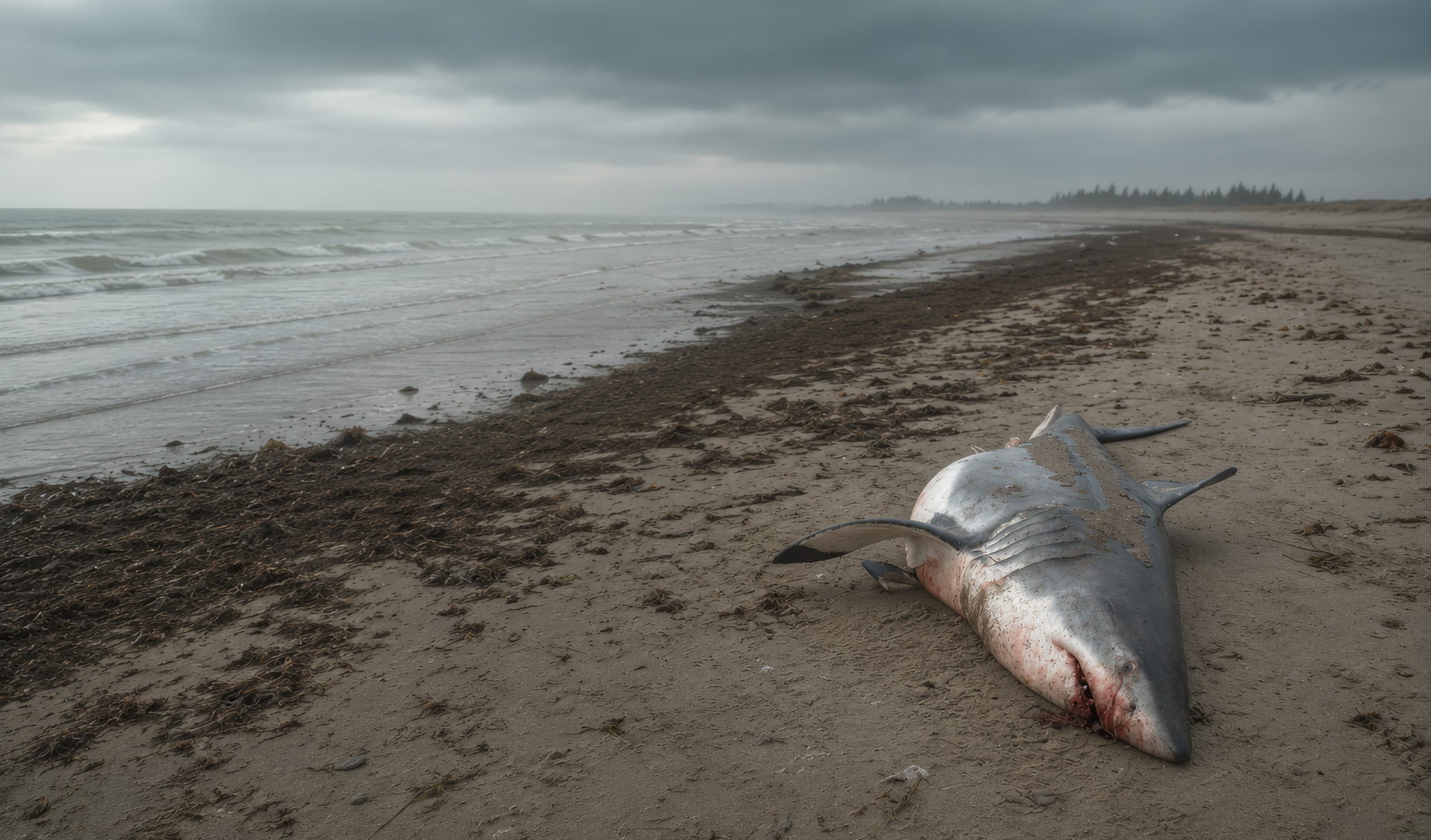
Stranded white shark near Kouchibouguac National Park, New Brunswick
AI-assisted © ORS |. All Rights Reserved
“Fear and apathy bite deeper
than any shark.”
Help protect the sharks
of the St. Lawrence.
— Jeffrey Hay Gallant, ORS
The St. Lawrence Shark Observatory is a registered charity:
Canada Revenue Agency #834462913RR0001
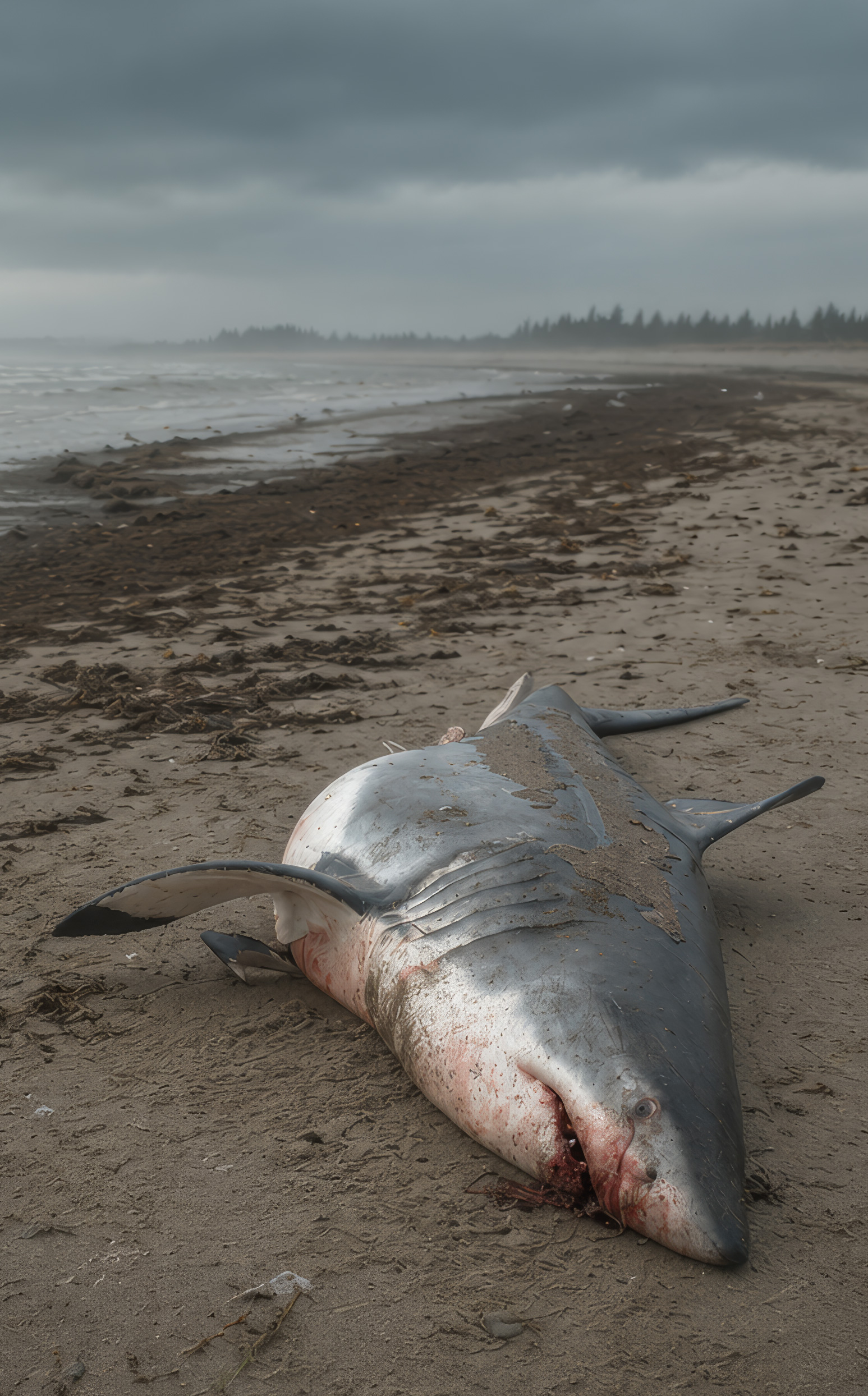
Stranded white shark near Kouchibouguac National Park, New Brunswick
AI-assisted © ORS |. All Rights Reserved
“Fear and apathy
bite deeper
than any shark.”
Help protect the sharks
of the St. Lawrence.
— Jeffrey Hay Gallant, ORS
The St. Lawrence Shark Observatory is a registered charity:
Canada Revenue Agency #834462913RR0001

CSAR
OSF
PUBLICATIONS

© 2026 St. Lawrence Shark Observatory. All Rights Reserved.
CSAR
OSF
PUBLICATIONS
© 2026 St. Lawrence Shark Observatory
All Rights Reserved