The Loch Ness Monster
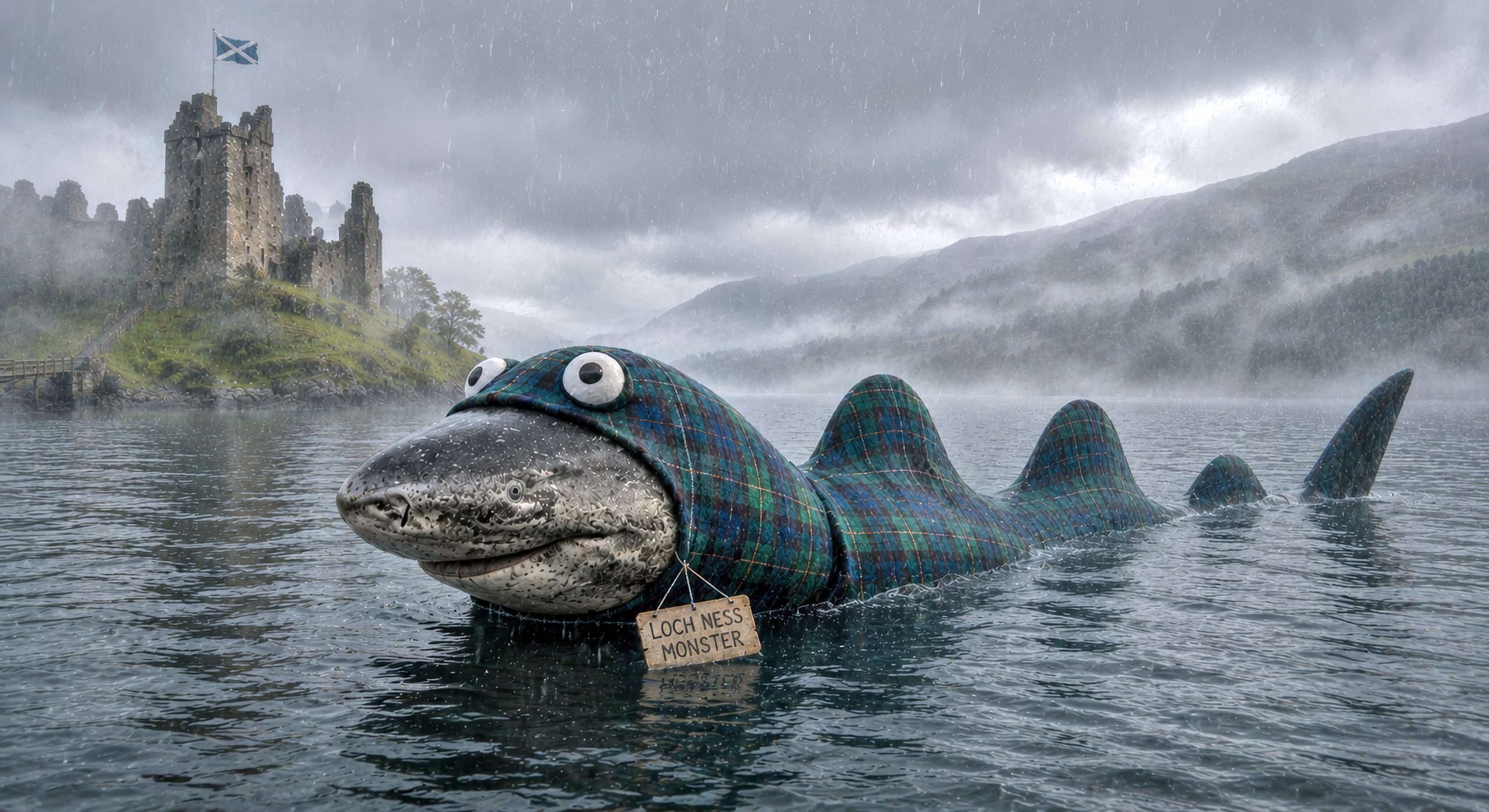
AI-assisted Image © ORS | All Rights Reserved
OPINION

The Loch Ness Monster
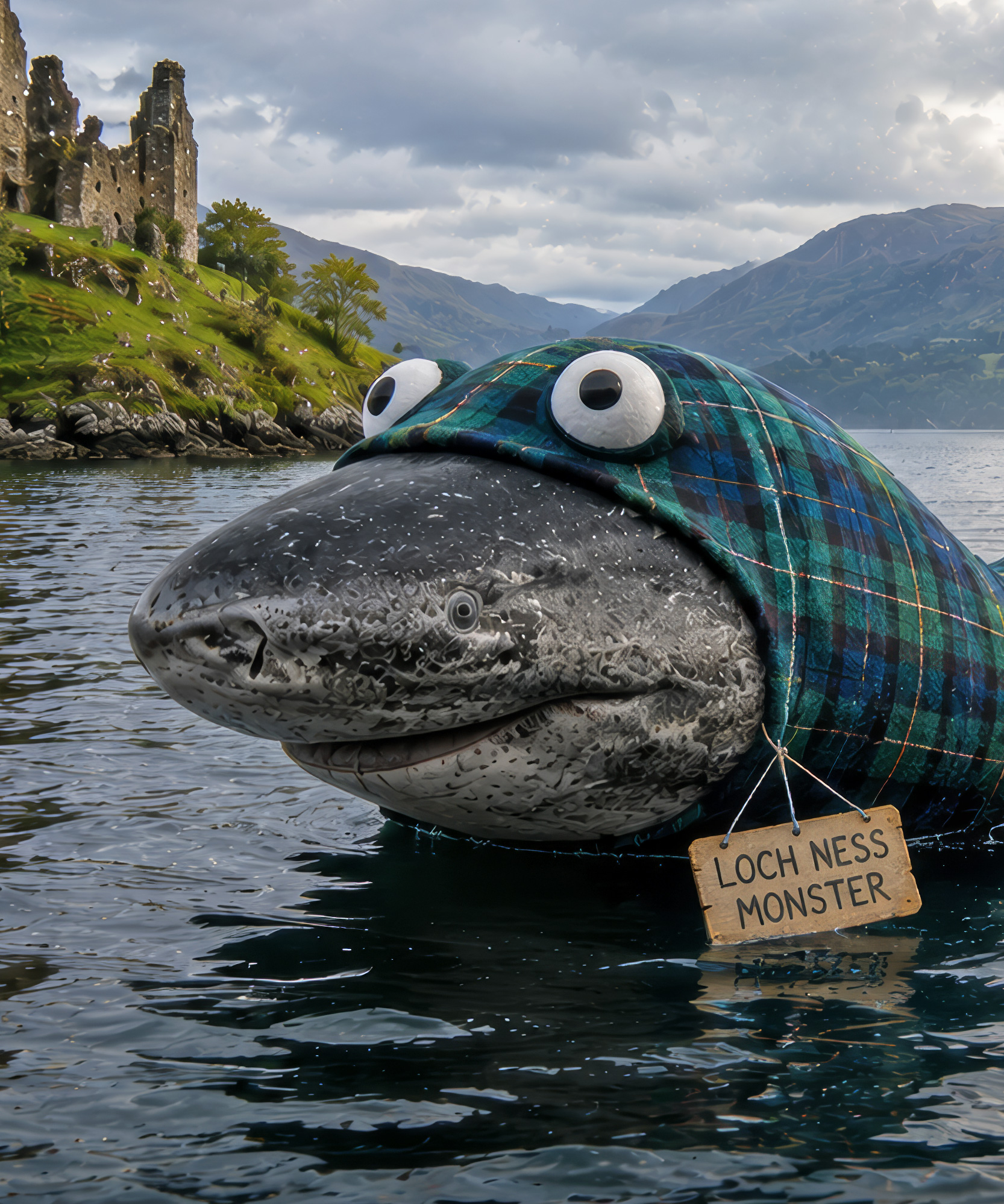
AI-Assisted image © ORS
All Rights Reserved
The truth about Nessie?
Revisiting misinformation, speculation, and media narratives surrounding one of the world’s most misunderstood sharks
By
, M. Sc.
8 min read
Posted on Oct. 25, 2014
Updated May 15, 2026
Jeffrey Hay Gallant
EDITORIAL

The truth about Nessie?
Revisiting misinformation, speculation, and media narratives surrounding one of the world’s most misunderstood sharks
By
, M. Sc.
8 min read
Posted on Oct. 25, 2014
Updated May 15, 2026
Jeffrey Hay Gallant
EDITORIAL
The following text reflects the views of Jeffrey Hay Gallant regarding the BBC Earth article The Truth About Animals | Mysterious Giant Sharks May Be Everywhere, published on October 24, 2014. Originally published in 2014, this editorial has been revised for clarity and updated context while preserving the substance and intent of the original text. Minor additions reflecting developments in science communication and media culture since the original publication have also been included.
The making of a modern myth
When a fellow scientist cited[1] ORS research to promote the idea that the Loch Ness Monster legend may actually have originated from Greenland shark sightings, I could not tell whether the author was being serious or simply having a little fun. After all, contrary to what was implied in the story, our encounters did not take place in freshwater, nor in the St. Lawrence Seaway. They took place entirely in the marine waters of the St. Lawrence Estuary near Baie-Comeau, a fact that could easily have been verified online or with a simple email.
Nevertheless, the idea rapidly spread beyond its original context and was eventually amplified internationally by media personalities and television productions, helping propel the “Greenland shark = Nessie” hypothesis onto the world stage despite its blatantly false premise. Admittedly, given my Scottish ancestry, I would be delighted if the Greenland shark ultimately turned out to have some genuine connection to Highland folklore. But facts matter, especially when scientific information is presented to a general public that still tends to place a certain degree of trust in scientists and mainstream media.
That trust, however, is increasingly fragile. In an era shaped by misinformation and growing skepticism toward expertise, poorly supported stories presented with scientific authority may ultimately contribute to the very erosion of credibility that more discerning scientists, journalists and television personalities now struggle to reverse.
So, when the BBC publishes an article under the title The Truth About Animals and the animal in question is the Greenland shark (Somniosus microcephalus), one expects a high degree of scientific rigour and factual accuracy.
As Sir David Attenborough enters his 100th year, his work remains a reminder that public fascination with wildlife should never come at the expense of scientific rigour.
Unfortunately, although the BBC article avoided the Loch Ness connection altogether and contained useful information, it nonetheless repeated a number of outdated assumptions, oversimplifications, and speculative interpretations concerning the Greenland shark and its ecology.
At the time the BBC article was published, more than a decade of observations and research had already been conducted on Greenland sharks in the St. Lawrence Estuary and Arctic waters. Yet much of this work, including repeated underwater observations of free-swimming sharks under natural conditions, was largely absent from the discussion.
The opening paragraphs of the article immediately reinforced one of the most persistent misconceptions surrounding the species: that Greenland sharks are effectively blind and biologically sluggish.
Are Greenland sharks “absurdly slow”?
The article described Greenland sharks as “absurdly slow.” But by what standard should one define such a term?
Our own observations of Greenland sharks in the St. Lawrence ranged from near immobility to bursts approaching one metre per second following tag deployment. While the species is certainly not built for sustained high-speed pursuit like the shortfin mako, terms such as stealthy, energy-conserving, or deliberate are scientifically more appropriate and far less anthropocentric.
Furthermore, the Greenland shark’s movement strategy has clearly served it well over evolutionary time. The species remains widely distributed across the North Atlantic and Arctic despite its slow growth and extremely long lifespan.
Are Greenland sharks blind?
The notion that Greenland sharks are “mostly blind” likely stems from observations made in Arctic populations heavily parasitised by ocular copepods. In many Arctic regions, sharks inhabit deep or dark environments beneath ice cover or polar darkness, where visual performance may be of limited importance.
This situation differs considerably from that observed in the St. Lawrence Estuary. Very few Greenland sharks encountered there exhibited significant eye damage or copepod infestation. Divers repeatedly observed sharks visually tracking movements underwater, approaching cautiously, and reacting to eye contact and body orientation in ways strongly suggesting functional vision[2].
Anyone who has been closely approached underwater by a free-swimming Greenland shark under natural conditions quickly realises that these animals are far more perceptive than popular portrayals suggest.
Distribution beyond the Arctic
Another recurring misconception concerns the Greenland shark’s distribution.
The species is often portrayed as an exclusively Arctic shark because of its common name. Yet Greenland sharks have long been documented throughout the North Atlantic, including the Gulf and Estuary of the St. Lawrence[3], Icelandic waters, northern Europe, and farther south along the Atlantic continental shelf[4].
Whether certain populations expanded northward historically, shifted distributions over time, or always occupied a broader range than commonly assumed remains incompletely understood. What is clear, however, is that the species cannot accurately be described as strictly Arctic.
Size and physical characteristics
The BBC article also implied that Greenland sharks can rival the bulk of the white shark. Although exceptionally large Greenland sharks may equal or possibly exceed the maximum recorded length of white sharks, they are generally far less massive in proportion. Their bodies are elongated and comparatively slender, lacking the robust girth typical of mature white sharks.
Natural encounters in the St. Lawrence
At the time of publication, the article suggested that Greenland sharks were most easily observed around Greenland and Iceland.
That statement depends heavily on what one considers an “observation.”
In Arctic regions, most encounters historically involved sharks captured on hook and line and hauled to the surface from great depths. By contrast, repeated natural underwater encounters with free-swimming Greenland sharks, where the sharks voluntarily approached divers without bait or restraint, had already been occurring for years near Baie-Comeau in the St. Lawrence Estuary.
Between 2003 and 2012, hundreds of such encounters took place during non-invasive dives conducted by ORS researchers. To this day, no other location worldwide has produced a comparable body of repeated underwater observations under entirely natural conditions.
Contrary to the notion that one must descend into extreme depths to observe Greenland sharks alive, many sharks in the St. Lawrence were encountered at shallow depths easily accessible to scuba divers[5].
Diet and scientific sampling
The BBC article also discussed Greenland shark diet primarily through stomach-content analysis obtained by dissecting sharks.
While such studies have undeniably contributed valuable information, it is worth noting that many Greenland sharks examined historically were exceptionally old animals intentionally killed for research purposes. In many cases, comparable dietary information can be obtained from accidental by-catch, stranded individuals, naturally deceased sharks, stable isotope analysis, or non-lethal sampling methods.
Given the Greenland shark’s extraordinary longevity and slow reproductive cycle, minimising unnecessary mortality should remain an important ethical consideration whenever possible.
The “Corkscrew Killer” hypothesis
One particularly problematic aspect of the article involved the long-debated “corkscrew seal” hypothesis.
For years, spiral wounds observed on seal carcasses at Sable Island and parts of northern Europe were attributed to Greenland shark attacks. Yet by 2014, substantial evidence already suggested that this explanation was poorly supported.
The wound morphology, environmental context, and known feeding behaviour of Greenland sharks did not correspond well with the corkscrew injuries. Subsequent studies and observations increasingly pointed instead toward aggressive interactions and predation involving grey seals themselves.
This serves as an important reminder of how speculative ideas can become amplified and persist publicly long after serious doubts emerge within the scientific community.
Climate change and the Greenland shark
Like virtually all marine species, Greenland sharks will undoubtedly be affected by climate change and changing Arctic conditions. However, the assumption that warming oceans automatically imply ecological collapse for the species may oversimplify a far more nuanced reality.
The St. Lawrence population demonstrates that Greenland sharks can persist in environments that are warmer, less ice-covered, and more heavily impacted by human activity than the high Arctic. Understanding how these southern populations function may therefore provide valuable insight into the species’ future adaptability.
The persistence of misinformation
Perhaps the most troubling aspect of such media narratives is not any single factual error, but rather the long lifespan of misinformation once it enters the public sphere.
Many readers understandably assume that major media organisations rigorously verify scientific claims before publication. Yet simplifications, speculative interpretations, and outdated assumptions can rapidly become entrenched online, where they are endlessly repeated through articles, documentaries, blogs, and social media.
This remains particularly problematic for species such as the Greenland shark, about which public knowledge is still relatively limited.
Ironically, the BBC article itself concluded by noting that most people had probably never heard of Greenland sharks. That is precisely why accurate reporting matters. For many readers, these stories form their very first impression of the species.
Today, more than a decade later, many of the same misconceptions continue to circulate online. Although public awareness of Greenland sharks has increased substantially, careful interpretation and evidence-based communication remain just as important as ever, particularly when mystery, folklore, and repetition can sometimes blur the line between speculation and perceived truth.
As for Nessie, the mystery lives on…
REFERENCES
(1) Friedman, M. (2012, May 3). Scientist wonders if Nessie monster is Alaska lake sleeper shark. ADN Alaska News. https://www.adn.com/science/article/scientist-wonders-if-nessie-monster-alaska-lake-sleeper-shark/2012/05/03
(2) Harvey-Clark, C. J., Gallant, J. J., and Batt, J. H. (2005). Vision and its relationship 2612 to novel behaviour in St. Lawrence River Greenland Sharks, Somniosus microcephalus. Can. Field Nat. 119, 355–358.
(3) Gallant, J., C. Harvey-Clark, R.A. Myers, and M.J.W. Stokesbury. 2005. Sea lamprey (Petromyzon marinus) attached to a Greenland shark (Somniosus microcephalus) in the St. Lawrence Estuary, Canada. Northeastern Naturalist. 2006 13(1):35–38.
(4) Edwards, J. E., Hiltz, E., Broell, F., Bushnell, P. G., Campana, S. E., Christiansen, J. S., Devine, B. M., Gallant, J. J., Hedges, K. J., MacNeil, A., McMeans, B. C., Nielsen, J., Præbel, K., Skomal, G. B., Steffensen, J. F., Walter, R. P., Watanabe, Y. Y., VanderZwaag, D. L., & Hussey, N. E. (2019). Advancing research for the management of long-lived species: A case study on the Greenland Shark. Frontiers in Marine Science, 6(APR).
(5) Stokesbury, M. J. W., Harvey-Clark, C., Gallant, J., Block, B. A., & Myers, R. A. (2005). Movement and environmental preferences of Greenland sharks (Somniosus microcephalus) electronically tagged in the St. Lawrence Estuary, Canada. Marine Biology, 148(1).

Founder and scientific director of the St. Lawrence Shark Observatory (ORS) and the Canadian Shark Attack Registry; doctoral researcher at UQAM. First encountered a shark at Peggy’s Cove, Nova Scotia, in 1975. Co-led Canada’s first cage dives in 2000, filmed the world’s first natural footage of a Greenland shark in 2003, and received the Université du Québec à Trois-Rivières (UQTR) Pythagore Prize in Science and Engineering in 2025.
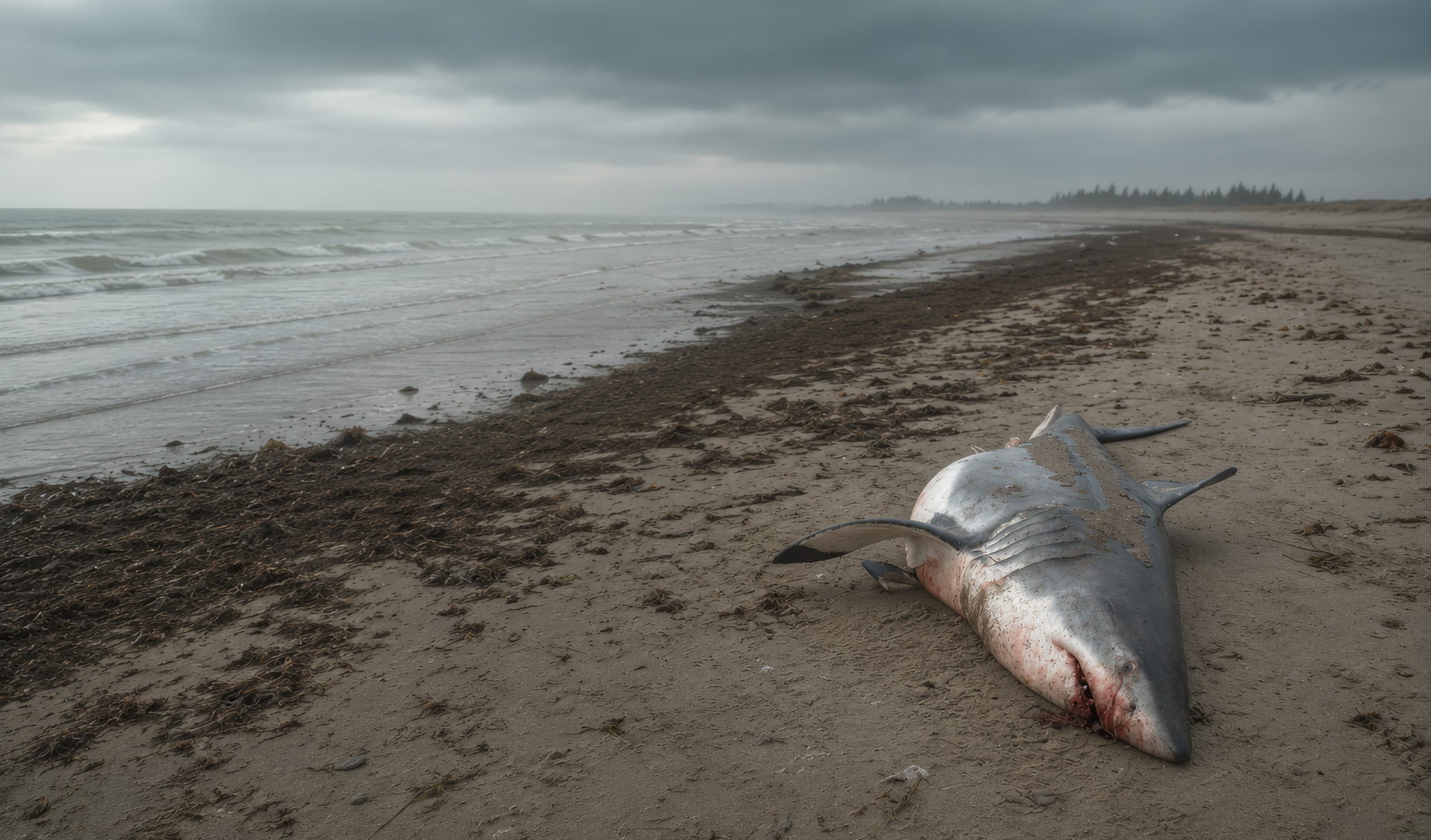
Stranded white shark near Kouchibouguac National Park, New Brunswick
AI-assisted © ORS |. All Rights Reserved
“Fear and apathy bite deeper
than any shark.”
Help protect the sharks
of the St. Lawrence.
— Jeffrey Hay Gallant, ORS
The St. Lawrence Shark Observatory is a registered charity:
Canada Revenue Agency #834462913RR0001
Stranded white shark near Kouchibouguac National Park, New Brunswick
AI-assisted © ORS |. All Rights Reserved
“Fear and apathy
bite deeper
than any shark.”
Help protect the sharks
of the St. Lawrence.
— Jeffrey Hay Gallant, ORS
The St. Lawrence Shark Observatory is a registered charity:
Canada Revenue Agency #834462913RR0001


CSAR
OSF
PUBLICATIONS

© 2026 St. Lawrence Shark Observatory. All Rights Reserved.
CSAR
OSF
PUBLICATIONS
© 2026 St. Lawrence Shark Observatory
All Rights Reserved