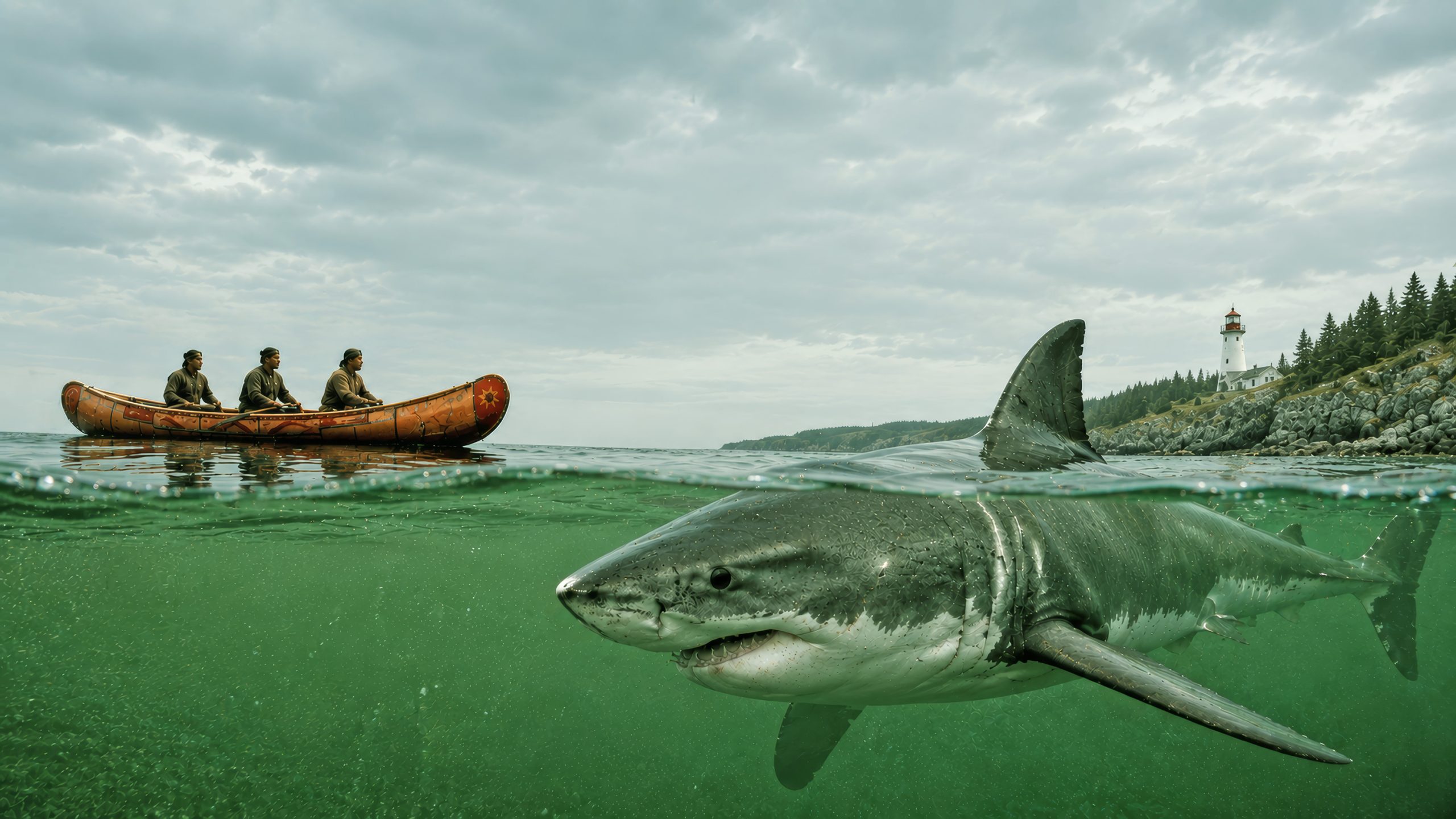
AI-assisted © ORS | St. Lawrence Shark Observatory
All Rights Reserved
OPINION

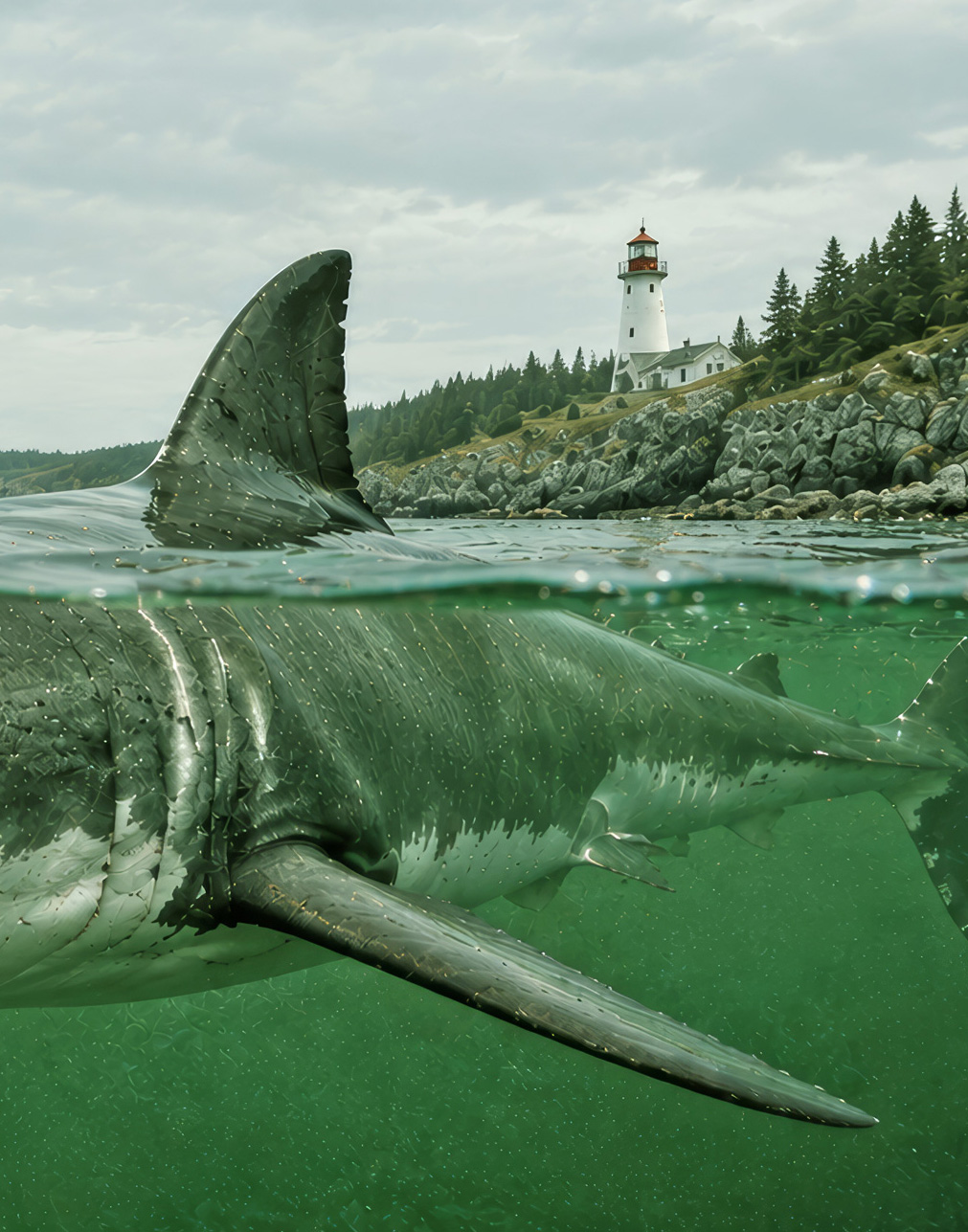
AI-assisted © ORS | St. Lawrence Shark Observatory
All Rights Reserved
White sharks and the perils
of misinformation
Historical evidence and Indigenous knowledge challenge the misconception that white sharks are recent climate-driven arrivals to the St. Lawrence.
By
, M. Sc.
7 min read
Posted on May 24, 2024
Updated May 15, 2026
Jeffrey Hay Gallant
EDITORIAL


White sharks
and the perils
of misinformation
Historical evidence and Indigenous knowledge challenge the misconception that white sharks are recent climate-driven arrivals to the St. Lawrence.
By
, M. Sc.
7 min read
Posted on May 24, 2024
Updated May 15, 2026
Jeffrey Hay Gallant
EDITORIAL
Written in response to the growing spread of misinformation surrounding white shark presence in Atlantic Canada and Québec, this 2024 editorial by ORS founder Jeffrey Gallant also addresses years of media misinterpretations of interviews and statements by ORS, oversimplified reporting, and recurring attempts to portray the species as a recent climate-driven arrival to the St. Lawrence ecosystem. Drawing on historical records, Indigenous knowledge, and longstanding scientific evidence, the piece argues that the white shark has been a natural seasonal component of the region for centuries, though typically documented only in relatively low numbers until recent decades, while cautioning against sensationalism, unsupported claims, and misleading narratives that distort public understanding and conservation priorities.
A Persistent Misconception
With each white shark migration season, a new wave of misleading and persistent information resurfaces through the media, influencers, and social networks, particularly regarding the historical presence of the species and the role of climate change in its distribution within the St. Lawrence ecosystem. In response, we reaffirm our working hypothesis that the white shark’s presence in Atlantic Canada and Québec is neither recent nor primarily driven by contemporary climate change.
In our interconnected world, where information travels instantly and narratives spread rapidly online, misinformation can have far-reaching and lasting impacts on public understanding. Well-meaning but misinformed individuals often contribute to this problem, particularly when attempting to explain complex ecological phenomena. One notable example involves the white shark (Carcharodon carcharias) in Atlantic Canada and Québec — a subject increasingly clouded by inaccurate claims portraying the species as a recent arrival caused exclusively by warming waters.
A Longstanding Seasonal Presence
The white shark, often misunderstood as a strictly warm-water species, has long been a seasonal component of Atlantic Canadian ecosystems. Historical records, scientific evidence, and Indigenous knowledge all support a longstanding presence of the species in the region, where it is attracted by suitable habitat and abundant prey. Yet a growing number of commentators, including members of the media and even non-specialists within the marine sciences, continue to attribute the shark’s presence almost entirely to climate change, thereby promoting an oversimplified and scientifically reductive narrative.
Our working hypothesis is that the increasing number of documented white sharks in the St. Lawrence results primarily from a combination of legal protection, recovering prey populations, improving ecosystem conditions, and natural population dynamics. Juvenile sharks, in particular, may disperse across vast geographic areas to reduce competition with larger mature individuals. Such movements likely contribute to a broader and more balanced ecological distribution of the species throughout the North Atlantic.
Unlike species closely restricted to tropical waters, the white shark is remarkably adaptable and capable of inhabiting a wide range of temperatures. The persistent misconception that it is exclusively associated with warm-water environments overlooks both its physiological adaptability and the extensive historical evidence documenting its occurrence in colder North Atlantic waters, including Atlantic Canada and Québec.
“In contrast to the Indigenous peoples of the Maritime Peninsula, who have respectfully incorporated the white shark into their cultures for millennia[1], the current knowledge gap largely stems from generational shortsightedness and a fundamental misunderstanding of the white shark’s ecological niche and longstanding migration patterns.”
Climate Change and Ecological Complexity
The role of climate change in white shark ecology is more nuanced than commonly portrayed. Climate change may indeed influence migration timing, residency duration, prey distribution, and environmental conditions within the Gulf of St. Lawrence. However, it does not adequately explain the long-established historical presence of the species in regions where it has been documented for centuries. Overemphasising climate change as a catch-all explanation oversimplifies a far more complex ecological reality and risks obscuring other important conservation and management concerns.
This oversimplified interpretation, along with other persistent misconceptions, such as claims that the white shark is not a fish or that it cannot distinguish humans from its natural prey[2], originates from many sectors of the maritime community. Yet even knowledgeable and experienced marine professionals are not necessarily specialists in shark biology, behaviour, or ecology. Scientists who do not work directly with sharks should therefore exercise caution when making definitive public statements, as unsupported claims may nonetheless be perceived as authoritative because of the speaker’s broader scientific credentials.
No matter the source, the dissemination of misinformation ultimately undermines science, public understanding, and shark conservation itself. When self-proclaimed or perceived experts repeat inaccurate information, even with good intentions, they contribute to narratives that may persist for years and influence public opinion, media coverage, and policy discussions. It is therefore essential that discussions surrounding sharks and marine ecosystems remain grounded in verified historical evidence, ecological context, and peer-reviewed science.
Media, Social Networks, and the Persistence of False Narratives
For more than two decades, the St. Lawrence Shark Observatory has worked to document and communicate accurate information about sharks in the greater St. Lawrence ecosystem. In recent years, however, a growing number of individuals, often acting with sincere intentions but lacking expertise in shark biology or behaviour, have increasingly contributed to the spread of misinformation. ORS does not claim to possess all the answers, nor does it seek to monopolise public discussion on sharks. On the contrary, we welcome the emergence of a new generation of researchers and communicators. Nevertheless, inaccurate information concerning the sharks of Atlantic Canada and Québec must be challenged and corrected before it further distorts public understanding.
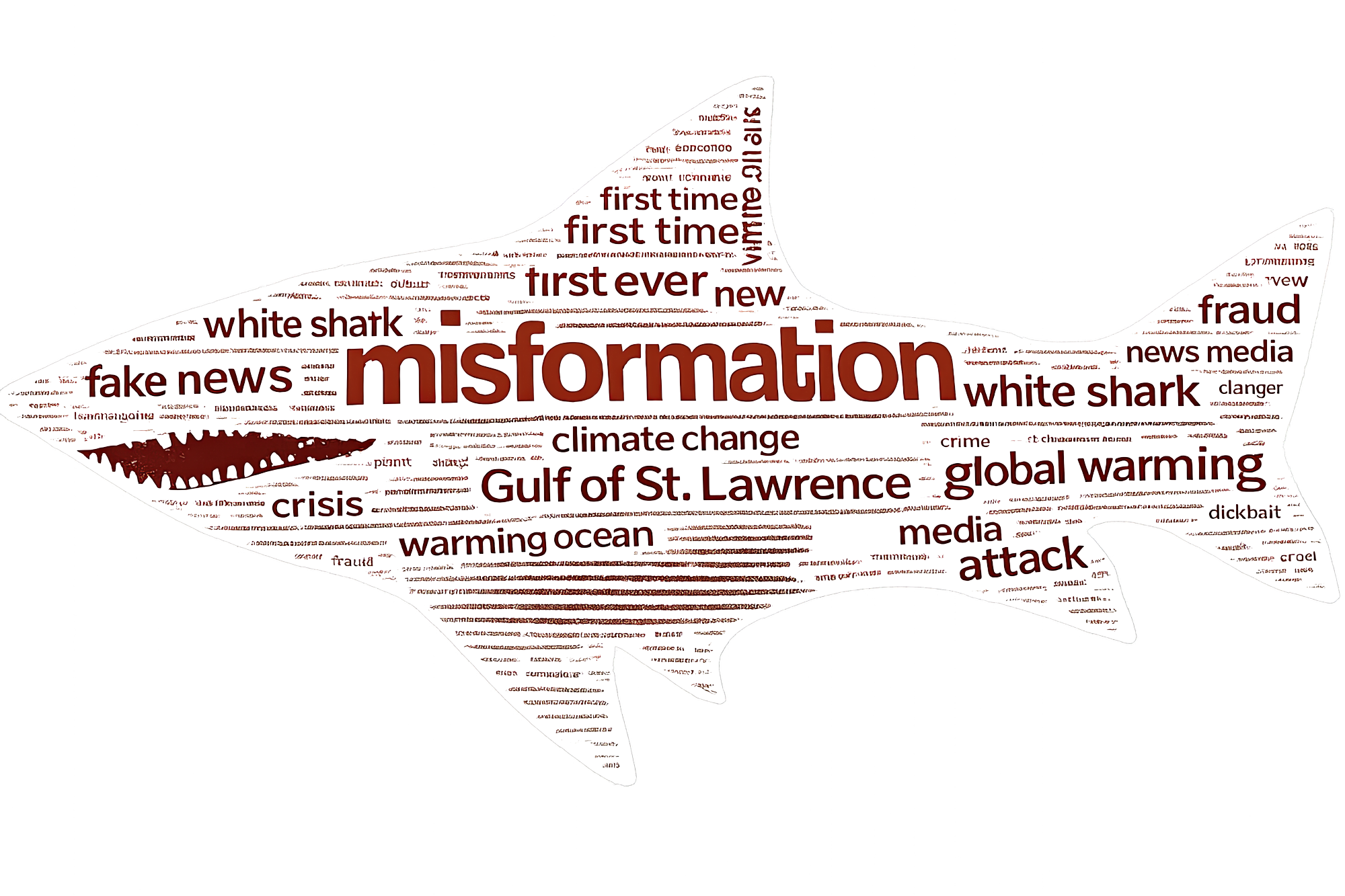
As for the media, it has become increasingly apparent that rigorous fact-checking is often neglected in favour of speed, sensationalism, or simplified narratives. This issue extends to numerous mainstream media outlets in Québec and Atlantic Canada, some of which have repeatedly published inaccurate information about sharks or misinterpreted interviews and statements provided by ORS researchers. Consulting appropriate specialists before publishing claims about sharks, or any wildlife species, remains essential to maintaining journalistic integrity and public trust.
The situation is further amplified by social media, where misleading information spreads rapidly through viral posts, memes, videos, and influencer content, often shared by individuals or institutions that should know better. Such misinformation frequently targets younger audiences who may lack the experience necessary to distinguish scientific evidence from speculation or sensationalism. False explanations and exaggerated claims not only distort public perception but can also undermine effective conservation efforts by diverting attention away from genuine threats such as by-catch, habitat degradation, and the need for long-term ecosystem protection.
Once inaccurate claims take root online, they can be frustratingly difficult or impossible to correct.
The longevity of misinformation in the digital age cannot be underestimated[3]. Once inaccurate claims become embedded online, they are often endlessly recycled through articles, videos, reposts, and even educational material. This digital contamination undermines the efforts of researchers, educators, and conservation organisations striving to promote evidence-based understanding. As a related concern, original information sources, including material developed and meticulously maintained for decades by ORS volunteers, are frequently reused online without proper attribution or context.
Conclusion
Although human-driven climate change unquestionably affects marine ecosystems and deserves serious attention, it should not be used as a simplistic explanation for the long-established presence of the white shark in Atlantic Canada and Québec. A more accurate understanding requires consideration of historical baselines, Indigenous knowledge, ecological complexity, population recovery, and longstanding migration patterns. Only by grounding public discussion in reliable evidence can we hope to improve both scientific literacy and meaningful conservation outcomes for sharks and the ecosystems they inhabit.
Additional Notes on Terminology and Ecology
As a side note regarding frequently repeated but outdated terminology, many scientists and government agencies have gradually moved away from the archaic term “great white shark.” The expression largely lost relevance once the oppositely named “lesser white shark” became known as the oceanic whitetip shark (Carcharhinus longimanus). Likewise, repeated claims that the white shark is primarily an offshore pelagic species, often intended to reassure beachgoers, are misleading. In reality, white sharks regularly patrol nearshore environments where seals are abundant, generally showing little to no interest in humans. For more information, please consult the Canadian Shark Attack Registry.
REFERENCES
(1) Betts, M. W., Blair, S. E., & Black, D. W. (2012). Perspectivism, mortuary symbolism, and human-shark relationships on the Maritime Peninsula. American Antiquity, 77(4), 621–645.
(1) Keenlyside, D.L. (1999). Glimpses of Atlantic Canada’s past.
(1) Martijn, Charles, A. (1986). Les Micmacs et la mer. Recherches amérindiennes au Québec, Montréal. 343 p.
(1) Adney, Edwin Tappan and Chapelle, Howard I. (1964). The Bark Canoes and Skin Boats of North America. Bulletin of the United States National Museum. 1–242, 224 figures.
(2) Ryan LA et al. (2021). A shark’s eye view: testing the ‘mistaken identity theory’ behind shark bites on humans. J. R. Soc. Interface 18: 20210533.
(3) William R. Casola, Justin M. Beall, M. Nils Peterson, Lincoln R. Larson, & Carol S. Price. (2022). Influence of social media on fear of sharks, perceptions of intentionality associated with shark bites, and shark management preferences. Frontiers in Communication, 7.

Founder and scientific director of the St. Lawrence Shark Observatory (ORS) and the Canadian Shark Attack Registry; doctoral researcher at UQAM. First encountered a shark at Peggy’s Cove, Nova Scotia, in 1975. Co-led Canada’s first cage dives in 2000, filmed the world’s first natural footage of a Greenland shark in 2003, and received the Université du Québec à Trois-Rivières (UQTR) Pythagore Prize in Science and Engineering in 2025.
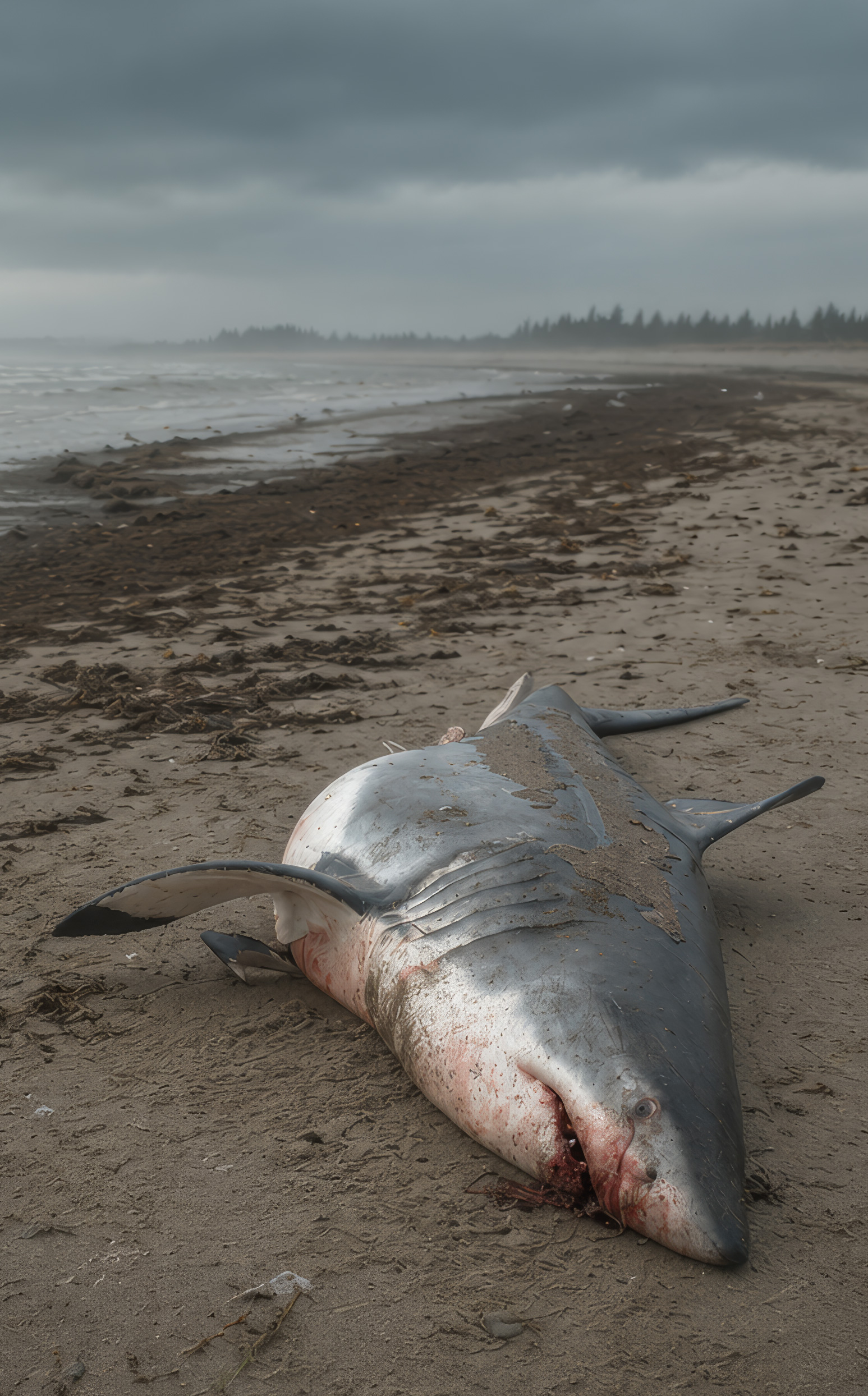
Stranded white shark near Kouchibouguac National Park, New Brunswick
AI-assisted © ORS |. All Rights Reserved
“Fear and apathy
bite deeper
than any shark.”
Help protect the sharks
of the St. Lawrence.
— Jeffrey Hay Gallant, ORS
The St. Lawrence Shark Observatory is a registered charity:
Canada Revenue Agency #834462913RR0001
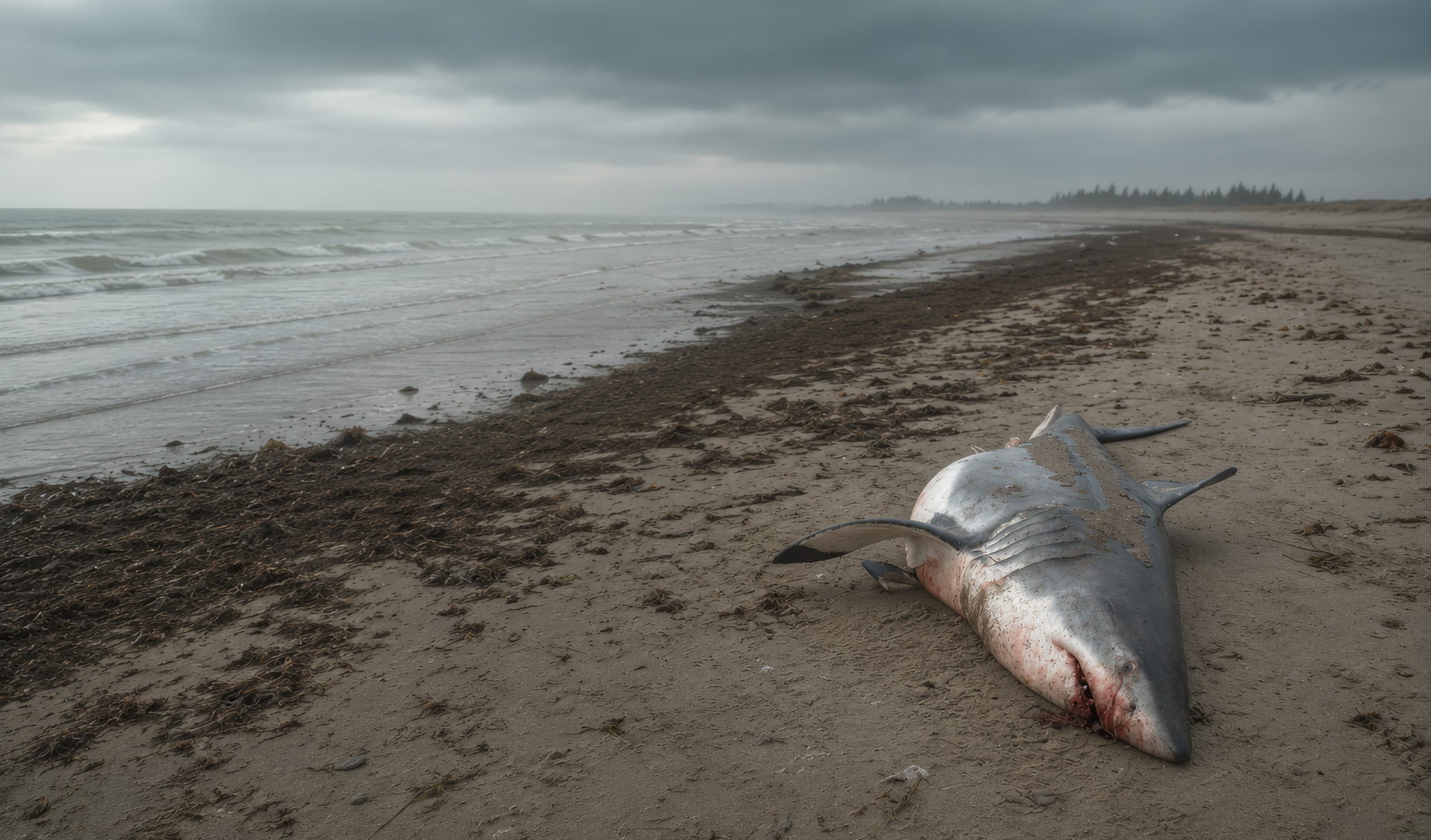
Stranded white shark near Kouchibouguac National Park, New Brunswick
AI-assisted © ORS |. All Rights Reserved
“Fear and apathy bite deeper
than any shark.”
Help protect the sharks
of the St. Lawrence.
— Jeffrey Hay Gallant, ORS
The St. Lawrence Shark Observatory is a registered charity:
Canada Revenue Agency #834462913RR0001


CSAR
OSF
PUBLICATIONS

© 2026 St. Lawrence Shark Observatory. All Rights Reserved.
CSAR
OSF
PUBLICATIONS
© 2026 St. Lawrence Shark Observatory
All Rights Reserved