AI-assisted image © ORS
All Rights Reserved
MEDIA
FOR IMMEDIATE RELEASE

AI-Assisted image © ORS
All Rights Reserved
PRESS RELEASE
JUNE 25, 2026 | FOR IMMEDIATE RELEASE
White shark season begins in the Gulf of St. Lawrence
Seasonal return of the species highlights the importance of context, awareness, and responsible conduct.
Editorial Note: The purpose of this communication is not to sound the alarm, but to provide factual and precautionary information regarding the expected seasonal return of the white shark to the Gulf of St. Lawrence, based on scientific observation rather than exaggeration, fear, or sensationalism. This release is issued voluntarily by the St. Lawrence Shark Observatory (ORS) in response to recurring public and media interest surrounding the beginning of each white shark season, as well as the broader increase in attention devoted to this species in Atlantic Canada. Any media coverage of this release, particularly headlines, should accurately reflect its informative and contextual nature, avoiding wording likely to generate unjustified fear, confusion, or sensationalism. This communication also seeks to provide a scientific counterbalance to misinformation, AI-generated hoaxes, speculative social media commentary, excessive generalisations by influencers, and the persistent distortions that too often accompany public discussions about sharks. Media outlets may quote in full the content of this release, including the personal remarks of the Scientific Director of the St. Lawrence Shark Observatory.
 MEDIA CONTACT: No interviews will be granted regarding this release. The media may reproduce in full the content of this text as well as the personal commentary of the Scientific Director of the St. Lawrence Shark Observatory.
Drummondville, QC, June 25, 2026
As summer begins in Atlantic Canada, the St. Lawrence Shark Observatory (ORS) reminds marine users that the seasonal return of the white shark (Carcharodon carcharias) to the Gulf of St. Lawrence is expected at any time.
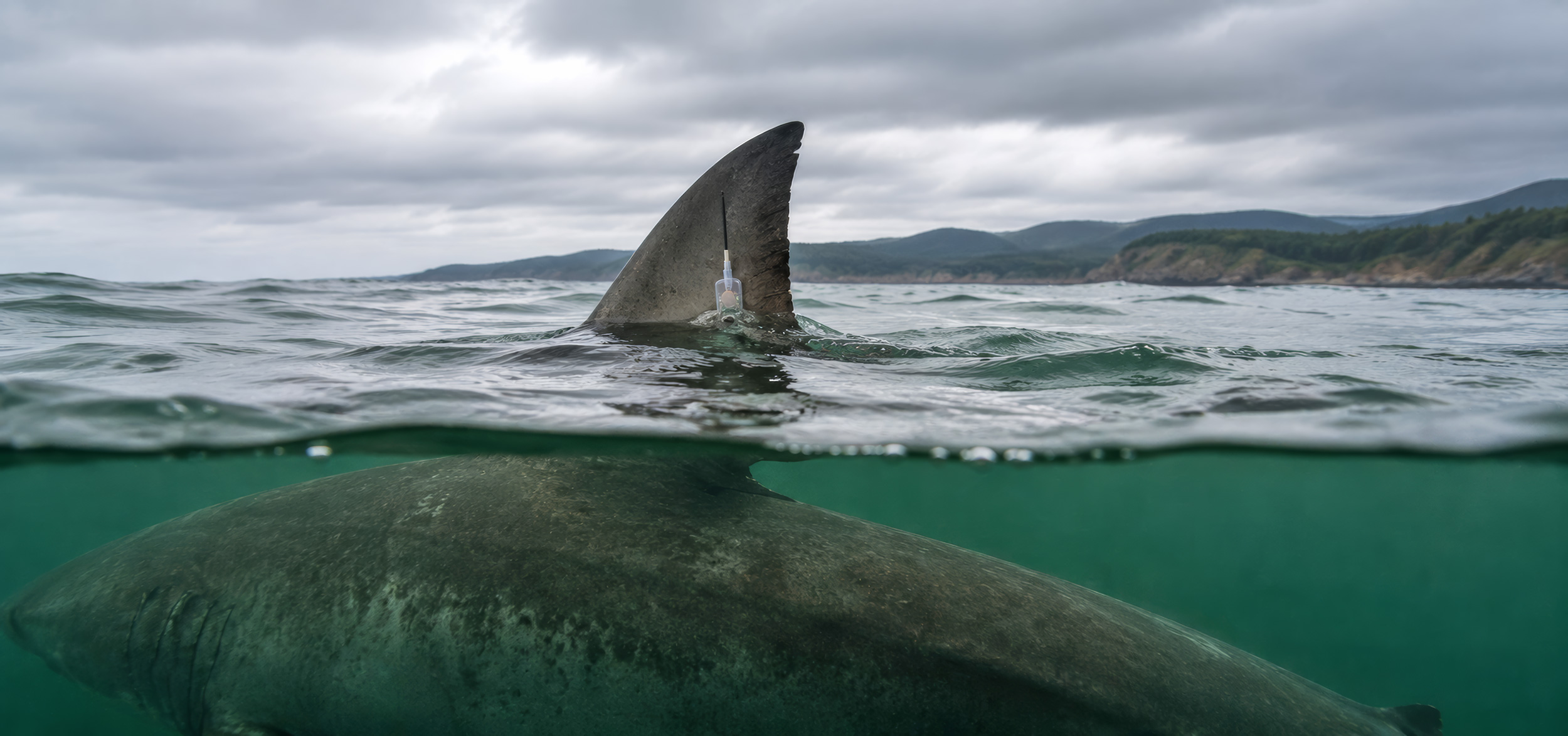
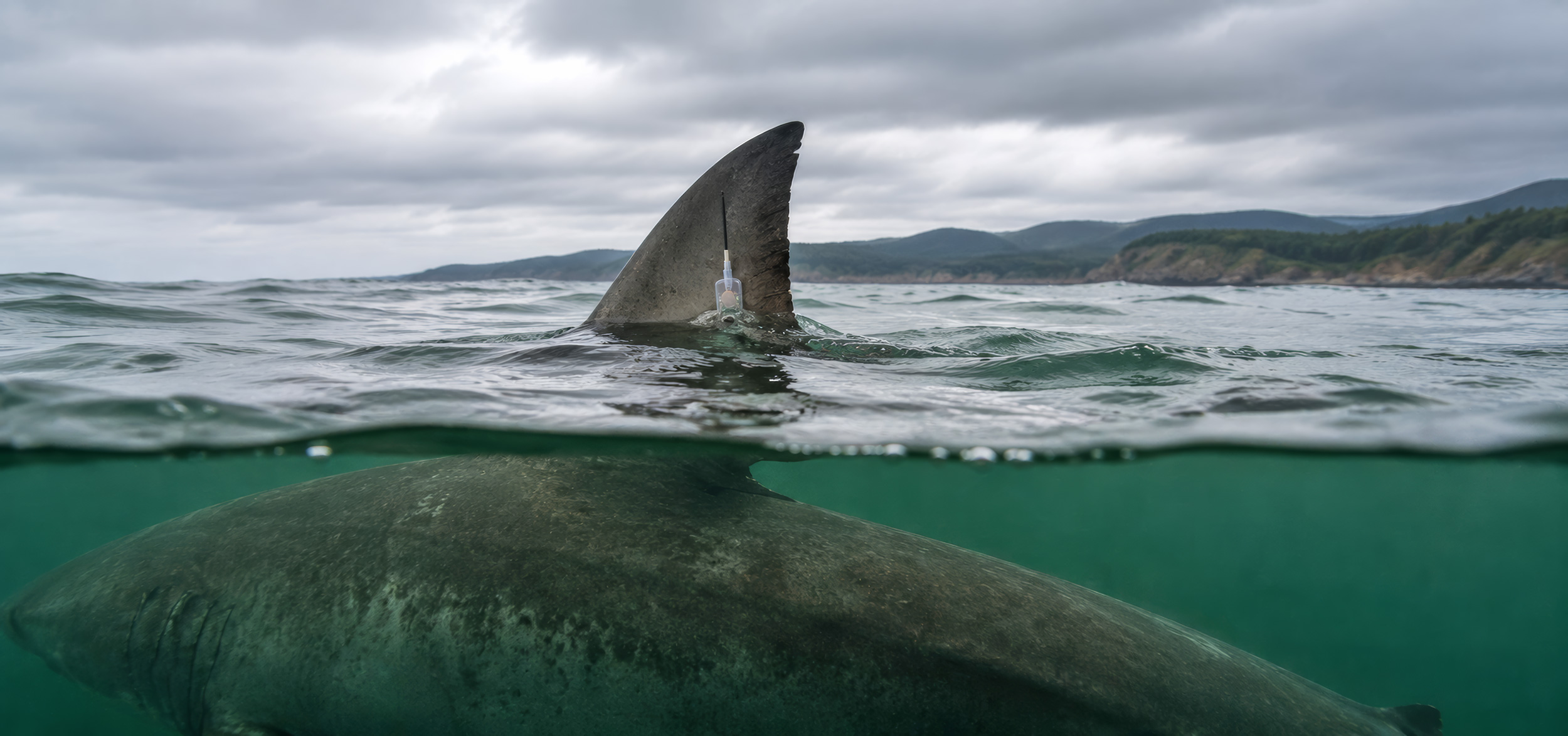
White sharks equipped with OCEARCH SPOT (Smart Position and Temperature) satellite tags¹ have already been detected off the coast of Nova Scotia since mid-May as part of their annual northward migration. Although no tagged white shark has yet been detected within the Gulf of St. Lawrence this season, ORS considers it entirely possible, and even likely, that one or more individuals are already present. The absence of a satellite detection should therefore not be interpreted as evidence that white sharks have not yet arrived.
Detection and context
Unlike acoustic transmitters, a SPOT tag only transmits when the shark’s dorsal fin breaks the surface and remains exposed long enough to establish a successful connection with an overhead Argos satellite. Because successful transmissions require a precise combination of surfacing behaviour, satellite position, and sufficient time above water, many surfacing events produce no successful transmission.
As a result, a shark may remain undetected for days, or even longer, despite already being present in the Gulf of St. Lawrence. Consequently, the first confirmed satellite detection of the season should not necessarily be interpreted as the shark’s arrival in the Gulf, but rather as the first successful documentation of an animal that may already have been occupying the region for some time.
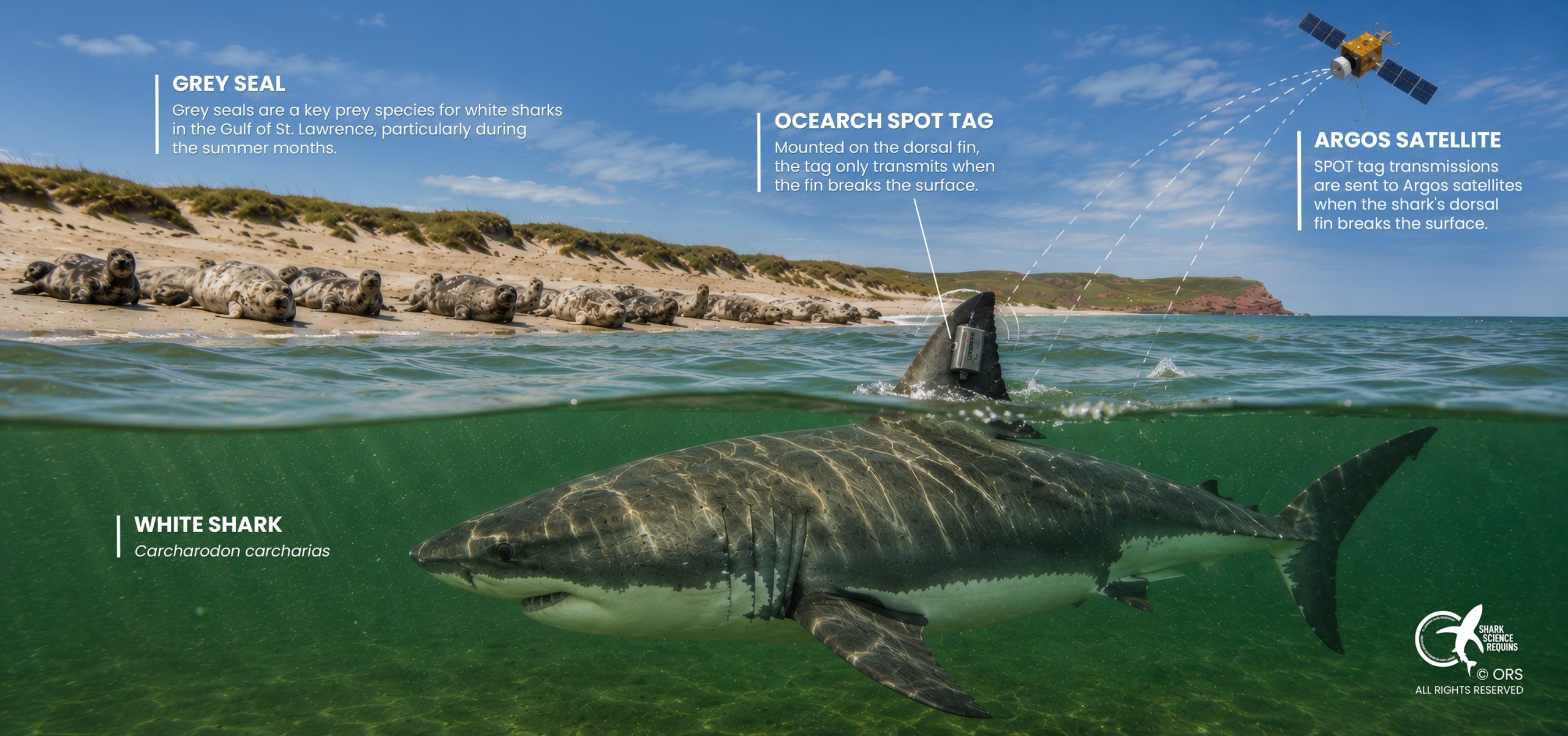
— Infographic © ORS | All Rights Reserved
Scientific interpretation
The St. Lawrence Shark Observatory (ORS) wishes to emphasise that this communication is intended to inform the public, not to cause alarm. The renewed presence of the white shark in Atlantic Canada and the Gulf of St. Lawrence has generated considerable media attention in recent years, often accompanied by exaggeration, misinformation, AI-generated hoaxes, speculative social media commentary, and sensationalist interpretations disconnected from scientific context. This release aims instead to encourage a measured and informed understanding of the species and its presence in Canadian waters.
The seasonal return of the white shark is no longer unexpected. In recent years, white sharks have generally been documented in Atlantic Canadian waters between late spring and late autumn, with peak activity typically occurring from July through September. Increasing observations over the past decade likely reflect a combination of population recovery following legal protection measures, changes in prey distribution and abundance, environmental shifts, growing scientific monitoring efforts, and the widespread use of smartphones, drones, and social media.
At the same time, ORS stresses that the white shark is not a “new” arrival in the Gulf of St. Lawrence. Historical records, long-shed teeth, fisheries accounts, Indigenous oral history, and recent scientific research all indicate that the species has likely frequented the region for centuries, albeit often in low numbers and largely unnoticed by the public.
Public awareness and responsible conduct
Although the statistical risk of a shark-related incident in Canada remains low to very low under most circumstances, the ORS continues to encourage prudent and informed behaviour among divers, swimmers, paddlers, surfers, and other marine users, particularly in areas with significant seal concentrations.
As previously stated in ORS advisories, avoiding large gatherings of seals, avoiding murky water, remaining attentive to unusual animal behaviour, and staying informed about verified shark sightings can help reduce risk considerably.
The ORS also reminds the public that the white shark is protected under Canada’s Species at Risk Act (SARA). It is therefore prohibited to harass, pursue, bait, intentionally approach, or otherwise disturb the species. This includes reckless behaviour by boaters, drone operators, divers, photographers, or thrill-seekers attempting to obtain dramatic footage for social media or commercial purposes.
Commentary
“The arrival of summer has also come to mark the seasonal return of the white shark to the Gulf of St. Lawrence. Twenty years ago, the possibility of seeing a white shark here would have been considered exceptional. Today, it increasingly reflects a broader ecological reality unfolding throughout Atlantic Canada.
Long before European contact, Indigenous peoples of the Gulf already lived alongside the white shark and integrated its presence into their knowledge and cultures. If they could coexist with this animal for centuries, there is no reason modern society cannot learn to do the same through knowledge, vigilance, and respect.”
— Jeffrey Hay Gallant, Scientific Director of ORS
Learn more
Readers wishing to better understand white sharks and their interactions with humans are encouraged to consult the newly updated Canadian Shark Attack Registry (CSAR), particularly its companion publication, Understanding Shark Interactions in Canada.
Drawing upon historical records, behavioural ecology, contemporary scientific research, evidence-based incident assessments, and practical safety guidance, this comprehensive resource examines why shark interactions occur, how risk can be evaluated, and what measures swimmers, surfers, paddleboarders, divers, boaters, and other marine users can take to reduce the likelihood of negative encounters while enjoying Canadian waters safely and responsibly.
By promoting knowledge, respect, and coexistence rather than fear and sensationalism, this publication reflects the same evidence-based approach that guides the work of the St. Lawrence Shark Observatory.
No interviews on this topic
Please note that the St. Lawrence Shark Observatory will not be granting interviews regarding this subject.
As previously stated in earlier advisories and releases, the organisation no longer participates in live media interviews concerning white sharks due to the repeated misinterpretation, sensationalism, and distortion that frequently accompany shark-related coverage. Instead, ORS will continue to communicate through written statements, scientific publications, background documents, and official media releases intended to ensure clarity, precision, and factual accuracy.
Given the sensitive nature of public safety issues involving large marine predators, verbal interviews and improvised commentary also create significant risks of statements being oversimplified, quoted out of context, or interpreted in ways that do not accurately reflect the position of ORS. Beyond contributing to misinformation and unnecessary sensationalism, such distortions may also carry potential legal and ethical implications in matters relating to public safety. Written communications therefore remain the only format through which ORS is prepared to address these subjects publicly.
ORS will continue monitoring developments and will share additional factual updates if warranted.
Jeffrey Hay Gallant, M. Sc.
Founder and Scientific Director
St. Lawrence Shark Observatory (ORS)
About the Observatory
The St. Lawrence Shark Observatory (ORS), officially founded in 2003 under the name Greenland Shark and Elasmobranch Education and Research Group (GEERG), is Canada’s first independent research organisation and registered charity dedicated to sharks. Entirely volunteer-run, ORS is devoted to the study, awareness, and conservation of sharks inhabiting the Gulf and Estuary of the St. Lawrence. In 2025, the organisation proudly commemorated 25 years since its first field expedition, marking a quarter century of commitment to shark research and conservation in the St. Lawrence and Atlantic Canada. Over the course of its history, the St. Lawrence Shark Observatory has achieved several shark-related firsts in Canada, and even internationally, particularly through its pioneering work on the Greenland shark. In 2022, ORS also founded the Canadian Shark Attack Registry, the first initiative of its kind in Canada dedicated to documenting interactions between sharks and humans in Canadian waters.
Through innovative, non-invasive research integrating field science and historical archives, the St. Lawrence Shark Observatory seeks to build a broader understanding of sharks, both past and present, while promoting rigorous, science-based information free from sensationalism and misinformation. In addition to its research and conservation work, the organisation is actively involved in public education and outreach, particularly among young people, whom it considers the future custodians of sharks and the oceans.
For more information about the history, mission, research, and team of the the St. Lawrence Shark Observatory (ORS), please visit the organisation’s About page.
REFERENCES
(1) Public telemetry data available through the OCEARCH Shark Tracker: https://www.ocearch.org/tracker
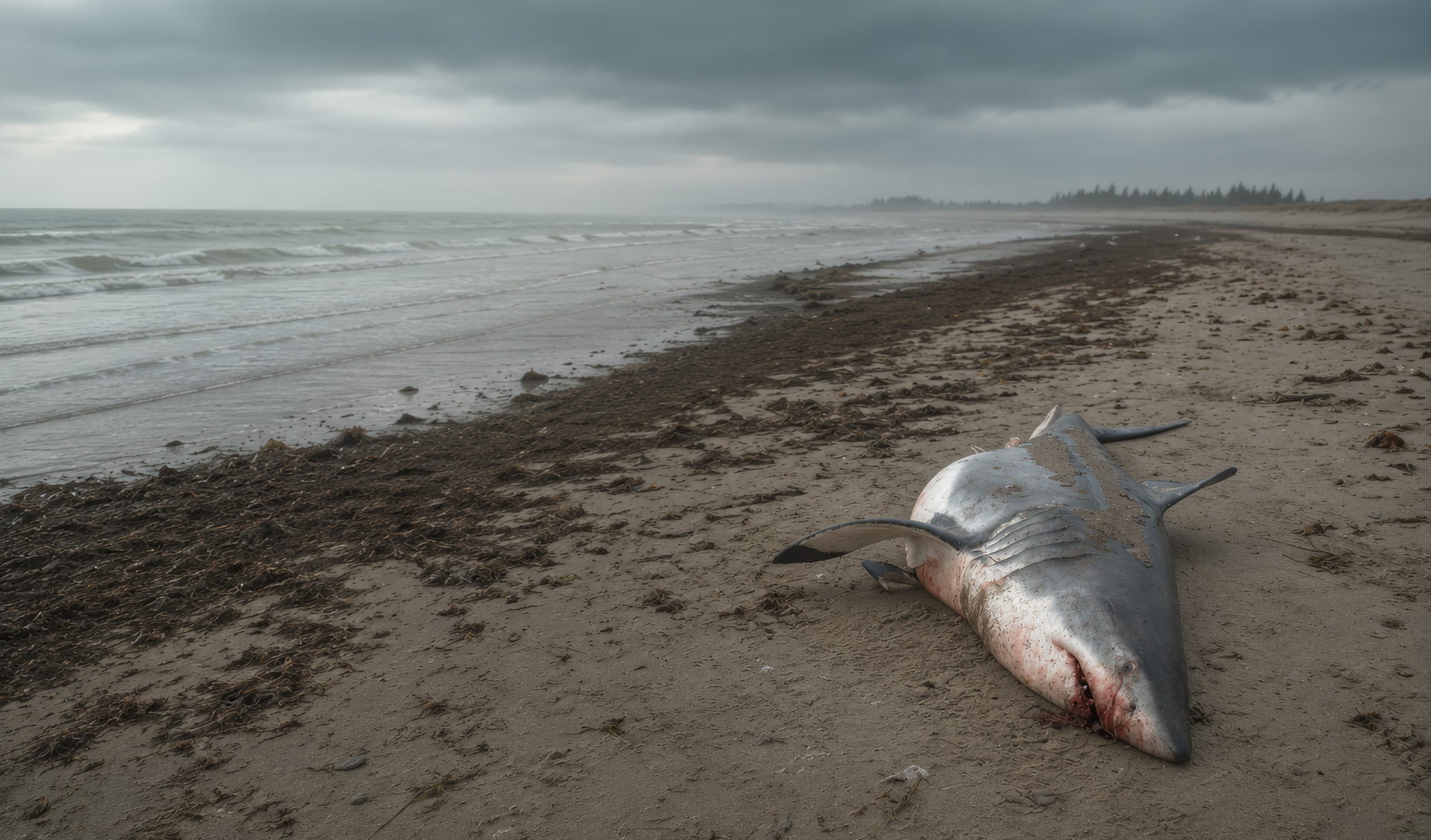
Stranded white shark near Kouchibouguac National Park, New Brunswick
AI-assisted © ORS |. All Rights Reserved
“Fear and apathy bite deeper
than any shark.”
Help protect the sharks
of the St. Lawrence.
— Jeffrey Hay Gallant, ORS
The St. Lawrence Shark Observatory is a registered charity:
Canada Revenue Agency #834462913RR0001
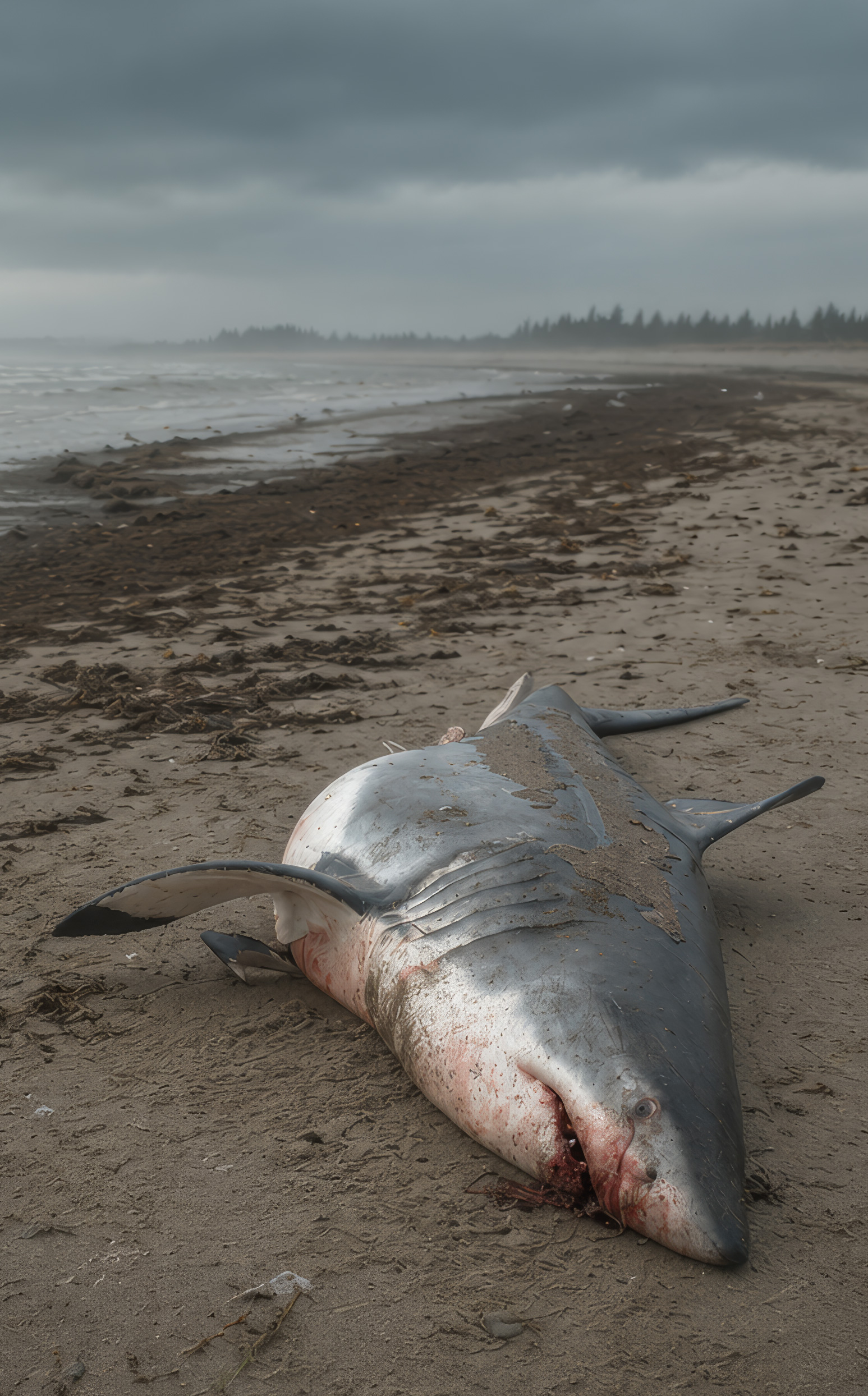
Stranded white shark near Kouchibouguac National Park, New Brunswick
AI-assisted © ORS |. All Rights Reserved
“Fear and apathy
bite deeper
than any shark.”
Help protect the sharks
of the St. Lawrence.
— Jeffrey Hay Gallant, ORS
The St. Lawrence Shark Observatory is a registered charity:
Canada Revenue Agency #834462913RR0001


CSAR
OSF
PUBLICATIONS

© 2026 St. Lawrence Shark Observatory. All Rights Reserved.
CSAR
OSF
PUBLICATIONS
© 2026 St. Lawrence Shark Observatory
All Rights Reserved