Image © ORS
All Rights Reserved
MEDIA
FOR IMMEDIATE RELEASE

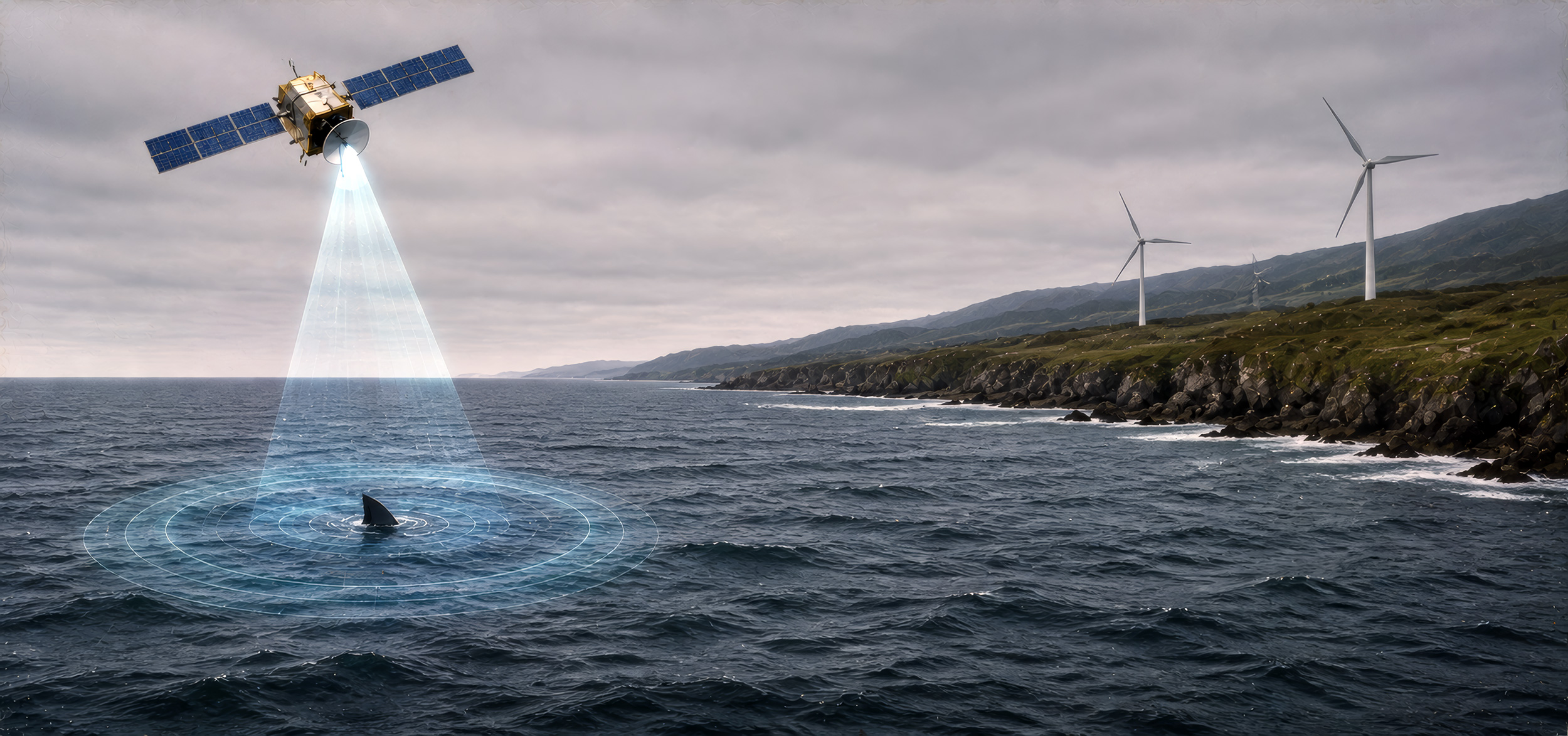
AI-Assisted image © ORS
All Rights Reserved
PRESS RELEASE
AUGUST 31, 2025 | FOR IMMEDIATE RELEASE
White shark detected near Cap-Chat
Westernmost detection of the year was close to the mouth of the St. Lawrence Estuary
Editorial Note: The purpose of this communication is not to sound the alarm, but to provide factual and precautionary information regarding the seasonal presence of the white shark to the Gulf of St. Lawrence, based on scientific observation rather than exaggeration, fear, or sensationalism. This release is issued voluntarily by the St. Lawrence Shark Observatory (ORS) in response to the broader increase in attention devoted to this species in Atlantic Canada. Any media coverage of this release—particularly headlines—should accurately reflect its informative and contextual nature, avoiding wording likely to generate unjustified fear, confusion, or sensationalism. This communication also seeks to provide a scientific counterbalance to misinformation, AI-generated hoaxes, speculative social media commentary, excessive generalisations by influencers, and the persistent distortions that too often accompany public discussions about sharks. Media outlets may quote in full the content of this release, including the personal remarks of the Scientific Director of the St. Lawrence Shark Observatory.
 MEDIA CONTACT: No interviews will be granted regarding this release. The media may reproduce in full the content of this text as well as the personal commentary of the Scientific Director of the St. Lawrence Shark Observatory.
Cap-Chat, QC, August 31, 2025
A white shark (Carcharodon carcharias) was detected off Cap-Chat on August 30, according to the Ocearch Shark Tracker. The shark, a male named Dold, was tagged by Ocearch off Florida in February, when it measured 3.4 m (11’ 2”) and weighed 345 kg (761 lbs).
The detection site (49.158186, -66.695916) lies about 35 km from the line between Pointe-des-Monts (Côte-Nord) and the Gaspé Peninsula, a boundary widely considered the limit of the Estuary before it opens into the Gulf. This places the shark virtually “knocking on the door” of the Estuary and represents the most upriver verified presence in the St. Lawrence in more than seven decades. The last confirmed specimen inside the Estuary was landed at Rivière-Portneuf in 1949.
White sharks have become increasingly visible in the Gulf of St. Lawrence during the last decade, but records this far upriver remain rare. Ocearch detections were also reported in 2023 along Québec’s lower Côte-Nord, where, as in the maritime Estuary, waters are colder and seals are less abundant than in the central or southern parts of the Gulf. In addition, white shark teeth found on beaches along the Côte-Nord, some discovered as early as the 1940s, as well as a heavily eroded tooth recovered near Baie-Trinité and examined by the ORS in 2019, had likely been shed long before their discovery. These finds show that the white shark frequented the region long before the current rise in sightings and the advent of accelerated climate change.
Commentary
“While we cannot yet say whether the shark was entering or leaving the Estuary, this is the closest we have come to validating a presence in over 70 years. Evidence from modern detections over the last decade and long-shed teeth suggests these sharks have frequented these waters long before the advent of accelerated climate change, and if their population continues to grow, incursions into the Estuary may become more frequent.”
— Jeffrey Hay Gallant, Scientific Director of ORS
Gallant also wishes to acknowledge the essential contribution of Ocearch and thank the organisation for the spirit of collaboration and transparency with which it shares its tagging data. By making this information available both to the scientific community and the public at large, Ocearch demonstrates how science can serve knowledge and collective awareness. Gallant emphasises that shark research should not be conducted in isolation but in a spirit of collaboration. By pooling efforts, knowledge, and resources, researchers can better serve shark conservation and strengthen outreach.
No interviews on this topic
Please note that the ORS will not be granting interviews regarding this sighting.
As previously stated in earlier advisories and releases, the organisation no longer participates in live media interviews concerning white sharks due to the repeated misinterpretation, sensationalism, and distortion that frequently accompany shark-related coverage. Instead, the ORS will continue to communicate through written statements, scientific publications, background documents, and official press releases intended to ensure clarity, precision, and factual accuracy.
Given the sensitive nature of public safety issues involving large marine predators, verbal interviews and improvised commentary also create significant risks of statements being oversimplified, quoted out of context, or interpreted in ways that do not accurately reflect the position of ORS. Beyond contributing to misinformation and unnecessary sensationalism, such distortions may also carry potential legal and ethical implications in matters relating to public safety. Written communications therefore remain the only format through which ORS is prepared to address this subject publicly.
ORS will continue monitoring developments and will share additional factual updates if warranted.
Best regards,
Jeffrey Hay Gallant, M. Sc.
Founder and Scientific Director
St. Lawrence Shark Observatory
About the Observatory
The St. Lawrence Shark Observatory (ORS), officially founded in 2003 under the name Greenland Shark and Elasmobranch Education and Research Group (GEERG), is Canada’s first independent research organisation and registered charity dedicated to sharks. Entirely volunteer-run, ORS is devoted to the study, awareness, and conservation of sharks inhabiting the Gulf and Estuary of the St. Lawrence. In 2025, the organisation proudly commemorated 25 years since its first field expedition, marking a quarter century of commitment to shark research and conservation in the St. Lawrence and Atlantic Canada. Over the course of its history, ORS has achieved several shark-related firsts in Canada, and even internationally, particularly through its pioneering work on the Greenland shark. In 2022, ORS also founded the Canadian Shark Attack Registry, the first initiative of its kind in Canada dedicated to documenting interactions between sharks and humans in Canadian waters.
Through innovative, non-invasive research integrating field science and historical archives, ORS seeks to build a broader understanding of sharks, both past and present, while promoting rigorous, science-based information free from sensationalism and misinformation. In addition to its research and conservation work, the organisation is actively involved in public education and outreach, particularly among young people, whom it considers the future custodians of sharks and the oceans.
For more information about the history, mission, research, and team of the the St. Lawrence Shark Observatory (ORS), please visit the organisation’s About page.
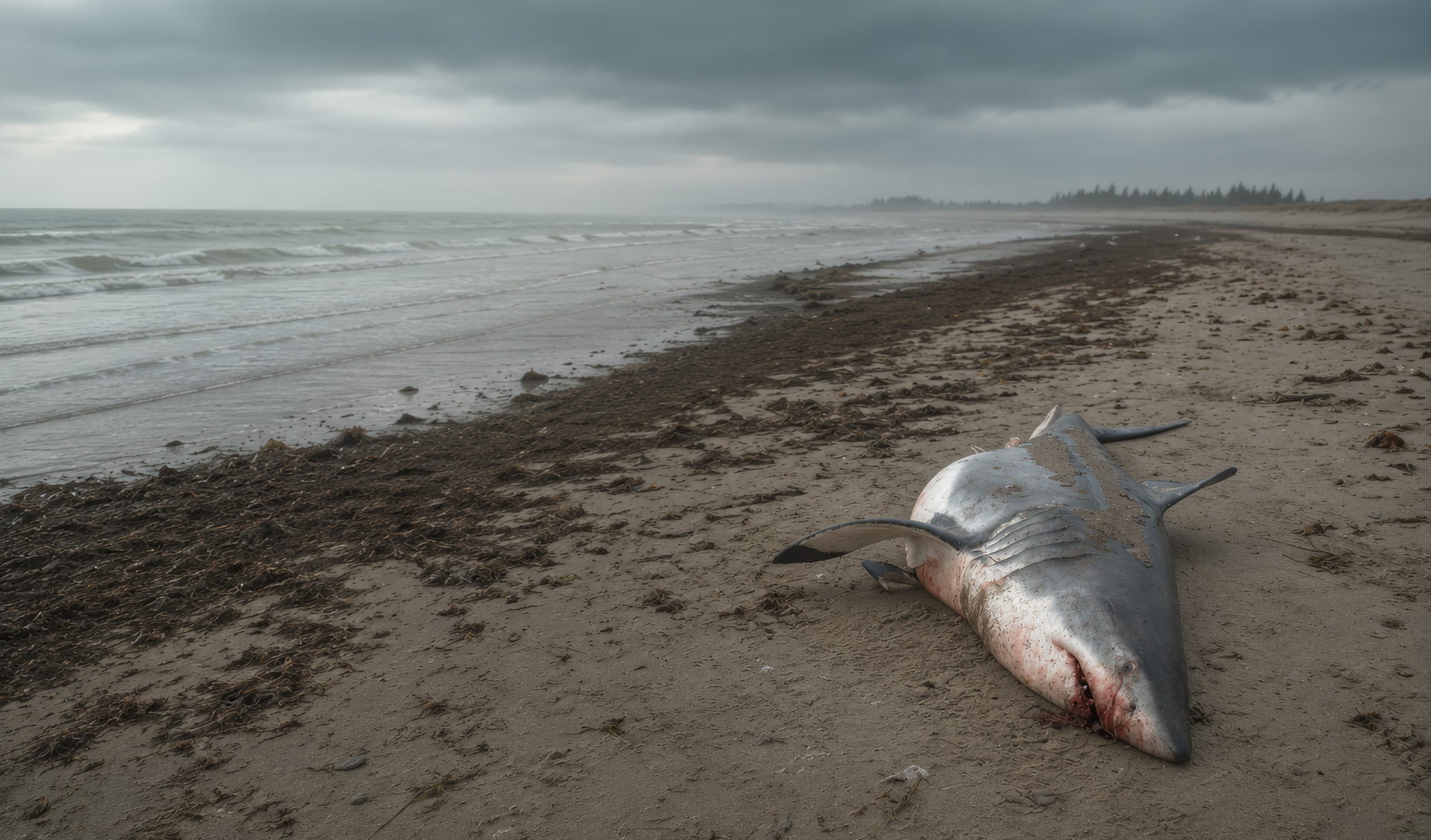
Stranded white shark near Kouchibouguac National Park, New Brunswick
AI-assisted © ORS |. All Rights Reserved
“Fear and apathy bite deeper
than any shark.”
Help protect the sharks
of the St. Lawrence.
— Jeffrey Hay Gallant, ORS
The St. Lawrence Shark Observatory is a registered charity:
Canada Revenue Agency #834462913RR0001
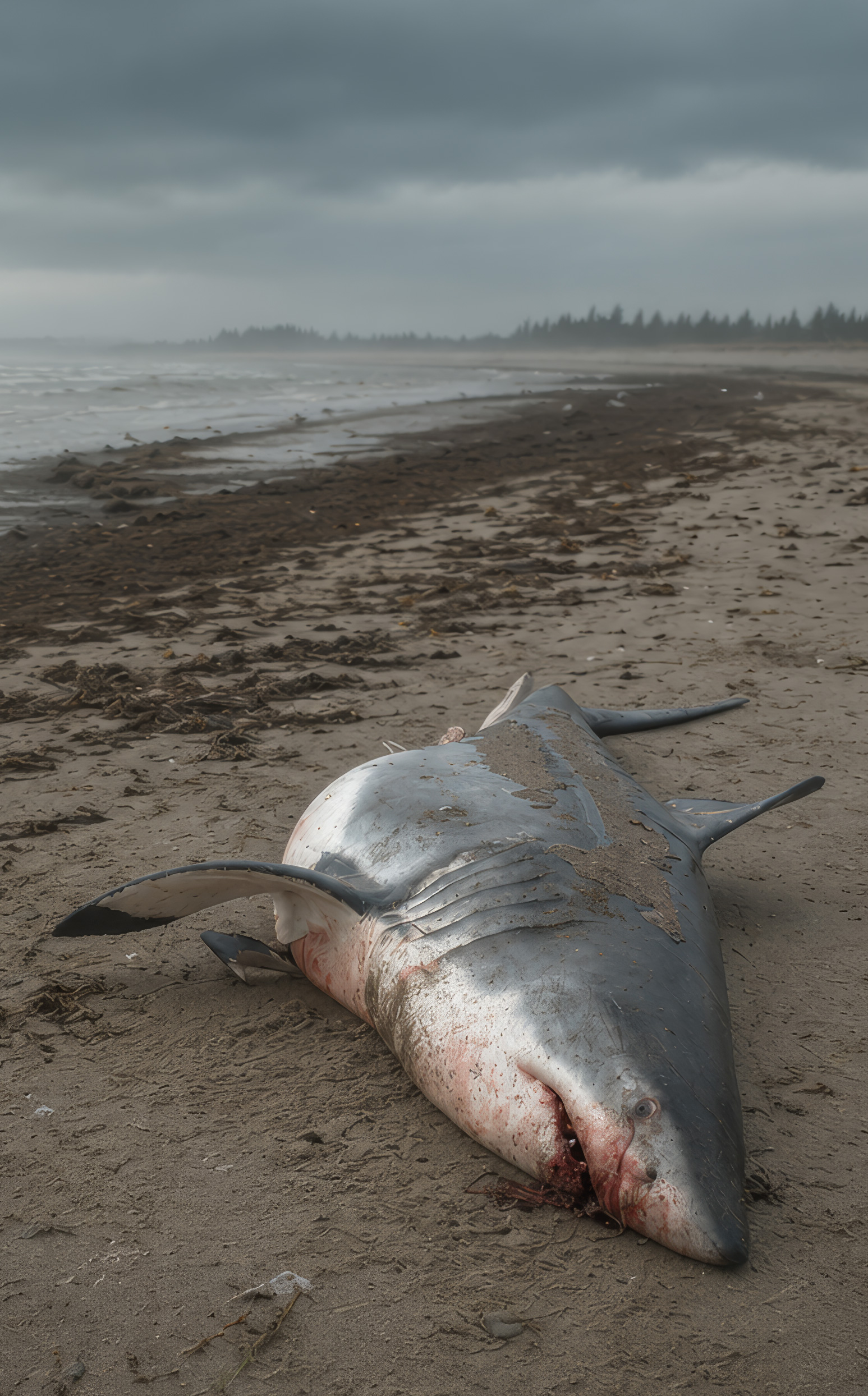
Stranded white shark near Kouchibouguac National Park, New Brunswick
AI-assisted © ORS |. All Rights Reserved
“Fear and apathy
bite deeper
than any shark.”
Help protect the sharks
of the St. Lawrence.
— Jeffrey Hay Gallant, ORS
The St. Lawrence Shark Observatory is a registered charity:
Canada Revenue Agency #834462913RR0001

CSAR
OSF
PUBLICATIONS

© 2026 St. Lawrence Shark Observatory. All Rights Reserved.
CSAR
OSF
PUBLICATIONS
© 2026 St. Lawrence Shark Observatory
All Rights Reserved