
© ORS
FAQ

© ORS
The ORS Frequently Asked Questions (FAQ) is a growing reference designed to answer the questions we receive most often from journalists, educators, students, fishers, divers and the general public.
Rather than publishing a large encyclopedia all at once, we are releasing individual answers as they are completed. Each article is based on the best available scientific evidence and is reviewed and updated as new information becomes available.
 COPYRIGHT NOTICE: The text, analyses, and interpretations presented in this FAQ are the intellectual property of the St. Lawrence Shark Observatory (ORS). Many of these articles contain original syntheses and interpretations developed specifically by ORS and are not available elsewhere. Reproduction or republication, in whole or in part, is therefore not permitted without prior written permission. © 2026 St. Lawrence Shark Observatory. All Rights Reserved.
FAQ — STRANDINGS
FAQ — STRANDINGS
Should you try to rescue a stranded shark?
A recent porbeagle rescue in New Brunswick illustrates why immediate intervention may sometimes offer a shark its only chance, but also why it cannot be recommended as a general response.
LAST UPDATED: 18.08.2026
Short answer
Members of the public should generally contact trained responders before approaching, handling or attempting to move a stranded shark. Sharks can make sudden, powerful movements, and improper handling can injure both the animal and the person trying to help.
In exceptional circumstances, however, immediate intervention may represent the shark’s only realistic chance of survival. The appropriate response depends on the species, size and condition of the animal, the conditions at the site and whether professional guidance is immediately available.
What happened at Maces Bay?
In August 2026, a teenager encountered a stranded porbeagle shark (Lamna nasus) on a beach at Maces Bay, New Brunswick.
The young man returned it to the water and guided it until it was able to swim away. The incident attracted attention because it showed a spontaneous and compassionate attempt to help a wild animal in immediate distress.
Although the shark left the area under its own power, its subsequent condition and survival could not be confirmed.
Did the young man do the right thing?
Based on the information available, the shark’s only realistic chance may have been immediate intervention. A trained response team probably could not have reached the site before the animal became further compromised or died. The young man therefore acted compassionately and, under the apparent circumstances, appears to have given the shark its only realistic chance of survival by returning it to the water.
This assessment should not, however, be interpreted as a general recommendation. Conditions can differ considerably from one stranding to another. Water depth, tides, surf, footing, weather, accessibility, the shark’s size and condition, and the availability of professional guidance can all affect whether intervention is possible or safe.
Assuming conditions at the site were safe, with sufficiently shallow water, no dangerous tidal movement or surf, stable footing, and a largely immobile shark, I would probably have felt compelled to help as well. I can therefore understand the young man’s motivation. When a living being is in immediate distress and professional help cannot arrive in time, the instinct to intervene can be difficult to resist.
— Jeffrey Hay Gallant, St. Lawrence Shark Observatory
Why is this not a general rescue procedure?
Only trained and authorised responders can properly evaluate the condition of a stranded marine animal and determine the safest course of action. MARS advises members of the public not to handle or return stranded sharks to the water without direction from a responder.
A procedure that appears to work for a small, largely immobile shark in calm, shallow water could be extremely dangerous if attempted with a larger or more active animal, on unstable footing, in deeper water or under strong tidal and surf conditions.
The condition of the shark must also be considered. Returning every stranded animal immediately to the water is not necessarily appropriate. A shark may be seriously injured, ill, disoriented or physiologically compromised. In some situations, moving it without an assessment could worsen its condition or prevent responders from documenting the cause of the stranding.
The Maces Bay incident should therefore be understood as a response to a particular set of circumstances, not as a demonstration of a standard rescue technique.
Can a stranded shark injure someone trying to help?
Yes. Even a shark that initially appears weak or motionless may suddenly make forceful and unpredictable movements when touched, lifted or returned to the water.
An injured or stranded shark may react to human contact, struggle to orient itself or continue trying to reach deeper water. Its head and tail can move rapidly, potentially striking or injuring someone nearby. Such an injury would not necessarily involve aggression or a deliberate attempt to bite.
Sharks are strong and highly flexible animals, but they are also physically vulnerable when removed from the support provided by water. Pulling, dragging or lifting a shark by its tail, fins or gills can seriously injure the animal. The gills and internal organs are particularly sensitive, and inappropriate handling may reduce rather than improve its chances of survival.
The safety of the people present must remain part of any decision. A well-intentioned rescue should not result in a second emergency.
Does swimming away mean that the shark survived?
Not necessarily.
A shark that strands may already be critically injured, seriously ill or severely exhausted. Even when a shark swims away after being returned to the water, it often fails to recover and may later strand again or be found dead nearby.
Conversely, when a shark disappears into open water and is not seen again, there is usually no way to determine whether it survived. Unless the animal carries a functioning transmitter or is subsequently identified, its outcome remains unknown.
Returning to the water gave the Maces Bay shark an opportunity to survive, but it does not provide evidence that it ultimately recovered.
How common are shark strandings?
ORS becomes aware of a few comparable shark strandings throughout Atlantic Canada and the Gulf of St. Lawrence each year. These incidents involve porbeagles as well as other species, including basking, blue, and white sharks. The reports received by ORS do not constitute a complete count, since many strandings are never observed, documented or reported.
In most cases brought to our attention, the shark is already dead when discovered. Live strandings appear to be reported less frequently.
Shark strandings can result from many circumstances, including illness, injury, entanglement, disorientation, and unfavourable environmental conditions. Young, inexperienced sharks may also follow schools of baitfish or seals into very shallow water and become stranded when the tide recedes. The reason for a particular stranding generally cannot be determined from photographs or video alone. A proper assessment or post-mortem examination may be required.
What should you do if you find a stranded shark?
Every shark stranding presents different circumstances. The following general steps are adapted from guidance published by the Marine Animal Response Society (MARS), with additional context from ORS:
1. Keep people and pets away. Crowds, noise and physical contact can increase the animal’s stress and create additional safety risks.
2. Assess the surroundings from a safe distance. Observe the tides, surf, water depth, weather, footing and any other hazards.
3. Document the animal and its location. Note the time, exact location, approximate size, apparent condition and any visible injuries, entanglement, tags or identifying features. Photographs and video from several angles can help responders identify the species and evaluate its condition.
4. Contact trained responders immediately. In the Maritime provinces (New Brunswick, Nova Scotia and Prince Edward Island), call the Marine Animal Response Society (MARS) at 1-866-567-6277. In Québec, contact the Quebec Marine Mammal Emergency Response Network (RQUMM) at 1-877-722-5346, which can provide advice or direct you to the appropriate responders if a shark is involved. Elsewhere in Canada, contact Fisheries and Oceans Canada or the appropriate regional marine wildlife response organisation.
5. Follow the instructions provided. Responders may be able to assess the situation remotely and provide immediate guidance when an on-site response cannot arrive in time.
6. Do not improvise a rescue based on another incident. A procedure used with one shark may be dangerous or harmful in different circumstances.
7. Do not approach the head or tail, and never pull the gills. If a responder directs someone at the site to assist, the instructions should be followed precisely.
The safest first action is generally to make the call. Contacting responders does not necessarily mean waiting passively for a team to arrive. It may allow trained personnel to provide immediate advice based on the animal and conditions present.
What if professional help cannot arrive in time?
This is the most difficult aspect of a live stranding.
Sharks are particularly vulnerable outside water, and rapid action may sometimes be necessary to preserve any chance of survival. At the same time, an untrained intervention can injure the shark or place the rescuer in danger.
No written FAQ can establish a universal rule for such situations. The best available approach is to contact responders immediately, provide clear photographs or video, describe the conditions accurately and follow their instructions. When communication is impossible and the animal faces an immediate threat, anyone considering intervention must carefully evaluate both personal safety and the possibility of causing further harm.
Compassion is understandable, but it must be accompanied by caution and sound judgement.
What should you do if the shark is already dead?
A dead shark should be reported and left undisturbed. If a responder confirms that the animal is dead and determines that an incoming tide may carry it back to sea before recovery, someone at the site may be asked to secure the carcass temporarily. When specifically instructed and conditions are safe, this may involve placing a line around the caudal peduncle, the narrow base of the tail, and anchoring it securely to shore without dragging, cutting or otherwise disturbing the animal. Preventing the carcass from being lost at sea can preserve valuable biological material and scientific information relevant to research and conservation. Recovery and examination, when appropriate, should be coordinated by trained and authorised organisations such as MARS or Fisheries and Oceans Canada.
A carcass can provide valuable scientific information about species identification, age, sex, reproduction, diet, health, contaminants, genetics and cause of death. Moving, cutting or removing parts from the animal can compromise that evidence.
People should also avoid assuming that a motionless shark is dead. Some severely compromised sharks may exhibit very little visible movement. Responders should be allowed to make that determination whenever possible.
Can teeth or other parts be collected?
Legal protections vary according to the species and population. Members of the public should not remove teeth, fins, tissue or other parts from a shark before its identity and legal status have been established.
For example, the Atlantic population of the white shark is listed as endangered under Canada’s Species at Risk Act. Section 32 prohibits killing, harming, harassing, capturing or taking an individual belonging to an endangered, threatened or extirpated species. It also prohibits the unauthorised possession or collection of the animal or any of its parts, including teeth, fins and tissue.
These provisions do not apply identically to every shark species. Nevertheless, collection should be left to authorised researchers and responders so that legal requirements are respected and scientifically valuable material is properly documented.
Conclusion
The Maces Bay incident demonstrates both the value of compassion and the difficulty of applying a single rule to every wildlife emergency.
Under the apparent circumstances, the young man’s immediate intervention may have offered the stranded porbeagle its only realistic chance of survival. His actions were understandable and well intentioned. They should not, however, be interpreted as a general recommendation for members of the public to handle stranded sharks.
Immediate intervention may occasionally help, but it can also place the rescuer at risk or further injure the animal. The safest general response is to report the incident immediately, evaluate the surroundings carefully and follow the guidance of trained responders.
REFERENCES
• Marine Animal Response Society. (n.d.). Strandings & response
• Marine Animal Response Society. (n.d.). Live animal response
• Marine Animal Response Society. (n.d.). Sharks
• Committee on the Status of Endangered Wildlife in Canada. (2014). COSEWIC assessment and status report on the porbeagle Lamna nasus in Canada
• Government of Canada. (2002). Species at Risk Act, S.C. 2002, c. 29, s. 32
• Fisheries and Oceans Canada. (2025). Recovery strategy for the white shark (Carcharodon carcharias), Atlantic population, in Canada
The ORS FAQ is being expanded progressively as new articles are completed.
In the meantime, you may find the following resources helpful:
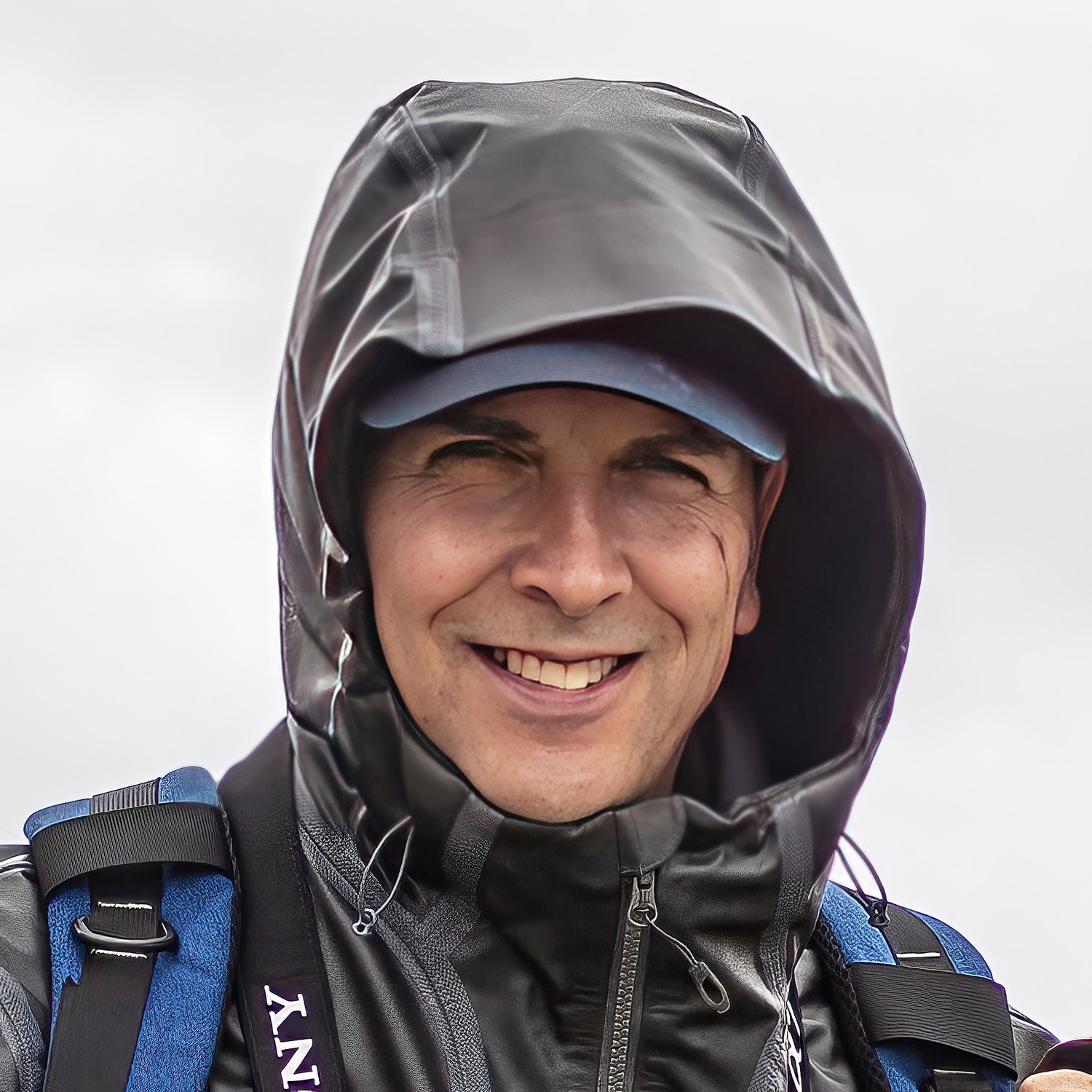
Founder and scientific director of the St. Lawrence Shark Observatory (ORS) and curator of the Canadian Shark Attack Registry. His first encounter with a shark was at Peggy’s Cove, Nova Scotia, in 1975. He co-led Canada’s first shark cage dives in 2000, captured the world’s first footage of a Greenland shark in its natural habitat in 2003, and received the Université du Québec à Trois-Rivières (UQTR) Pythagore Prize in Science and Engineering in 2025.
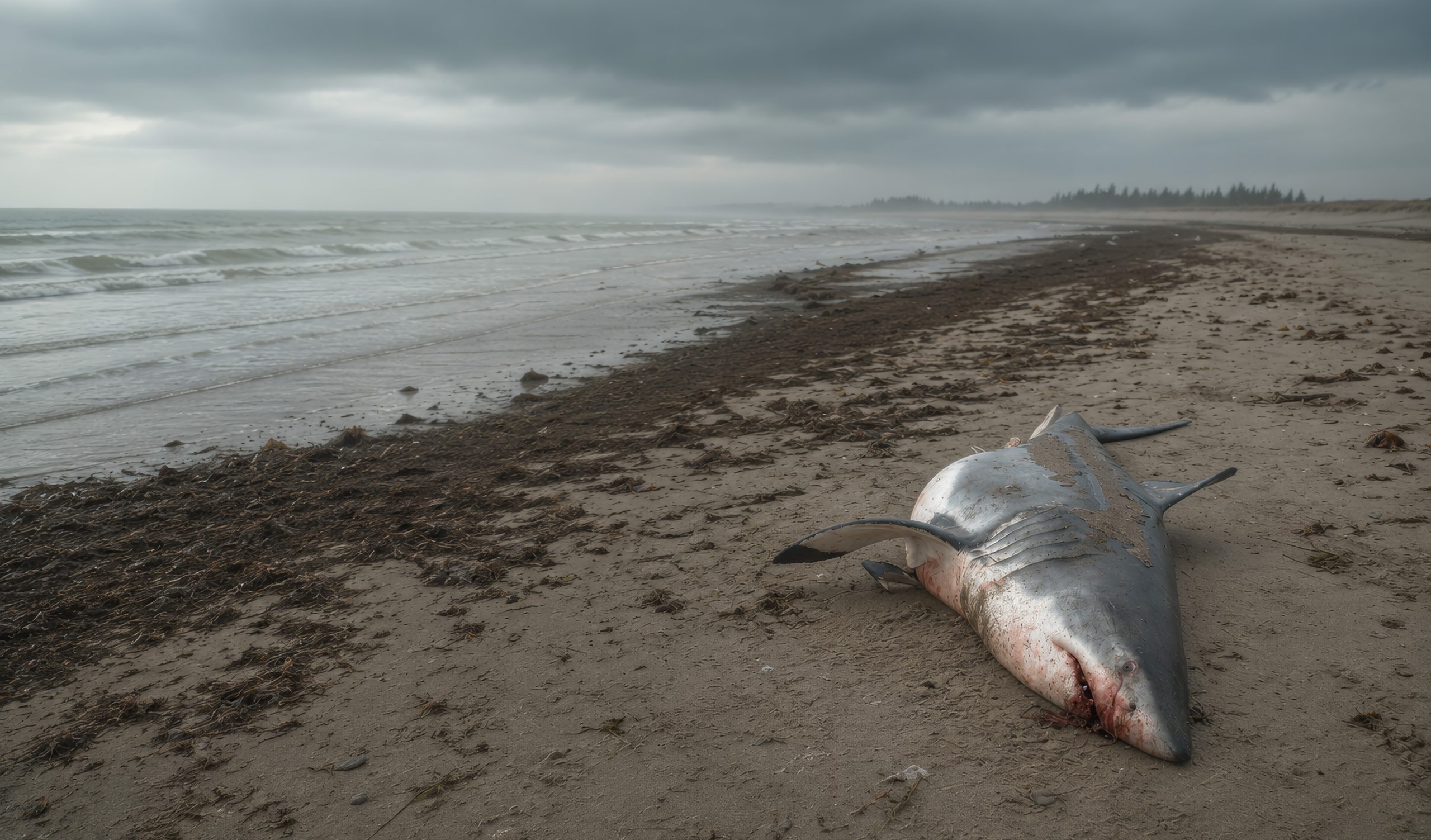
Stranded white shark near Kouchibouguac National Park, New Brunswick
AI-assisted © ORS |. All Rights Reserved
“Fear and apathy bite deeper
than any shark.”
Help protect the sharks
of the St. Lawrence.
— Jeffrey Hay Gallant, ORS
The St. Lawrence Shark Observatory is a registered charity:
Canada Revenue Agency #834462913RR0001
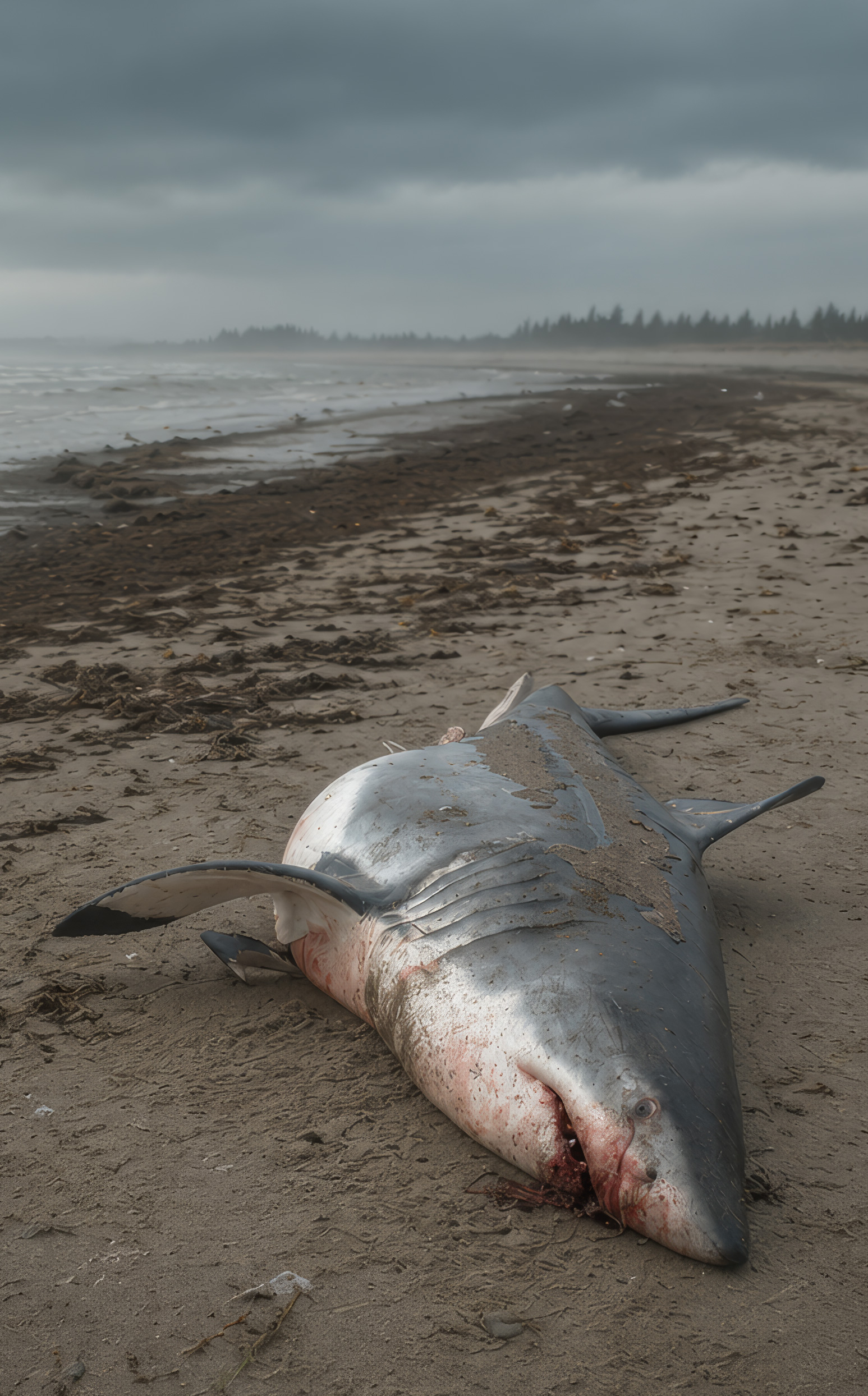
Stranded white shark near Kouchibouguac National Park, New Brunswick
AI-assisted © ORS |. All Rights Reserved
“Fear and apathy
bite deeper
than any shark.”
Help protect the sharks
of the St. Lawrence.
— Jeffrey Hay Gallant, ORS
The St. Lawrence Shark Observatory is a registered charity:
Canada Revenue Agency #834462913RR0001



© 2026 St. Lawrence Shark Observatory. All Rights Reserved.