
© ORS
FAQ

© ORS
The ORS Frequently Asked Questions (FAQ) is a growing reference designed to answer the questions we receive most often from journalists, educators, students, fishers, divers and the general public.
Rather than publishing a large encyclopedia all at once, we are releasing individual answers as they are completed. Each article is based on the best available scientific evidence and is reviewed and updated as new information becomes available.
 COPYRIGHT NOTICE: The text, analyses, and interpretations presented in this FAQ are the intellectual property of the St. Lawrence Shark Observatory (ORS). Many of these articles contain original syntheses and interpretations developed specifically by ORS and are not available elsewhere. Reproduction or republication, in whole or in part, is therefore not permitted without prior written permission. © 2026 St. Lawrence Shark Observatory. All Rights Reserved.
FAQ — RESEARCH ETHICS
FAQ — RESEARCH ETHICS
What does ORS mean by “non-invasive” research?
Why the term non-invasive is not always as straightforward as it seems, and how ORS defines it.
LAST UPDATED: 13.08.2026
Why is there confusion?
Terms such as non-invasive, minimally invasive, and non-lethal are widely used in wildlife research, but they do not always mean the same thing. Depending on the discipline or study, a technique may be be described as non-invasive even if it involves capturing, restraining, handling, attaching equipment to, or otherwise disturbing an animal. As a result, two research projects may both be described as non-invasive while involving very different levels of interaction with the animals being studied.
Because no universally accepted definition exists across all fields of wildlife research, ORS believes it is important to clearly define what the term means within its own research programme.
The ORS definition
For ORS, non-invasive means that sharks are not captured, restrained, handled, physically contacted, intentionally injured, or subjected to procedures that alter their normal behaviour beyond the minimum necessary for observation. Our objective is to study sharks behaving as naturally as possible while avoiding unnecessary stress or risk.
Whenever scientifically feasible, ORS favours techniques that allow sharks to behave as naturally as possible throughout the research process while minimising their awareness of, and response to, human presence. These include environmental DNA (eDNA) collected from seawater, vessel- and shore-based observations, drone surveys, underwater camera systems, historical records, and verified public reports and observations.
In some studies, conducted under the appropriate permits and licences, ORS may use limited attractants, such as tuna heads or a seal decoy, to increase the likelihood of observing sharks or collecting environmental DNA. These attractants are used solely to facilitate observation or sampling. Sharks are never intentionally fed, allowed to consume the bait, or conditioned to associate boats or people with food.
Looking beyond the shark
In the view of ORS, a study should not be considered non-invasive solely because it avoids physically contacting sharks. Certain research methods may also involve varying degrees of disturbance to prey species, other wildlife, or the surrounding habitat. For this reason, ORS evaluates invasiveness from an ecosystem perspective and strives to minimise unnecessary impacts on all wildlife and habitats affected by its research.
Does this make research more difficult?
Yes.
Studying sharks without capturing, handling or feeding them generally results in fewer encounters and slower data collection. Fieldwork often requires more time, greater patience, and acceptance that sharks may simply not appear.
Even when limited attractants are used, encounters occur entirely on the sharks’ terms. Sharks remain free to approach, investigate briefly, or disappear without interacting further. This often means long hours on the water with little or no shark activity, but ORS considers this an acceptable consequence of minimising disturbance.
Does ORS oppose other research methods?
No.
Many important discoveries about white sharks have resulted from techniques involving capture, satellite tagging, biological sampling, and other forms of direct interaction. These methods have substantially advanced our understanding of shark biology, movements, physiology, and conservation, and continue to play an important role in shark research worldwide.
ORS simply adopts a different research philosophy. Whenever scientifically feasible, we favour methods that minimise interactions with sharks while still allowing us to answer meaningful scientific questions.
Why choose this approach?
Research methods always involve trade-offs. Techniques involving direct interaction with animals can often provide data that cannot be obtained by observation alone. Conversely, studying sharks without capturing, handling or feeding them generally results in lower encounter rates, fewer sampling opportunities, and less dramatic imagery for documentaries, news reports, and public outreach.
The ORS approach also reflects a broader trend in wildlife science. Advances in environmental DNA (eDNA), drones, remote imaging, artificial intelligence, and statistical modelling increasingly allow researchers to answer ecological questions that once required capturing, handling, or otherwise disturbing wild animals. While these technologies cannot replace every traditional field method, they are expanding the range of questions that can be addressed using less intrusive approaches and are placing greater emphasis on animal welfare alongside scientific rigour.
ORS views non-invasive research not as a limitation, but as an opportunity to develop new methods that obtain robust scientific data while reducing our footprint on the wildlife and ecosystems we seek to understand. Although this approach often requires more time, patience, and effort in the field, we believe it allows us to study sharks behaving as naturally as possible while reducing our impact on the animals themselves.
Conclusion
ORS does not place the welfare of sharks above that of other wildlife. Our objective is to understand and conserve sharks while respecting the broader marine ecosystem of which they are a part. For us, non-invasive research is not simply about avoiding harm to sharks; it is about minimising unnecessary impacts on all living components of the ecosystem whenever scientifically feasible.
At the same time, no wildlife research is entirely without impact. Every boat passing overhead, every drone flight, and every researcher entering the field becomes part of the environment being studied. The goal of ORS is therefore not to eliminate all influence—which is impossible—but to reduce it to the greatest extent reasonably achievable while still answering meaningful scientific questions.
This philosophy is perhaps best illustrated by a principle familiar to many Star Trek fans: the Prime Directive, which encourages observation while avoiding unnecessary interference. Wildlife research can never follow such a principle absolutely, but it serves as a useful ethical ideal; one that reminds us that the animals we study should remain as wild as possible.
Ultimately, we don’t judge the success of our research by how spectacular the footage is or how many sharks we encounter. We judge it by the quality of the science, the knowledge it generates, and whether the sharks were able to remain wild throughout the process. We sleep better knowing that our best encounters happen on the sharks’ terms, not ours.
— Jeffrey Hay Gallant, St. Lawrence Shark Observatory
Important legal notice
White sharks are listed as Endangered under Canada’s Species at Risk Act (SARA). As a result, it is generally an offence to kill, harm, harass, capture, or take a white shark, or to possess, collect, buy, sell, or trade an individual or any part of one. Activities that would otherwise contravene these prohibitions may only be conducted under a permit or other authorisation issued in accordance with the Species at Risk Act and only under specific conditions.
Scientific research involving white sharks, including activities such as capture, handling, tagging, biological sampling, or other direct interactions, generally requires authorisation under the Species at Risk Act. Such permits are issued only where the research is scientifically justified, conducted by qualified persons, all reasonable alternatives have been considered, all feasible measures are taken to minimise impacts, and the activity will not jeopardise the survival or recovery of the species.
Where required, ORS fieldwork is also conducted under a research protocol reviewed and approved by the Animal Care Committee of a Canadian Council on Animal Care (CCAC) member institution. This independent ethical review complements the permitting process by evaluating the scientific justification for the work, animal welfare, and measures taken to minimise impacts on both the target species and the broader ecosystem.
Members of the public should never deliberately approach or attempt to attract a white shark for the purpose of obtaining photographs or video. This includes using vessels, bait, food, drones, or entering the water to pursue or film a shark. Such activities may constitute harassment under the Species at Risk Act or otherwise require prior authorisation.
Similarly, intentionally disturbing, injuring, or otherwise manipulating wildlife to locate or attract white sharks may also contravene applicable wildlife legislation. The pursuit of dramatic photographs, documentary footage, or social media content should never take precedence over the welfare of protected wildlife or the ecosystems they inhabit.
ORS encourages researchers, photographers, documentary filmmakers, dive operators, boaters, and members of the public to observe white sharks responsibly, comply with all applicable legislation and permit requirements, and remember that the best wildlife encounters are those that leave the animals, and the ecosystems they inhabit, as undisturbed as reasonably possible.
If obtaining a photograph or video requires you to alter the natural behaviour of a white shark or any other protected wildlife, you should not take the photograph. The best wildlife images are those obtained without the animal ever needing to respond to your presence.
This philosophy has guided ORS fieldwork for many years. Readers interested in its origins are encouraged to read the ORS editorial Hooked on Conservation, originally published in 2012. Although written about Greenland sharks, its central message applies equally to white sharks and all other wildlife: conservation should never come at the expense of the very animals it seeks to protect.
REFERENCES
Research ethics
• Canadian Council on Animal Care. (2003). CCAC guidelines on: The care and use of wildlife.
• Canadian Council on Animal Care. (2005). CCAC guidelines on: The care and use of fish in research, teaching and testing.
• Curzer, H. J., Wallace, M. C., Perry, G., Muhlberger, P. J., & Perry, D. (2013). The Ethics of Wildlife Research: A Nine R Theory. ILAR Journal, 54(1), 52–57.
• Rowe, A. (2026). Why Non-invasive Animal Studies Should Seek Ethical Review. Journal of Agricultural & Environmental Ethics, 39(1), 1–16.
• Soulsbury, C. D., Gray, H. E., Smith, L. M., Braithwaite, V., Cotter, S. C., Elwood, R. W., Wilkinson, A., & Collins, L. M. (2020). The welfare and ethics of research involving wild animals: A primer. Methods in Ecology and Evolution, 11(10), 1164–1181.
• Zemanova, M. A. (2020). Towards more compassionate wildlife research through the 3Rs principles: moving from invasive to non-invasive methods. Wildlife Biology, 2020(1).
Non-invasive research methods
• Çevik, T., & Çevik, N. (2025). Environmental DNA (eDNA): A review of ecosystem biodiversity detection and applications. Biodiversity and Conservation, 34(9), 2999–3035.
• Goodenough, A. E., & Perks, S. J. (2025). Using non-invasive and minimally-invasive methods to inform conservation of terrestrial mammals: A review of novel techniques and new applications. Journal for Nature Conservation, 88.
• Thomsen, P. F., & Willerslev, E. (2015). Environmental DNA – An emerging tool in conservation for monitoring past and present biodiversity. Biological Conservation, 183, 4–18.
ORS resources
• St. Lawrence Shark Observatory (ORS). Hooked on conservation (Editorial)
The ORS FAQ is being expanded progressively as new articles are completed.
In the meantime, you may find the following resources helpful:
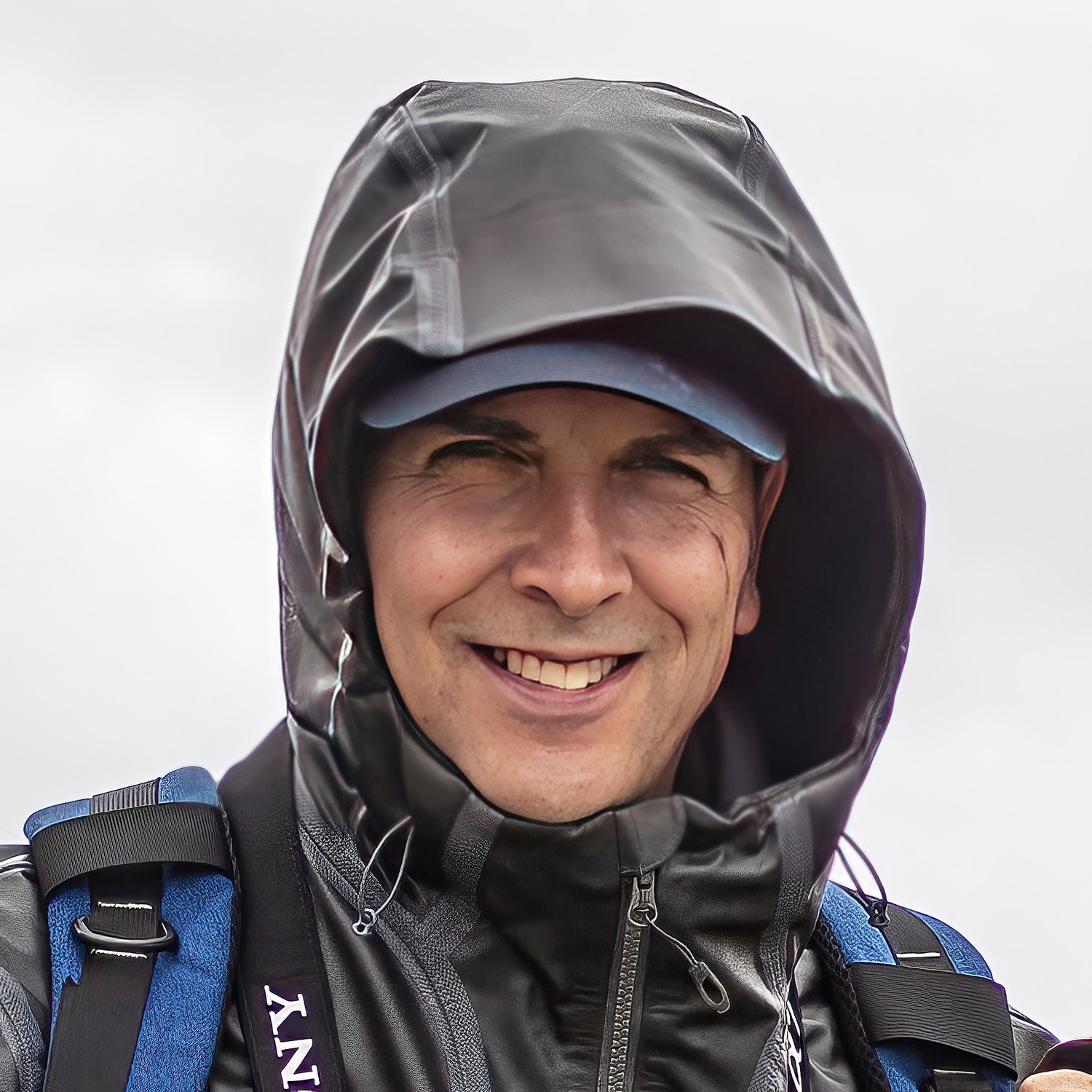
Founder and scientific director of the St. Lawrence Shark Observatory (ORS) and curator of the Canadian Shark Attack Registry. His first encounter with a shark was at Peggy’s Cove, Nova Scotia, in 1975. He co-led Canada’s first shark cage dives in 2000, captured the world’s first footage of a Greenland shark in its natural habitat in 2003, and received the Université du Québec à Trois-Rivières (UQTR) Pythagore Prize in Science and Engineering in 2025.
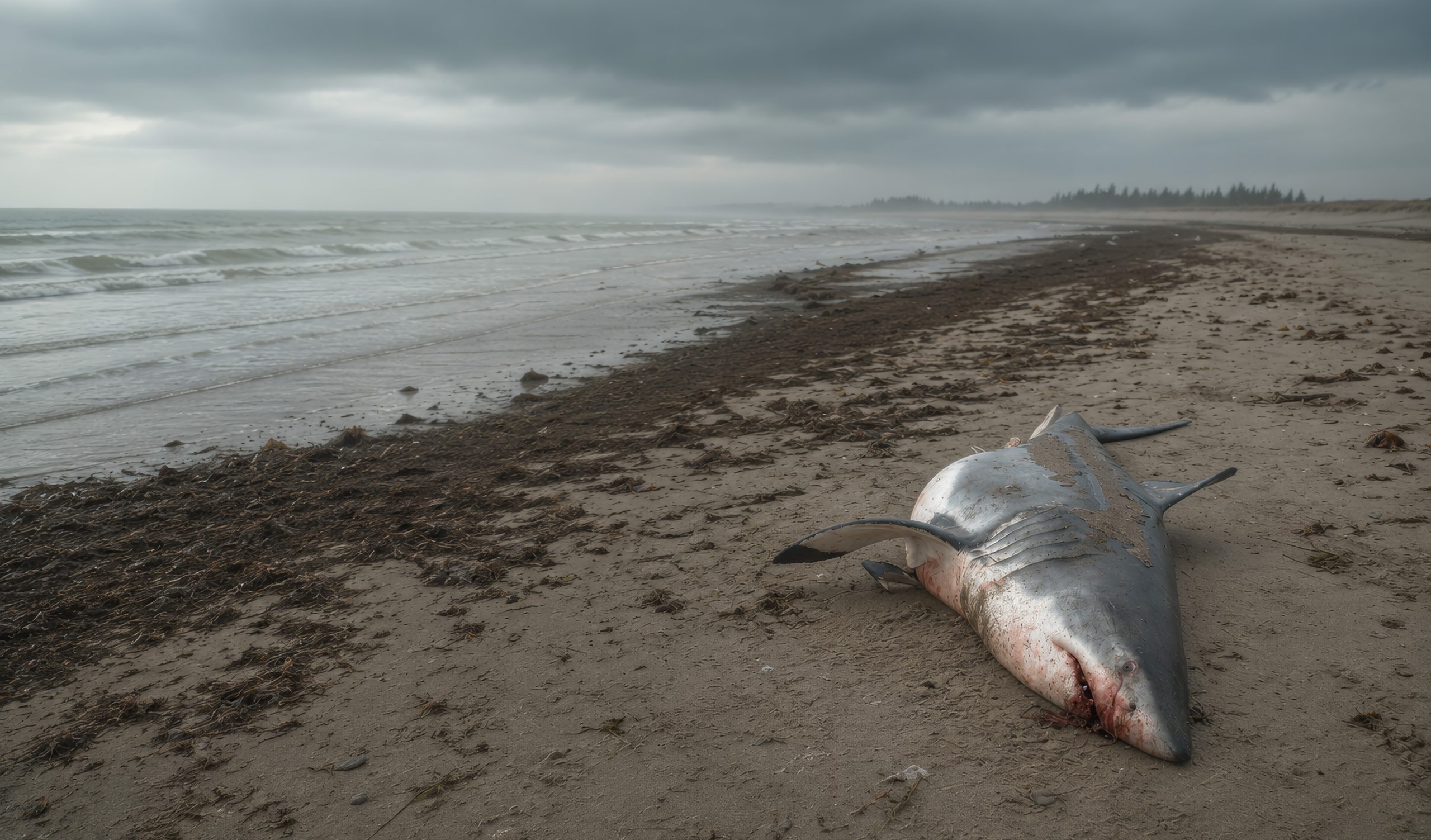
Stranded white shark near Kouchibouguac National Park, New Brunswick
AI-assisted © ORS |. All Rights Reserved
“Fear and apathy bite deeper
than any shark.”
Help protect the sharks
of the St. Lawrence.
— Jeffrey Hay Gallant, ORS
The St. Lawrence Shark Observatory is a registered charity:
Canada Revenue Agency #834462913RR0001
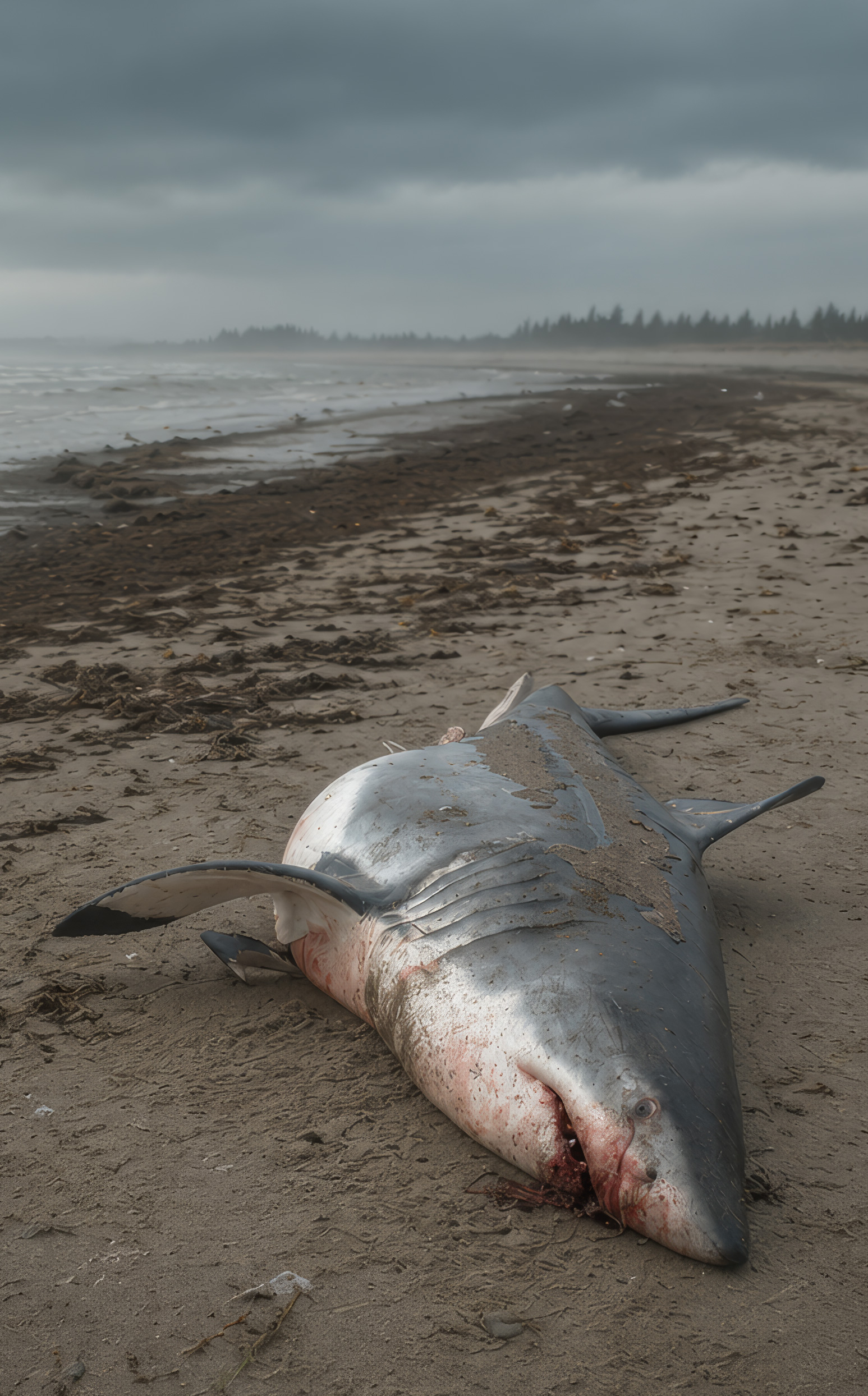
Stranded white shark near Kouchibouguac National Park, New Brunswick
AI-assisted © ORS |. All Rights Reserved
“Fear and apathy
bite deeper
than any shark.”
Help protect the sharks
of the St. Lawrence.
— Jeffrey Hay Gallant, ORS
The St. Lawrence Shark Observatory is a registered charity:
Canada Revenue Agency #834462913RR0001



© 2026 St. Lawrence Shark Observatory. All Rights Reserved.