
© ORS
FAQ

© ORS
The ORS Frequently Asked Questions (FAQ) is a growing reference designed to answer the questions we receive most often from journalists, educators, students, fishers, divers and the general public.
Rather than publishing a large encyclopedia all at once, we are releasing individual answers as they are completed. Each article is based on the best available scientific evidence and is reviewed and updated as new information becomes available.
 COPYRIGHT NOTICE: The text, analyses, and interpretations presented in this FAQ are the intellectual property of the St. Lawrence Shark Observatory (ORS). Many of these articles contain original syntheses and interpretations developed specifically by ORS and are not available elsewhere. Reproduction or republication, in whole or in part, is therefore not permitted without prior written permission. © 2026 St. Lawrence Shark Observatory. All Rights Reserved.
FAQ — GREENLAND SHARK
FAQ — GREENLAND SHARK
How old can Greenland sharks become?
The science behind the world’s longest-lived vertebrate, and why its extraordinary lifespan matters.
LAST UPDATED: 16.08.2026
Short answer
Greenland sharks (Somniosus microcephalus) are currently considered the longest-lived vertebrates known to science. The oldest individual examined was estimated to be approximately 392 ± 120 years old, indicating that some Greenland sharks can live for several centuries.
Although this estimate carries considerable uncertainty, there is little doubt that Greenland sharks are exceptionally long-lived. Their extraordinary lifespan, combined with extremely slow growth and very late sexual maturity, makes them unlike almost any other vertebrate on Earth.
How do scientists know?
Determining the age of a Greenland shark is surprisingly difficult. Unlike many shark species, Greenland sharks do not possess calcified vertebrae with annual growth bands that can be counted to estimate age. Traditional ageing techniques therefore do not work.
The breakthrough came in 2016 when Julius Nielsen and colleagues developed an alternative approach using radiocarbon dating of the eye lens. The centre of the eye lens contains proteins formed before birth that remain unchanged throughout the shark’s life. By measuring the amount of radiocarbon in this tissue, the researchers were able to estimate when each shark was born.
The largest shark examined, measuring approximately 5 metres (16.5 ft), was estimated to be 392 ± 120 years old. The study also suggested that female Greenland sharks may not reach sexual maturity until approximately 156 ± 22 years of age.
These estimates transformed our understanding of Greenland sharks and established the species as the longest-lived vertebrate currently known to science.
It is important to remember, however, that 392 years is an estimate, not a precisely measured age. The uncertainty associated with radiocarbon dating means that scientists cannot yet determine the exact age of individual Greenland sharks. For this reason, ORS recommends avoiding statements such as “Greenland sharks live to 500 years old.” A more accurate description is that they can live for several centuries, with the oldest individual studied estimated at approximately 392 ± 120 years.
Why do they live so long?
Scientists are still trying to answer that question.
For many years, Greenland shark longevity was attributed primarily to an extremely slow metabolism associated with life in cold, deep water. Their slow growth and energy-efficient lifestyle almost certainly contribute to their exceptional lifespan.
More recent research suggests the explanation is more complex. A chromosome-level genome published in 2026 identified several genetic adaptations involving DNA repair, genome maintenance, immune function, and cellular regulation that may also contribute to the species’ remarkable longevity. Researchers are also investigating how Greenland sharks maintain healthy tissues over such extraordinarily long lives.
Although the precise mechanisms remain under investigation, it is increasingly clear that Greenland shark longevity results from a combination of slow growth, cold-water physiology, and biological adaptations that help maintain normal cellular function over centuries.
Why does this matter?
Extreme longevity has important conservation implications.
A species that may require more than 150 years to reach sexual maturity cannot quickly recover from increased mortality. The loss of even a few mature individuals may affect populations for generations.
For this reason, Greenland sharks are particularly vulnerable to overfishing, bycatch, and other human-caused mortality. Understanding their extraordinary life history helps explain why precautionary conservation measures are so important.
Conclusion
The popular description of the Greenland shark as a “500-year-old shark” captures the public imagination, but the science is more nuanced.
What we know with confidence is that Greenland sharks can live for several centuries, grow extraordinarily slowly, and mature later than almost any other vertebrate. Ongoing research is now shifting the focus from simply asking how old these sharks become to understanding how a vertebrate can remain alive and functional for so long.
REFERENCES
Peer-reviewed literature
• Hansen, P. M. (1963). Tagging experiments with the Greenland shark (Somniosus microcephalus) in Subarea 1. International Commission for the Northwest Atlantic Fisheries, Special Publication, 4, 172–175.
• Nielsen, J., Hedeholm, R. B., Heinemeier, J., Bushnell, P. G., Christiansen, J. S., Olsen, J., Ramsey, C. B., Brill, R. W., Simon, M., Steffensen, K. F., & Steffensen, J. F. (2016). Eye lens radiocarbon reveals centuries of longevity in the Greenland shark (Somniosus microcephalus). Science, 353(6300), 702–704.
• Yang, K., Nishiwaki, K., Mizobata, H., Liang, J., Asakawa, S., Yoshitake, K., Watanabe, Y. Y., Hussey, N. E., Kovacs, K. M., Lydersen, C., Kadota, M., Kuraku, S., & Kinoshita, S. (2026). The Greenland shark genome: Insights into lifespan extremes and population dynamics. Proceedings of the National Academy of Sciences of the United States of America, 123(21), e2601272123.
ORS resources
• St. Lawrence Shark Observatory (ORS). Greenland shark (Species profile)
• St. Lawrence Shark Observatory (ORS). Hooked on conservation (Editorial)
• St. Lawrence Shark Observatory (ORS). Science publications (Peer-reviewed Greenland shark research authored or co-authored by ORS)
The ORS FAQ is being expanded progressively as new articles are completed.
In the meantime, you may find the following resources helpful:

Founder and scientific director of the St. Lawrence Shark Observatory (ORS) and curator of the Canadian Shark Attack Registry. His first encounter with a shark was at Peggy’s Cove, Nova Scotia, in 1975. He co-led Canada’s first shark cage dives in 2000, captured the world’s first footage of a Greenland shark in its natural habitat in 2003, and received the Université du Québec à Trois-Rivières (UQTR) Pythagore Prize in Science and Engineering in 2025.
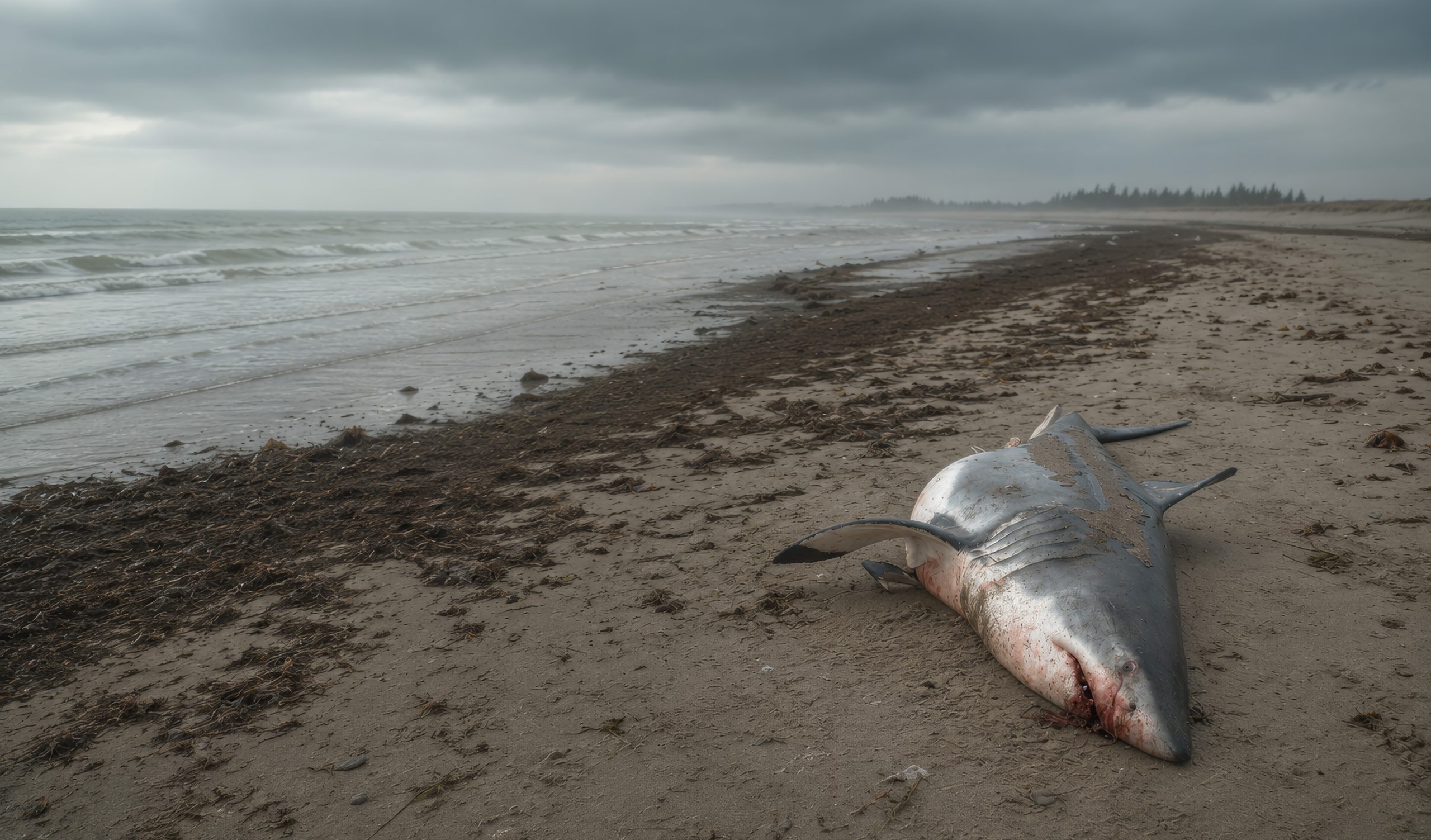
Stranded white shark near Kouchibouguac National Park, New Brunswick
AI-assisted © ORS |. All Rights Reserved
“Fear and apathy bite deeper
than any shark.”
Help protect the sharks
of the St. Lawrence.
— Jeffrey Hay Gallant, ORS
The St. Lawrence Shark Observatory is a registered charity:
Canada Revenue Agency #834462913RR0001
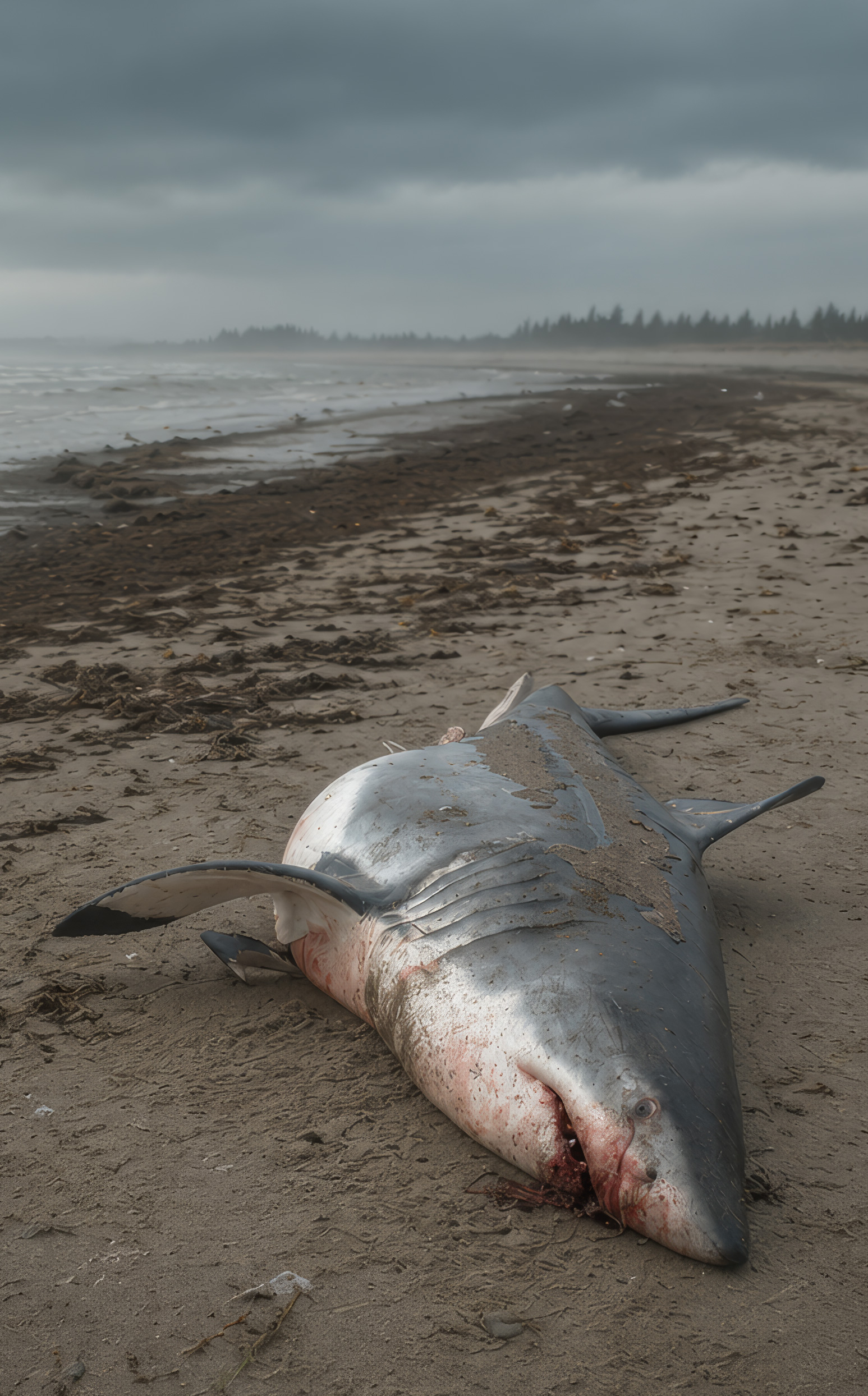
Stranded white shark near Kouchibouguac National Park, New Brunswick
AI-assisted © ORS |. All Rights Reserved
“Fear and apathy
bite deeper
than any shark.”
Help protect the sharks
of the St. Lawrence.
— Jeffrey Hay Gallant, ORS
The St. Lawrence Shark Observatory is a registered charity:
Canada Revenue Agency #834462913RR0001



© 2026 St. Lawrence Shark Observatory. All Rights Reserved.